
Proper Form When Running: 5 Fixes That Last a Long Run
Raceblock team Updated November 12, 2026 12 min read
Free training plan for your race date
Free training plan for your race date
Build my free planIn this article
Proper form when running comes down to five things: run tall with a slight lean from the ankles, land with your foot close to under your hips, take quick light steps, keep your arms swinging forward and back with loose shoulders, and breathe from your belly. That is it. You do not need a new stride, you need the one you already have to hold up when you are tired.
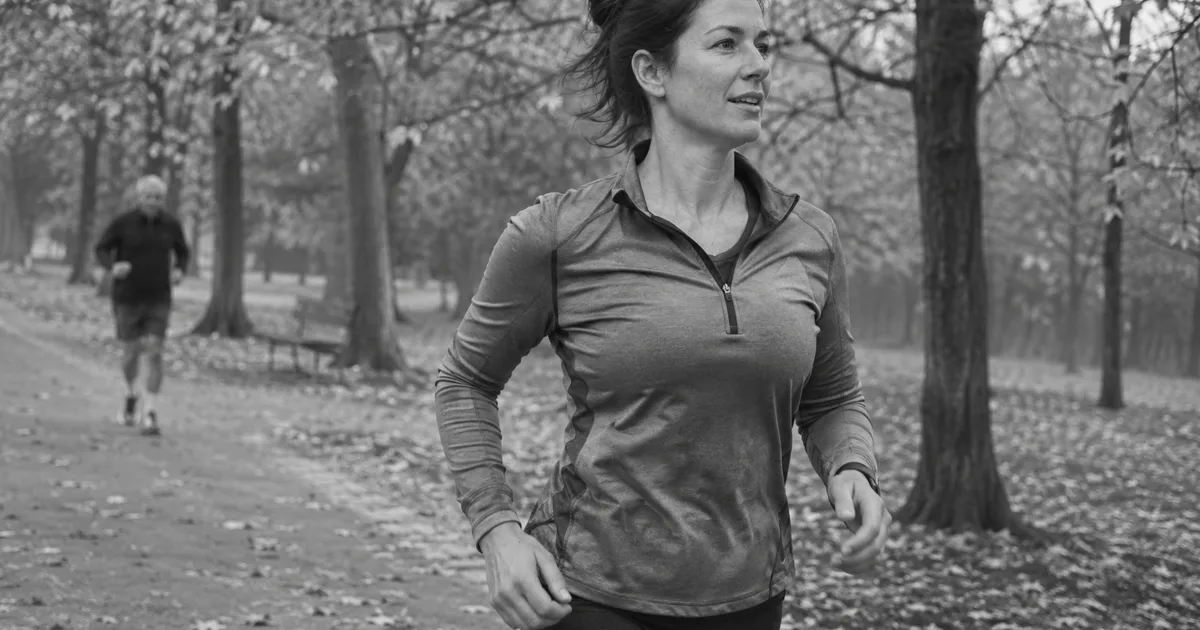
That last part is the bit most form guides skip. Almost everyone looks fine in the first 3 km (2 mi) of a run. Form falls apart at 25 km (15.5 mi) of a long run, when the shoulders creep up, the head drops and the stride turns into a shuffle. So the goal is not perfect form. It is form that survives fatigue.
What is proper running form?
Proper running form is a relaxed, upright stride where your foot lands close to under your body, your steps are short and quick, and your upper body stays quiet. It is not one fixed technique. Your height, leg length and pace all change what "good" looks like, so the aim is to remove the few faults that cost you energy, not to copy an elite runner.
Here is the full checklist, from head to feet. Use it as a mirror: find the fault you recognize and fix only that.
| Body part | Good form | Common fault | Cue that fixes it |
|---|---|---|---|
| Head | Level, eyes 10 to 20 m (30 to 65 ft) ahead | Chin dropped to the ground | "Look at the horizon" |
| Shoulders | Low and loose | Shrugged up toward the ears | "Drop the shoulders" every km |
| Arms | Elbows near 90 degrees, swing forward and back | Arms crossing the chest | "Hands brush your hips" |
| Hands | Loosely cupped | Clenched fists | "Hold a crisp, don't break it" |
| Torso | Tall, slight lean from the ankles | Bent at the waist or leaning back | "Run tall, hips forward" |
| Feet | Land close to under the hips | Heel landing far in front of the knee | "Quicker, shorter steps" |
| Cadence | Your natural step rate, or a bit higher | Long, slow, bouncing strides | Add 5% to your step count |
The single change with the best evidence behind it is the last one: a slightly quicker step. More on that below.
What is the perfect posture to run?
The best running posture is tall and slightly forward: one straight line from your ankle through your hip to your ear, tipped a few degrees forward from the ankles. Your head sits level, your chest is open and your hips stay under you rather than behind you.
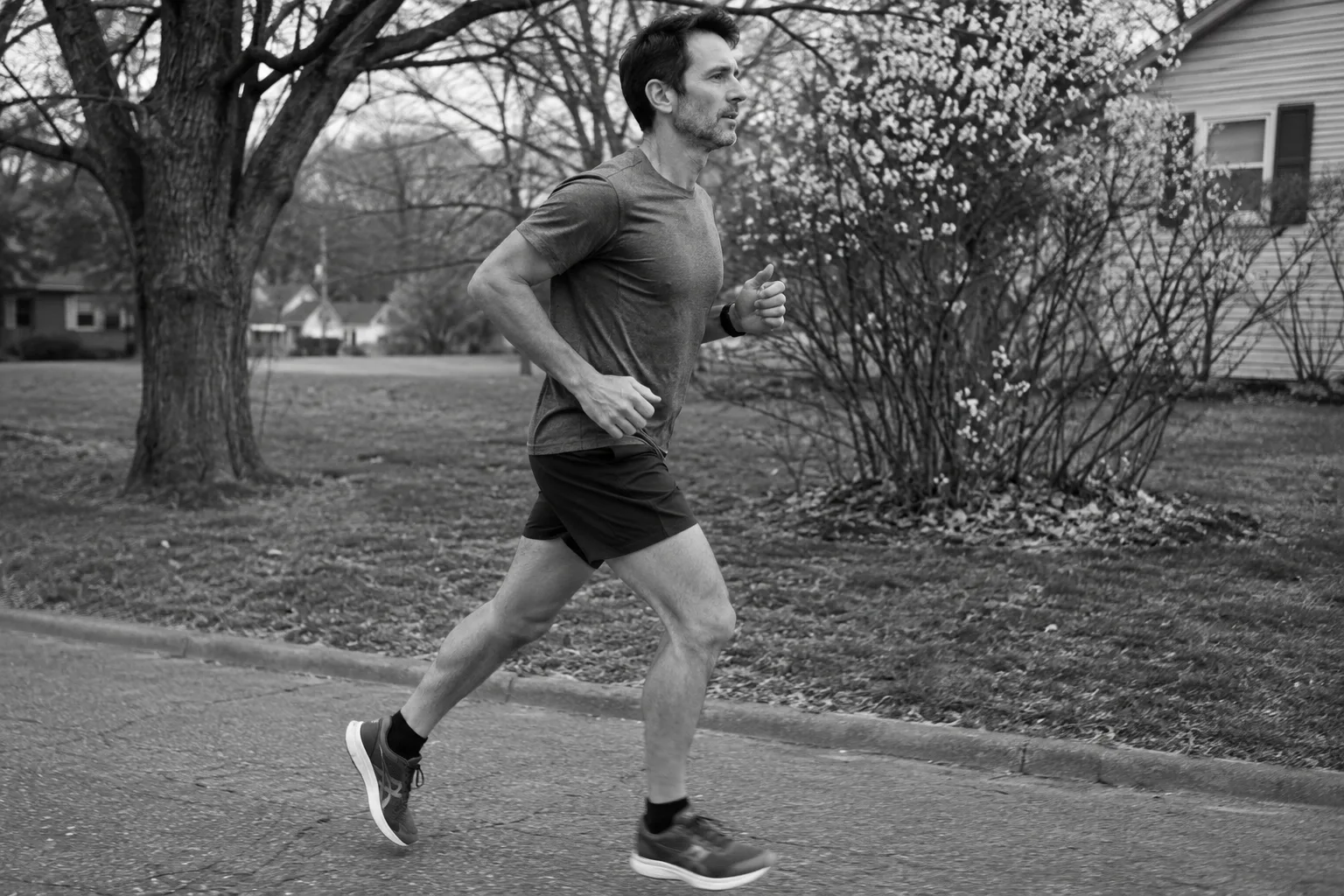
The mistake is leaning from the waist. That folds you in half, pushes your hips back and makes your foot land further in front of you. A useful check: stand still, rise onto your toes, then let yourself tip forward until you have to take a step to stop falling. That small lean from the ankles is the angle you want. Anything more is too much.
Posture is also the first thing to go when you are tired. If you only remember one cue on a long run, make it "run tall".
How should your foot land?
Land with your foot close to under your hips, with your knee softly bent and your shin close to vertical. Whether the heel, midfoot or forefoot touches first matters much less than where the foot lands relative to your body.
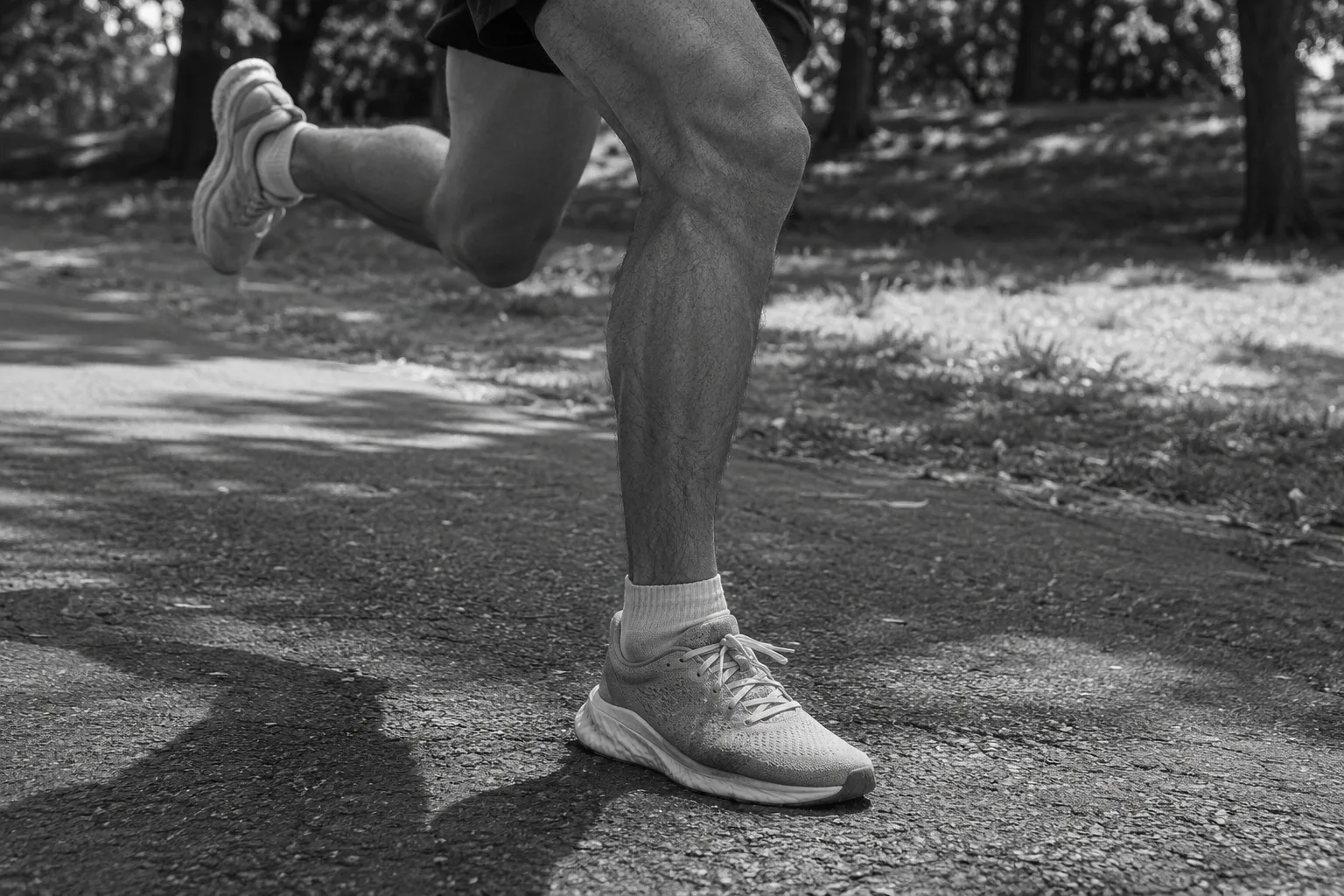
The fault to fix is overstriding: reaching your foot far out in front of you so it lands on the heel with a straight leg. That acts like a brake on every step. You do not fix it by forcing yourself onto your toes, which tends to overload the calves and Achilles if you change suddenly. You fix it by shortening your stride, which brings the landing back under you on its own.
What is cadence in running?
Cadence is the number of steps you take per minute, counting both feet. To find yours, count every step for 30 seconds on an easy run and double it. Most coaching advice is not about hitting a magic number, it is about nudging your own number up a little. Our guide to running cadence shows how to read your number against your pace.
The best research here is a lab study of 45 healthy recreational runners on a treadmill at a fixed speed. When they increased their step rate by 5%, their knees absorbed less energy on landing, and at 10% their hips did too. Their steps got shorter, they bounced up and down less and they braked less on each step (Heiderscheit et al., 2011). Slowing their step rate by 10% did the opposite.
The math is simple. If you count 160 steps per minute, a 5% increase is 168. Use a metronome app set to 168 for a few minutes of each easy run, then let it go and see if your legs keep the rhythm. Do not jump straight to 180: that number is often quoted from elite runners at race pace, not a target for a 5:40 /km (9:07 /mi) easy run.
Arms, hands and shoulders
Your arms balance your legs, so a messy arm swing leaks into your stride. Keep your elbows bent near 90 degrees and swing them forward and back, with your hands brushing past your hips. Hands stay loosely cupped.

The two faults are shrugged shoulders and arms crossing your chest. Both come from tension, and both get worse late in a run. Once every kilometer, drop your shoulders, shake out your hands for a few steps and carry on. It takes two seconds and resets your whole upper body.
Breathing with good form
Breathe from your belly, not your upper chest, and let your breathing follow your effort. On easy runs you should be able to talk in full sentences. If you need help, a simple rhythm like breathing in for three steps and out for two keeps you relaxed. We go into rhythms and side stitches in how to breathe while running, and if a sharp pain under the ribs keeps cutting runs short, read why you get a stitch in your side.
Good posture helps here too. A tall torso with open shoulders gives your lungs room; a hunched one squashes them.
Proper running form for long distance
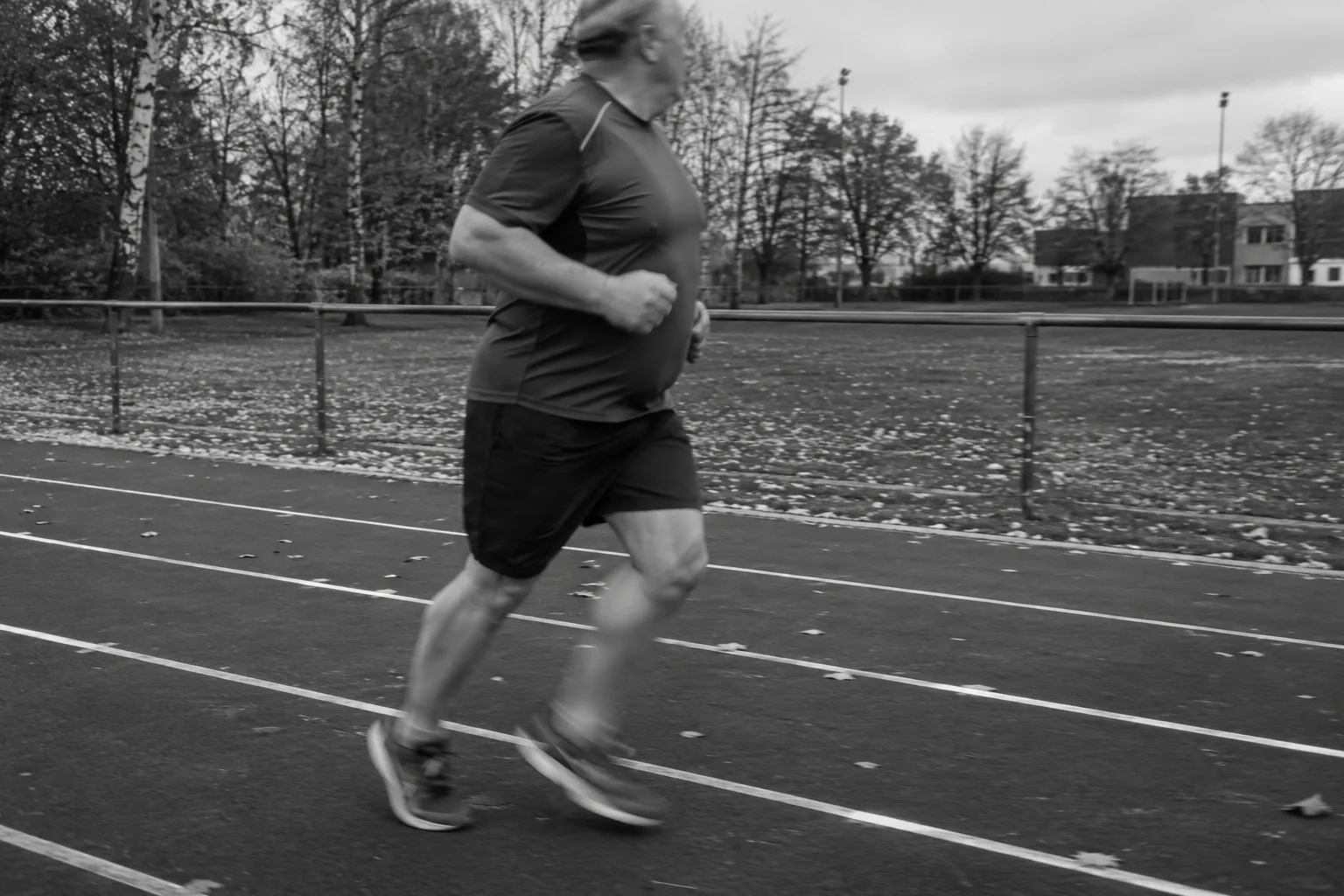
Long distance form is quieter and more economical than fast form: a slightly shorter stride, a lower arm swing and as little bounce as possible. You are not trying to look fast. You are trying to waste as little energy per step as you can for 3 or 4 hours.
Form also changes with the situation. Here is what to adjust and which cue to use.
| Situation | What changes | The one cue |
|---|---|---|
| Easy run | Relaxed, short stride, chatty breathing | "Quick and quiet feet" |
| Long run, last third | Shoulders rise, head drops, stride shuffles | "Run tall, drop the shoulders" |
| Uphill | Shorter steps, lean into the hill from the ankles, drive the arms | "Small steps, eyes up" |
| Downhill | Keep the feet under you, let gravity work, do not brake | "Fast feet, lean with the slope" |
| Strides and fast running | Longer stride from pushing back, stronger arm drive | "Push the ground behind you" |
| Treadmill | Less push needed, stride often shortens | "Same cadence as outside" |
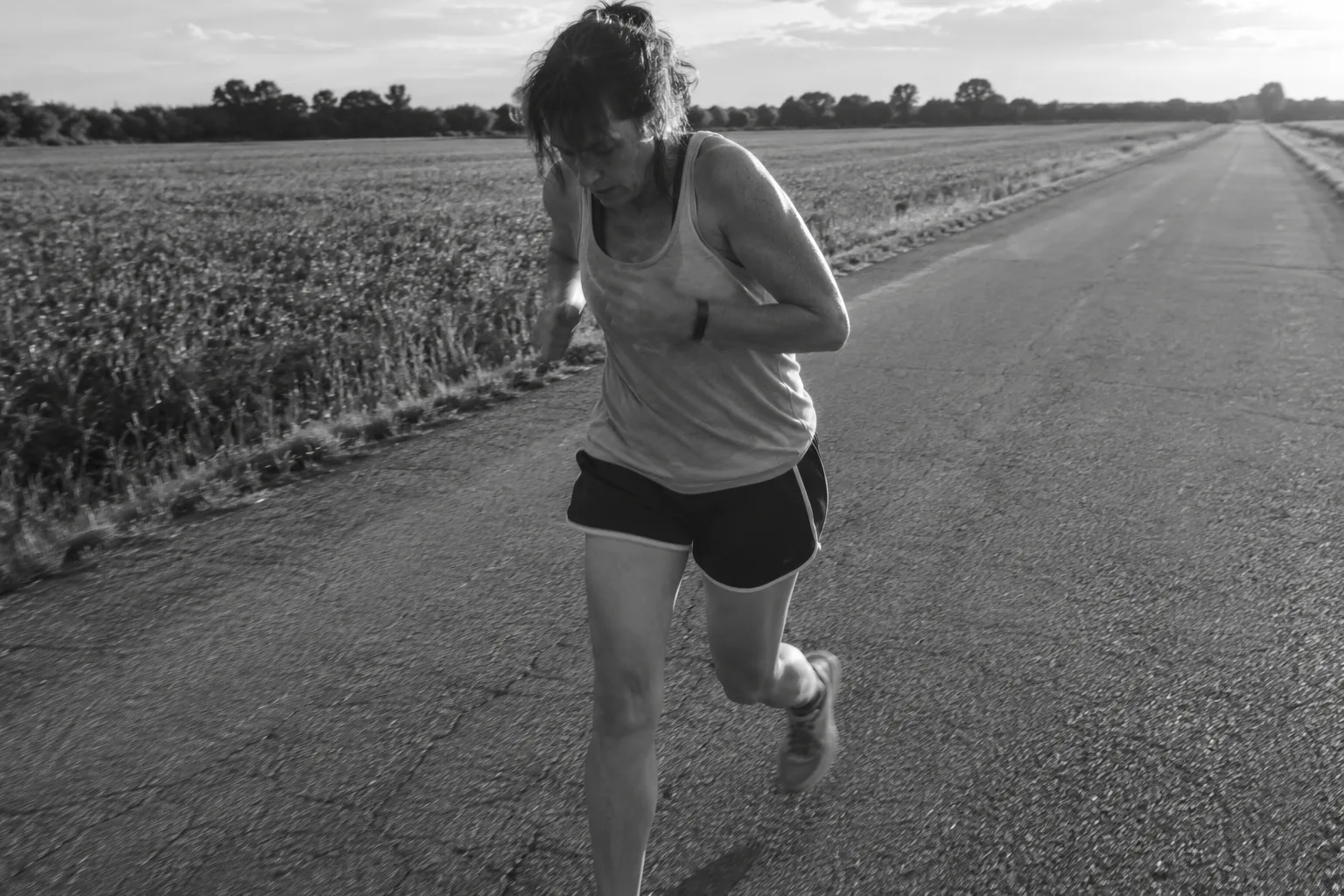
The late long run is where all of this pays off. By the last third of a long run, or the last 10 km (6.2 mi) of a marathon, most runners show the same pattern: shoulders up, chin down, arms crossing, feet shuffling. Pick two cues for those miles before you start, such as "run tall" and "drop the shoulders", and repeat them every kilometer. Going out at a pace you can hold also protects your form; a marathon pace chart shows what even splits look like for your goal.
Check your form in 10 minutes
You do not need a lab. A phone and a friend, or a phone propped on a bench, is enough.
How to check your running form
- Film yourself from the side
Run past the camera at your easy pace, then again at a faster pace. Ten seconds of footage each way is plenty. Watch it in slow motion.
- Check where your foot lands
Pause on the frame where your foot first touches the ground. If your foot is well in front of your knee and your leg is straight, you are overstriding.
- Count your cadence
Count every step for 30 seconds and double it. Write the number down so you can compare it in a month.
- Look at your upper body
Check whether your shoulders are up, your arms cross your chest or you bend at the waist. Pick the worst one.
- Fix one thing only
Choose a single cue for the next two weeks, then film again. Changing everything at once makes you stiff and slower.
Drills that make good form stick
Cues work for a few minutes. Drills and short fast running make good form automatic, so it is still there when you are tired. They also make a good warm-up: do them after a few minutes of easy jogging, as in our guide to warming up before a run.
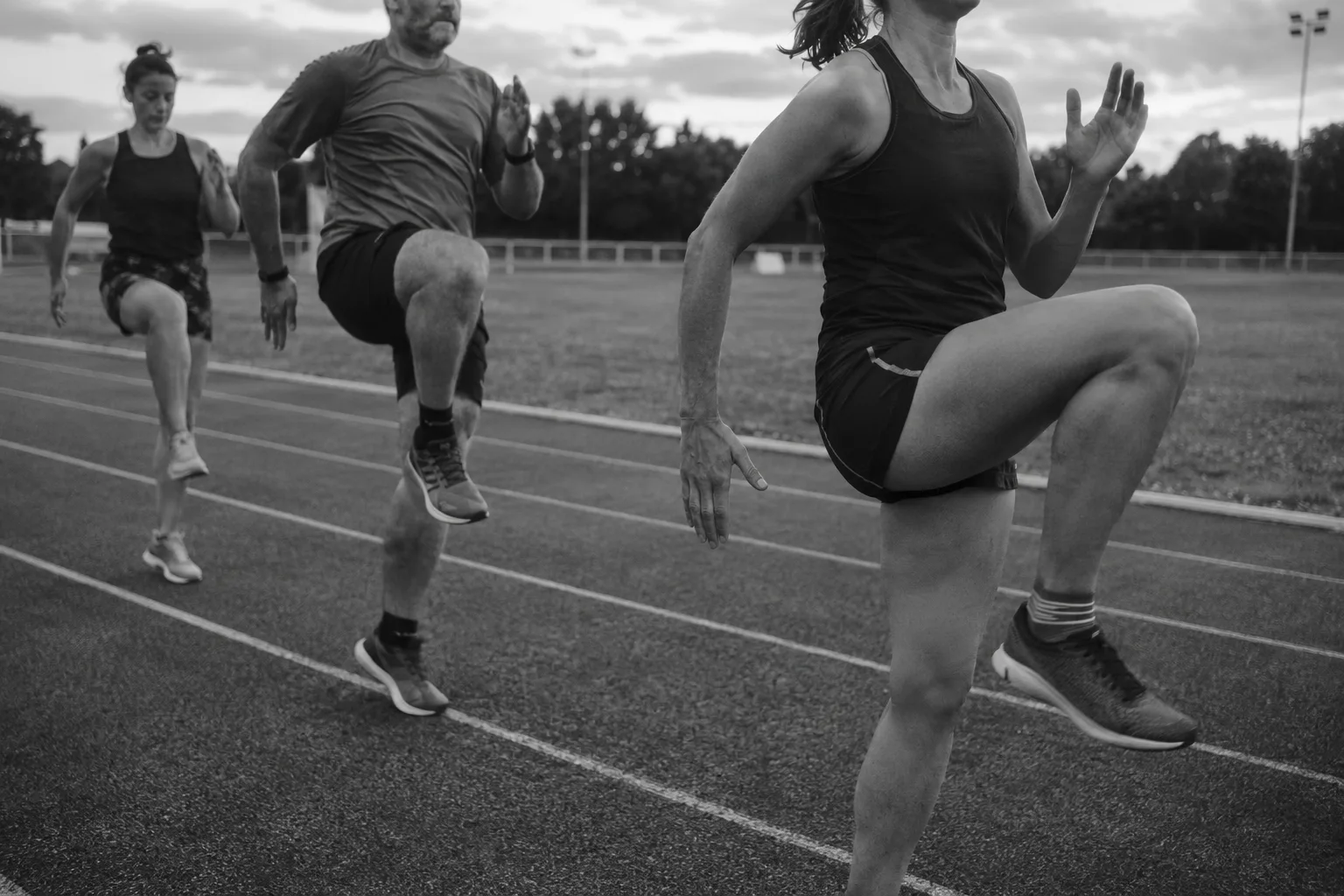
Do these twice a week after an easy run, on flat ground:
- A skips: 2 x 20 m (22 yd). Drive one knee up, land the foot under you, swap.
- High knees: 2 x 20 m (22 yd). Quick, light steps with a tall body.
- Butt kicks: 2 x 20 m (22 yd). Heels toward your seat, short and fast.
- Strides: 4 to 6 x 20 seconds, about 100 m (110 yd), fast but relaxed, walking back between each.
Strides are the most useful of the four. Running fast and relaxed teaches your body a quicker, shorter, more upright stride, and some of it carries over to your easy pace. Our how to run faster guide shows where strides and hills fit into a training week. Top speed asks for a different shape again, a tall posture with the knee driving up in front, which our sprint form and drills guide breaks down.
Strength work helps too: two short sessions a week of squats, lunges, calf raises and planks give your body the strength to hold its shape late in a run. Our six-move strength routine for distance runners has the sets and reps.
General training guidance, not medical advice. Check with a doctor before increasing training if you have symptoms or a health condition. Pain, swelling, chest pain or feeling faint means stop and see a doctor or physio.
Running form mistakes and what they cost
- Overstriding. Your foot lands in front of you and brakes every step. Fix it with quicker, shorter steps.
- Forcing a forefoot strike. Switching overnight loads your calves and Achilles. If you want to change, shorten your stride and let the landing change on its own.
- Changing everything at once. You end up stiff and slower. One cue at a time, for two weeks each.
- Copying elite runners. Their stride fits their speed and their bodies. Yours should fit an easy pace.
- Only thinking about form on fresh legs. Form breaks down when you are tired, so practice the cues in the last third of your long runs.
- Running every run too fast. Tired legs on every run means tired form on every run. Most runs should be easy.
When your week stops matching the plan
You can do all of this with a notebook: film yourself, pick one cue, add strides and drills twice a week and keep the long run easy. If you have a race coming, a marathon training plan or a half marathon training plan puts the drills, strides and long runs into the right weeks.
The wall comes when your week stops matching the plan. A cold takes out your long run, work eats two easy days, and suddenly you are cramming miles into tired legs, which is exactly when form falls apart. A written plan does not move when your week does. If that has already happened, here is what to do after a missed long run.
That is the part Raceblock handles. Build your free plan for your race date. On the Coach plan, next week re-plans itself when you miss a run.
Free training plan
Build your free plan for your race date.
Pick your race and race date. Every week from today to race day is planned for you, with distances in km and miles.
Proper running form in one line
Run tall, land under your hips, take slightly quicker steps and keep your shoulders low, then practice those cues when you are tired, not just when you are fresh. Fix one thing at a time and let strides and drills do the rest.
Good form is built in ordinary weeks of easy running, not one perfect session. If you are training for a race, build a free plan for your race date and let the drills and long runs land in the right weeks, from base building to the marathon taper.
Source: step rate findings from Heiderscheit et al. (2011), Medicine and Science in Sports and Exercise.
Frequently asked questions
Run tall with a slight forward lean from the ankles, not the waist. Keep your head level and your eyes on the horizon, your chest open and your shoulders low. Your hips should stay under you, so your foot lands close to under your body.
Cadence is your number of steps per minute, counting both feet. Count your steps for 30 seconds on an easy run and double it. Rather than chasing 180, try raising your own number by about 5%, for example from 160 to 168.
A relaxed, economical stride: slightly shorter steps, a low arm swing, little bounce and a tall posture. The key is holding it late in a long run, so pick two cues such as "run tall" and "drop the shoulders" and repeat them every kilometer in the last third.
Free training plan
Build your free plan for your race date.
On the Coach plan, next week re-plans itself when you miss a run.
Share article
About the author
More running training guides

Running basics · 12 min
What Is a Recovery Run? Pace, Length and When to Skip It
A recovery run is a short, very easy run you do the day after a long run or hard session. Here is how slow to run it, how long, how it differs from an easy run and a rest day, where it fits in a half or marathon week, and when to skip it.
Running basics · 10 min
10K Beginner Training Schedule: 10 Weeks From Run-Walk
A 10k beginner training schedule for runners starting from run-walk: 10 weeks, three timed sessions a week, a long session that grows to about 70 minutes, the paces behind common finish times and how to adjust the plan to your week.
Running basics · 11 min
10K Training Routine: 3 Runs a Week for 8 Weeks
A 10k training routine is three runs a week on fixed days: one easy run, one faster session and a long run that builds to the full 10 km (6.2 mi) at an easy pace. Here is the weekly layout, the 8-week schedule, the paces and the mistakes that break it.

Running basics · 11 min
5K Training Routine: The Weekly Schedule to Repeat
A good 5K training routine is three or four runs a week on fixed days: one key session, one longer easy run and easy running in between. Here are both weekly layouts, your paces, an 8-week schedule and the mistakes that stall it.
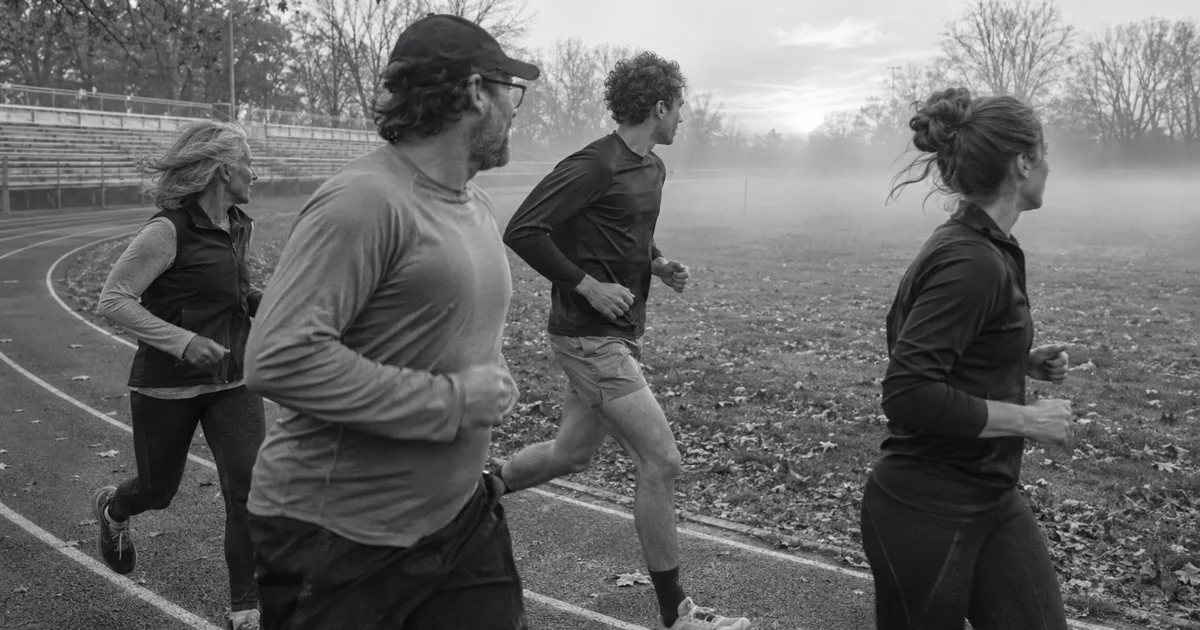
Running basics · 11 min
Interval Training Plan for Running: 8 Weeks With Paces
A simple 8-week interval training plan for running: one session a week at 5 km to 10 km effort, with paces per km and per mile, jog recoveries, a sample week and how to adjust it for a half marathon, a marathon or a comeback.
Running basics · 10 min
Running in the Heat: 9 Tips to Train Safely All Summer
Running in the heat tips that work: run early, run by effort instead of pace, drink and add salt on long runs, adapt over two weeks, and know the warning signs that mean stop.