
5K Training Routine: The Weekly Schedule to Repeat
Raceblock team November 17, 2026 11 min read
Free training plan for your race date

Free training plan for your race date
Build my free planIn this article
A good 5K training routine is three or four runs a week on the same days: one key session with some speed in it, one longer easy run, and easy running in between. Keep the days fixed for 6 to 8 weeks, and the race takes care of itself.
The surprise for most runners is how little of the week is fast. A 5 km (3.1 mi) race feels like a speed test, so the instinct is to train hard every time. But the routine that builds a 5K is mostly easy running with one hard session in it. The hard session gets the attention. The easy runs do most of the work.
What does a 5K training routine look like?
A 5K training routine is one weekly shape repeated for 6 to 8 weeks: a key session early in the week, a longer easy run at the weekend, and easy runs or rest in the gaps. The distances grow a little each week, but the days stay the same, so training becomes a habit instead of a weekly negotiation.
How many days you can run decides the shape. Here are the two layouts that cover most runners.
| Day | 3 runs a week | 4 runs a week |
|---|---|---|
| Monday | Rest | Easy run, 4 to 6 strides at the end |
| Tuesday | Key session | Key session |
| Wednesday | Rest or strength | Easy run |
| Thursday | Easy run | Rest or strength |
| Friday | Rest | Easy run |
| Saturday | Strength or rest | Rest |
| Sunday | Longer easy run | Longer easy run |
| Who it fits | A first 5K, busy weeks | You have run a 5K and want to run it better |
Swap the weekend days if Saturday suits you better. The one rule: never put the key session the day before the longer run. Leave at least one easy or rest day between them.
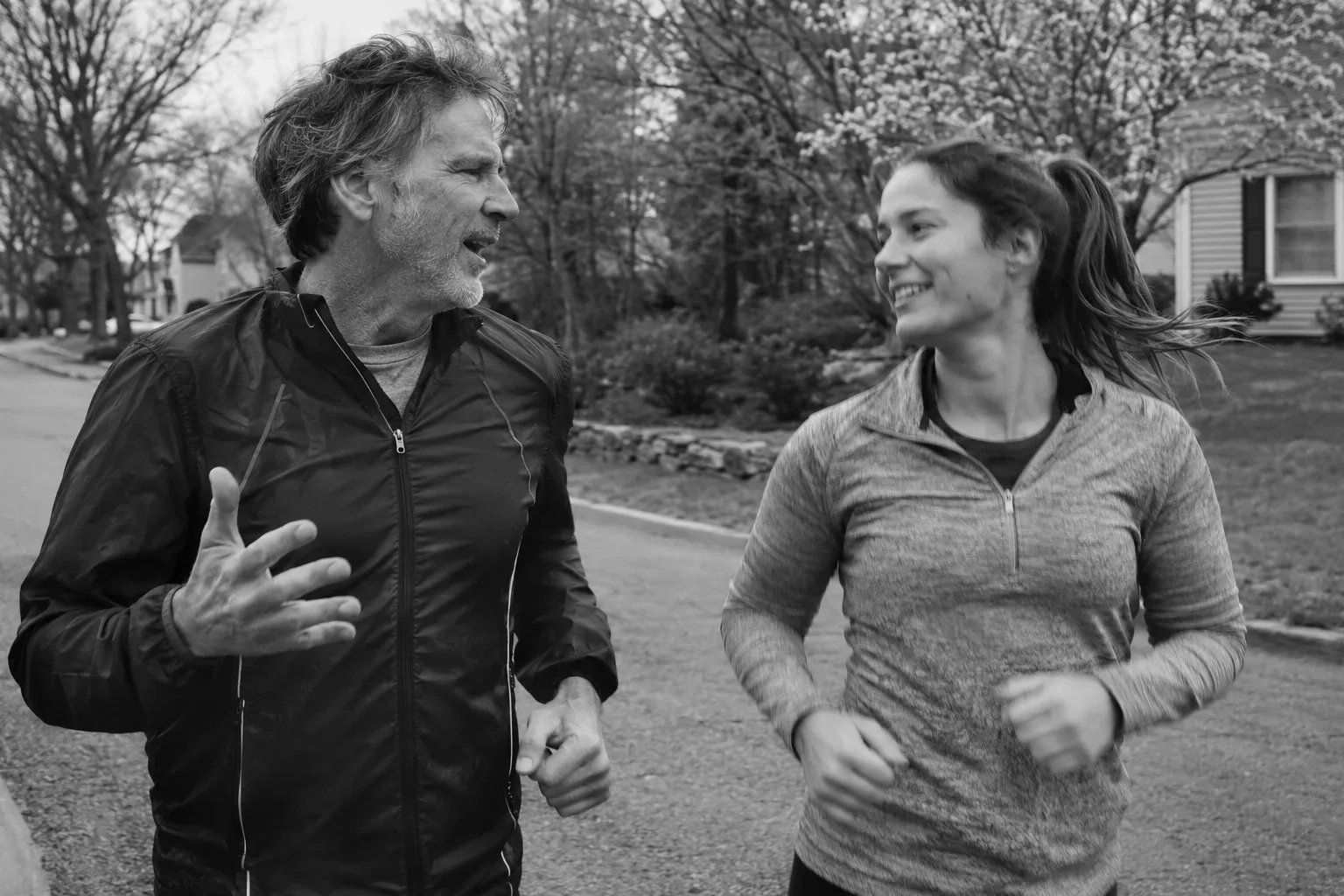
Which 5K routine fits you?
Where you start matters more than which plan you pick. Find your row, then use that routine.
| Where you are now | Routine | How long |
|---|---|---|
| You cannot run 5 km (3.1 mi) without stopping yet | Run and walk intervals, 3 days a week | About 9 weeks |
| You can run 5 km, first race | 3 runs a week, one key session | 6 to 8 weeks |
| You have raced a 5K and want to run it better | 4 runs a week, one key session | 8 weeks |
| The 5K is a step toward a half marathon | 5K sessions inside a longer plan | 10 to 16 weeks |
If you cannot run 5 km yet
Start with run and walk intervals. The NHS Couch to 5K program uses three runs a week with a rest day between each, starting with short bursts of running and walking and building to 30 minutes of running over 9 weeks. Do that first. A speed session adds nothing until you can run the distance.
If this is your first 5K race
Use the 3-run week. One key session, one easy run, one longer easy run, and four days without running. Most of the gain in your first 8 weeks comes from running regularly, not from running hard.
If you want to run your 5K better
Add the fourth run, but keep it easy. A fourth easy run builds more than a second hard session, and it does not wreck the one that matters.
Your 5K training paces
Your paces come from your current 5K time, not your goal. Train off the runner you are today. If you do not have a recent time, run 5 km at a hard but even effort and use that, or check the 5K running pace chart for the pace behind any finish time.
| Current 5K time | 5K pace | Easy runs | Steady runs |
|---|---|---|---|
| 25:00 | 5:00 /km (8:03 /mi) | 6:15 to 6:45 /km (10:04 to 10:52 /mi) | 5:30 to 5:45 /km (8:51 to 9:15 /mi) |
| 30:00 | 6:00 /km (9:39 /mi) | 7:30 to 8:06 /km (12:04 to 13:02 /mi) | 6:36 to 6:54 /km (10:37 to 11:06 /mi) |
| 35:00 | 7:00 /km (11:16 /mi) | 8:45 to 9:27 /km (14:05 to 15:12 /mi) | 7:42 to 8:03 /km (12:24 to 12:57 /mi) |
Easy is 25 to 35% slower than your 5K pace; steady is 10 to 15% slower. These are the same ratios the Raceblock plan engine uses. Easy will feel too slow. That is the point: if you can talk in full sentences, it is right.
The key session: one a week is enough
The key session is the only run in the week with real effort in it. It rotates between three types, so your legs see something new without getting more hard days.

- Intervals. Short repeats at your current 5K pace with easy jogging between, for example 5 x 400 m (0.25 mi) or 4 x 800 m (0.5 mi). This is race pace in small pieces. The interval training plan has more sessions and how to progress them.
- Hills. 6 to 8 repeats of 30 seconds up a moderate hill, walking or jogging back down. Strength and speed with less pounding than a track.
- Steady runs. 15 to 20 minutes at steady pace inside an easy run. Controlled, sustained effort, not a race.
Every key session starts with 10 to 15 minutes of easy running and ends with 5 to 10 minutes of easy jogging. If you skip the warm-up, the first reps hurt and teach you nothing. The full routine is in how to warm up before running.

Why most of the week stays easy
Most of the routine is easy because easy running is what lets you show up for the hard session fresh, week after week. A review of how well-trained endurance athletes actually train found roughly 80% of their sessions at low intensity (Seiler, 2010). The 3-run 5K week sits right there: one key session, two easy runs.
The runners who stall are usually the ones running every run at "comfortably hard". Their easy runs are too fast to recover from and too slow to build speed, so the key session is flat too.
An 8-week 5K training schedule
Here is the 3-run routine laid out over 8 weeks for a runner who can already run 5 km. Distances include the warm-up and cool-down. Week 4 is lighter on purpose, and week 8 is race week.
| Week | Key session (Tuesday) | Easy run (Thursday) | Longer easy run (Sunday) | Week total |
|---|---|---|---|---|
| 1 | 6 x 1 min brisk, 2 min jog: 4 km (2.5 mi) | 4 km (2.5 mi) | 5 km (3.1 mi) | 13 km (8.1 mi) |
| 2 | 8 x 1 min brisk, 2 min jog: 4 km (2.5 mi) | 4 km (2.5 mi) | 6 km (3.7 mi) | 14 km (8.7 mi) |
| 3 | 5 x 400 m (0.25 mi) at 5K pace: 5 km (3.1 mi) | 5 km (3.1 mi) | 6 km (3.7 mi) | 16 km (9.9 mi) |
| 4 | 6 x 30 s hills: 4 km (2.5 mi) | 4 km (2.5 mi) | 5 km (3.1 mi) | 13 km (8.1 mi) |
| 5 | 4 x 800 m (0.5 mi) at 5K pace: 5.5 km (3.4 mi) | 5 km (3.1 mi) | 7 km (4.3 mi) | 17.5 km (10.9 mi) |
| 6 | 15 min steady: 6 km (3.7 mi) | 5 km (3.1 mi) | 8 km (5.0 mi) | 19 km (11.8 mi) |
| 7 | 3 x 1 km (0.6 mi) at 5K pace: 6 km (3.7 mi) | 5 km (3.1 mi) | 8 km (5.0 mi) | 19 km (11.8 mi) |
| 8 | 4 x 400 m (0.25 mi) at 5K pace: 4 km (2.5 mi) | 3 km (1.9 mi) | Race: 5 km (3.1 mi) | 12 km (7.5 mi) |
On the 4-run routine, add one more easy run of 3 to 5 km (1.9 to 3.1 mi) on Monday or Friday from week 2. Do not make it a second key session.
General training guidance, not medical advice. Check with a doctor before increasing training if you have symptoms or a health condition.
Where strength and rest go
Two short strength sessions a week fit the routine without stealing from it. The NHS guidelines for adults recommend strength activities on at least two days a week, and 20 minutes is enough: split squats, calf raises, glute bridges and a plank.

- Put strength on an easy day or a rest day, after the run if it is the same day.
- Never lift hard the day before the key session or the longer run.
- Keep at least two full rest days a week on the 4-run routine, and four on the 3-run routine.
If you want a fuller program, strength training for long distance runners covers the exercises and how to progress them.
Race week
Race week keeps the routine and cuts the volume. Do a short key session early in the week, such as 4 x 400 m (0.25 mi) at 5K pace, a short easy run two or three days out, and rest the day before. Nothing new on race morning: the same shoes, the same breakfast. The details on timing your food are in what to eat before a 5K run.
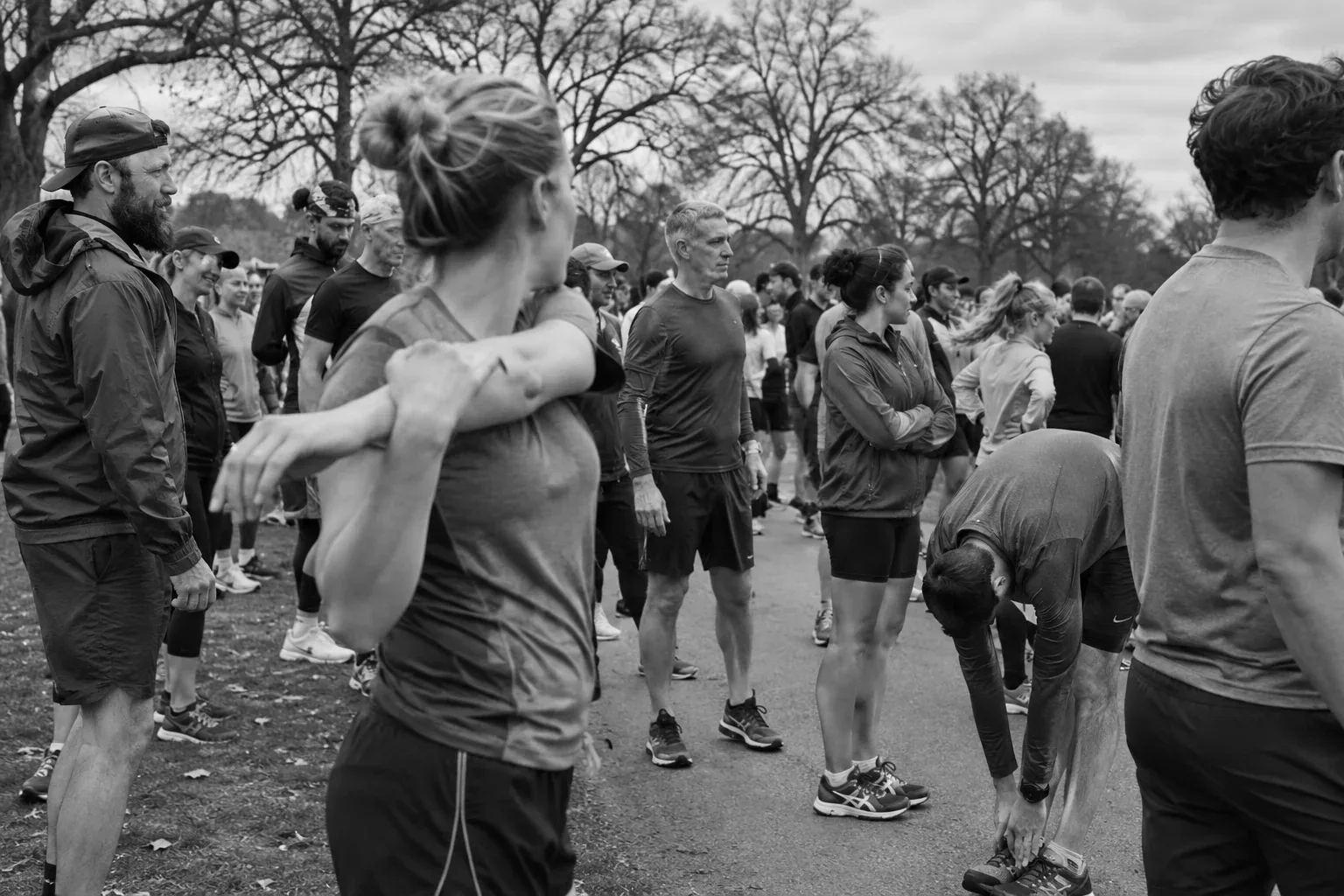
Start at your current 5K pace, not your hopeful one. A first kilometer run too fast is the most common way to lose a 5K.
Common 5K routine mistakes
- Every run is hard. It feels productive and leaves the key session flat. Easy days should feel almost too easy.
- Two or three speed sessions a week. More hard days means more tired legs, not more speed. One is enough for most runners.
- Paces set from the goal time. Training at a pace you cannot run yet turns every session into a race. Use your current time.
- Moving days around every week. A routine that changes every Monday gets skipped. Fixed days get run.
- Racing the longer run. It is an easy run that happens to be longer. Run it at easy pace.
When the routine breaks
The schedule above works on paper. Then week 5 arrives with a cold, a late meeting eats Tuesday, or the race moves. A fixed 8-week table cannot answer the real question: which runs do you keep, and where does the plan go from here?

That is the wall: the plan does not move when your week does. It matters even more once the 5K becomes a step toward something longer, which is where many runners take it next. You can put your 5K time into the race time predictor to see what it points to over 21.1 km (13.1 mi), then build a half marathon training plan around it.
That is the part Raceblock handles. Build your free plan for your race date. On the Coach plan, next week re-plans itself when you miss a run.
Free training plan
Build your free plan for your race date.
Pick your race and race date. Every week from today to race day is planned for you, with distances in km and miles.
The routine in one line
Three or four runs on fixed days, one key session, everything else easy, two short strength sessions and real rest. Repeat it for 6 to 8 weeks and the 5 km (3.1 mi) race becomes the last run of a routine instead of a test.
If you are curious how your result compares, the average 5K time by age puts it in context. And when the 5K is done and you want a bigger goal, build a free plan for your race date and let next week follow the week you actually ran.
Sources: the Couch to 5K structure from the NHS; the 80% low-intensity finding from Seiler (2010), International Journal of Sports Physiology and Performance; strength guidance from the NHS physical activity guidelines for adults. Paces on this page are computed from the 5K times shown.
Frequently asked questions
Three or four. Three runs a week, with one key session, is enough for a first 5K. Add a fourth easy run once you have raced the distance and want to run it better. Keep at least two rest days either way.
Six to eight weeks if you can already run 5 km (3.1 mi) without stopping. If you cannot yet, spend about 9 weeks building up with run and walk intervals first, then start the routine.
It is a 9-week program of three runs a week with a rest day between each. You start by alternating short bursts of running with walking, and the running parts grow each week until you can run for 30 minutes without stopping.
It means about 80% of your training is at an easy, conversational effort and the rest is harder. It comes from studies of how endurance athletes train. In a 3-run 5K week, that is one key session and two easy runs.
It depends on your age, sex and how long you have been running, so the useful comparison is with runners like you. The average 5K time by age guide linked above breaks it down. For training, what matters is your own current time, because that sets your paces.
Free training plan
Build your free plan for your race date.
On the Coach plan, next week re-plans itself when you miss a run.
Share article
About the author
More running training guides

Running basics · 12 min
What Is a Recovery Run? Pace, Length and When to Skip It
A recovery run is a short, very easy run you do the day after a long run or hard session. Here is how slow to run it, how long, how it differs from an easy run and a rest day, where it fits in a half or marathon week, and when to skip it.

Running basics · 10 min
10K Beginner Training Schedule: 10 Weeks From Run-Walk
A 10k beginner training schedule for runners starting from run-walk: 10 weeks, three timed sessions a week, a long session that grows to about 70 minutes, the paces behind common finish times and how to adjust the plan to your week.

Running basics · 11 min
10K Training Routine: 3 Runs a Week for 8 Weeks
A 10k training routine is three runs a week on fixed days: one easy run, one faster session and a long run that builds to the full 10 km (6.2 mi) at an easy pace. Here is the weekly layout, the 8-week schedule, the paces and the mistakes that break it.

Running basics · 11 min
Interval Training Plan for Running: 8 Weeks With Paces
A simple 8-week interval training plan for running: one session a week at 5 km to 10 km effort, with paces per km and per mile, jog recoveries, a sample week and how to adjust it for a half marathon, a marathon or a comeback.

Running basics · 10 min
Running in the Heat: 9 Tips to Train Safely All Summer
Running in the heat tips that work: run early, run by effort instead of pace, drink and add salt on long runs, adapt over two weeks, and know the warning signs that mean stop.

Running basics · 11 min
Side Stitch When Running: What Causes It and How to Stop It
A side stitch when running is a sharp pain under the ribs that eases when you slow down. How to get rid of one mid-run in five steps, what causes it, and the four habits that prevent the next one, starting with what you eat 2 hours before.