
Marathon Pace Chart: Every Goal Time, km and Mile Splits
Raceblock team Updated November 10, 2026 11 min read
Free marathon plan for your race date
Free marathon plan for your race date
Build my free planIn this article
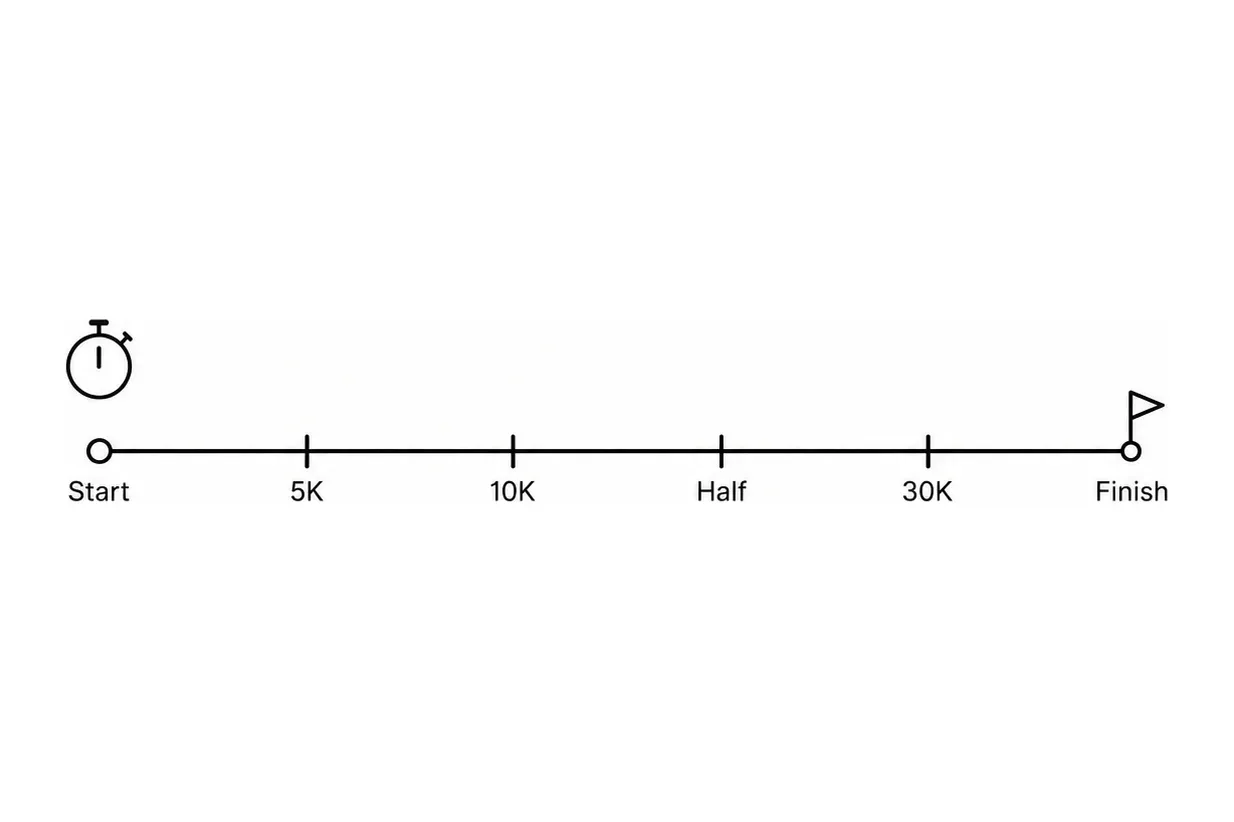
A 4:00:00 marathon means running 5:41 per km (9:09 per mile) for 42.2 km (26.2 mi), which puts you at halfway in 2:00:00 and at 30K (18.6 mi) in 2:50:38. The calculator and the marathon pace chart below cover every goal from 2:30 to 7:00 in 5-minute steps, with pace per km and per mile and the clock time you should see at 5K, 10K, halfway and 30K.
The chart is the easy part. The hard part is the first 5 km (3.1 mi), where goal pace feels slow and almost everyone runs too fast. So this guide spends as much time on how to use the numbers on race day as on the numbers themselves.
Marathon pace calculator and split calculator
Type a goal finish time to get a split for every kilometer and every mile, your halfway time and a pace band you can print. The math runs in your browser, nothing you type is sent anywhere, and it works without an account.
Marathon pace calculator
Splits for a 4:00:00 marathon, even pace
- Average pace per km
- 5:41 /km
- Average pace per mile
- 9:09 /mi
- Halfway
- 2:00:00
- Second half
- 2:00:00
Kilometer splits
| km | mi | Split | Elapsed |
|---|---|---|---|
| 1 | 0.6 | 5:41 | 5:41 |
| 2 | 1.2 | 5:41 | 11:23 |
| 3 | 1.9 | 5:41 | 17:04 |
| 4 | 2.5 | 5:41 | 22:45 |
| 5 | 3.1 | 5:41 | 28:26 |
| 6 | 3.7 | 5:41 | 34:08 |
| 7 | 4.3 | 5:41 | 39:49 |
| 8 | 5 | 5:41 | 45:30 |
| 9 | 5.6 | 5:41 | 51:11 |
| 10 | 6.2 | 5:41 | 56:53 |
| 11 | 6.8 | 5:41 | 1:02:34 |
| 12 | 7.5 | 5:41 | 1:08:15 |
| 13 | 8.1 | 5:41 | 1:13:57 |
| 14 | 8.7 | 5:41 | 1:19:38 |
| 15 | 9.3 | 5:41 | 1:25:19 |
| 16 | 9.9 | 5:41 | 1:31:00 |
| 17 | 10.6 | 5:41 | 1:36:42 |
| 18 | 11.2 | 5:41 | 1:42:23 |
| 19 | 11.8 | 5:41 | 1:48:04 |
| 20 | 12.4 | 5:41 | 1:53:45 |
| 21 | 13 | 5:41 | 1:59:27 |
| 22 | 13.7 | 5:41 | 2:05:08 |
| 23 | 14.3 | 5:41 | 2:10:49 |
| 24 | 14.9 | 5:41 | 2:16:31 |
| 25 | 15.5 | 5:41 | 2:22:12 |
| 26 | 16.2 | 5:41 | 2:27:53 |
| 27 | 16.8 | 5:41 | 2:33:34 |
| 28 | 17.4 | 5:41 | 2:39:16 |
| 29 | 18 | 5:41 | 2:44:57 |
| 30 | 18.6 | 5:41 | 2:50:38 |
| 31 | 19.3 | 5:41 | 2:56:19 |
| 32 | 19.9 | 5:41 | 3:02:01 |
| 33 | 20.5 | 5:41 | 3:07:42 |
| 34 | 21.1 | 5:41 | 3:13:23 |
| 35 | 21.7 | 5:41 | 3:19:05 |
| 36 | 22.4 | 5:41 | 3:24:46 |
| 37 | 23 | 5:41 | 3:30:27 |
| 38 | 23.6 | 5:41 | 3:36:08 |
| 39 | 24.2 | 5:41 | 3:41:50 |
| 40 | 24.9 | 5:41 | 3:47:31 |
| 41 | 25.5 | 5:41 | 3:53:12 |
| 42 | 26.1 | 5:41 | 3:58:53 |
| 42.2 | 26.2 | 1:07 | 4:00:00 |
Mile splits
| Mile | km | Split | Elapsed |
|---|---|---|---|
| 1 | 1.6 | 9:09 | 9:09 |
| 2 | 3.2 | 9:09 | 18:18 |
| 3 | 4.8 | 9:09 | 27:28 |
| 4 | 6.4 | 9:09 | 36:37 |
| 5 | 8 | 9:09 | 45:46 |
| 6 | 9.7 | 9:09 | 54:55 |
| 7 | 11.3 | 9:09 | 1:04:05 |
| 8 | 12.9 | 9:09 | 1:13:14 |
| 9 | 14.5 | 9:09 | 1:22:23 |
| 10 | 16.1 | 9:09 | 1:31:32 |
| 11 | 17.7 | 9:09 | 1:40:41 |
| 12 | 19.3 | 9:09 | 1:49:51 |
| 13 | 20.9 | 9:09 | 1:59:00 |
| 14 | 22.5 | 9:09 | 2:08:09 |
| 15 | 24.1 | 9:09 | 2:17:18 |
| 16 | 25.7 | 9:09 | 2:26:28 |
| 17 | 27.4 | 9:09 | 2:35:37 |
| 18 | 29 | 9:09 | 2:44:46 |
| 19 | 30.6 | 9:09 | 2:53:55 |
| 20 | 32.2 | 9:09 | 3:03:05 |
| 21 | 33.8 | 9:09 | 3:12:14 |
| 22 | 35.4 | 9:09 | 3:21:23 |
| 23 | 37 | 9:09 | 3:30:32 |
| 24 | 38.6 | 9:09 | 3:39:41 |
| 25 | 40.2 | 9:09 | 3:48:51 |
| 26 | 41.8 | 9:09 | 3:58:00 |
| 26.2 | 42.2 | 2:00 | 4:00:00 |
4:00:00 marathon · even pace
- 5 km28:26
- 10 km56:53
- 15 km1:25:19
- 20 km1:53:45
- 25 km2:22:12
- 30 km2:50:38
- 35 km3:19:05
- 40 km3:47:31
- 42.2 km4:00:00
Raceblock pace band · myraceblock.com
Even pacing holds one speed from the start line to the finish. The negative split option runs the first half 1% slower than average and the second half 1% faster, so a 4:00:00 goal passes halfway in 2:01:12 and runs the second half in 1:58:48. Both versions stop the clock at the same time, which also makes this a marathon finish time calculator: change the goal until the pace feels right and read the finish.
Marathon pace chart from 2:30 to 7:00
Find your goal time in the first column, then read across for the average pace per kilometer and per mile and the clock time you should see at each checkpoint if you run even splits. Every row is the goal time divided by 42.195 km (26.2 mi), the official distance on the World Athletics marathon page, so there is no rounding drift from one row to the next. If your training plan is written in the other unit, a pace conversion chart for km and miles translates any training pace, not just race pace.
Marathon pace chart
| Goal time | Pace per km | Pace per mile | 5K 5 km (3.1 mi) | 10K 10 km (6.2 mi) | Halfway 21.1 km (13.1 mi) | 30K 30 km (18.6 mi) |
|---|---|---|---|---|---|---|
| 2:30:00 | 3:33 /km | 5:43 /mi | 17:46 | 35:33 | 1:15:00 | 1:46:39 |
| 2:35:00 | 3:40 /km | 5:55 /mi | 18:22 | 36:44 | 1:17:30 | 1:50:12 |
| 2:40:00 | 3:48 /km | 6:06 /mi | 18:58 | 37:55 | 1:20:00 | 1:53:45 |
| 2:45:00 | 3:55 /km | 6:18 /mi | 19:33 | 39:06 | 1:22:30 | 1:57:19 |
| 2:50:00 | 4:02 /km | 6:29 /mi | 20:09 | 40:17 | 1:25:00 | 2:00:52 |
| 2:55:00 | 4:09 /km | 6:40 /mi | 20:44 | 41:28 | 1:27:30 | 2:04:25 |
| 3:00:00 | 4:16 /km | 6:52 /mi | 21:20 | 42:40 | 1:30:00 | 2:07:59 |
| 3:05:00 | 4:23 /km | 7:03 /mi | 21:55 | 43:51 | 1:32:30 | 2:11:32 |
| 3:10:00 | 4:30 /km | 7:15 /mi | 22:31 | 45:02 | 1:35:00 | 2:15:05 |
| 3:15:00 | 4:37 /km | 7:26 /mi | 23:06 | 46:13 | 1:37:30 | 2:18:39 |
| 3:20:00 | 4:44 /km | 7:38 /mi | 23:42 | 47:24 | 1:40:00 | 2:22:12 |
| 3:25:00 | 4:52 /km | 7:49 /mi | 24:18 | 48:35 | 1:42:30 | 2:25:45 |
| 3:30:00 | 4:59 /km | 8:01 /mi | 24:53 | 49:46 | 1:45:00 | 2:29:18 |
| 3:35:00 | 5:06 /km | 8:12 /mi | 25:29 | 50:57 | 1:47:30 | 2:32:52 |
| 3:40:00 | 5:13 /km | 8:23 /mi | 26:04 | 52:08 | 1:50:00 | 2:36:25 |
| 3:45:00 | 5:20 /km | 8:35 /mi | 26:40 | 53:19 | 1:52:30 | 2:39:58 |
| 3:50:00 | 5:27 /km | 8:46 /mi | 27:15 | 54:31 | 1:55:00 | 2:43:32 |
| 3:55:00 | 5:34 /km | 8:58 /mi | 27:51 | 55:42 | 1:57:30 | 2:47:05 |
| 4:00:00 | 5:41 /km | 9:09 /mi | 28:26 | 56:53 | 2:00:00 | 2:50:38 |
| 4:05:00 | 5:48 /km | 9:21 /mi | 29:02 | 58:04 | 2:02:30 | 2:54:11 |
| 4:10:00 | 5:55 /km | 9:32 /mi | 29:37 | 59:15 | 2:05:00 | 2:57:45 |
| 4:15:00 | 6:03 /km | 9:44 /mi | 30:13 | 1:00:26 | 2:07:30 | 3:01:18 |
| 4:20:00 | 6:10 /km | 9:55 /mi | 30:49 | 1:01:37 | 2:10:00 | 3:04:51 |
| 4:25:00 | 6:17 /km | 10:06 /mi | 31:24 | 1:02:48 | 2:12:30 | 3:08:25 |
| 4:30:00 | 6:24 /km | 10:18 /mi | 32:00 | 1:03:59 | 2:15:00 | 3:11:58 |
| 4:35:00 | 6:31 /km | 10:29 /mi | 32:35 | 1:05:10 | 2:17:30 | 3:15:31 |
| 4:40:00 | 6:38 /km | 10:41 /mi | 33:11 | 1:06:22 | 2:20:00 | 3:19:05 |
| 4:45:00 | 6:45 /km | 10:52 /mi | 33:46 | 1:07:33 | 2:22:30 | 3:22:38 |
| 4:50:00 | 6:52 /km | 11:04 /mi | 34:22 | 1:08:44 | 2:25:00 | 3:26:11 |
| 4:55:00 | 6:59 /km | 11:15 /mi | 34:57 | 1:09:55 | 2:27:30 | 3:29:44 |
| 5:00:00 | 7:07 /km | 11:27 /mi | 35:33 | 1:11:06 | 2:30:00 | 3:33:18 |
| 5:05:00 | 7:14 /km | 11:38 /mi | 36:09 | 1:12:17 | 2:32:30 | 3:36:51 |
| 5:10:00 | 7:21 /km | 11:49 /mi | 36:44 | 1:13:28 | 2:35:00 | 3:40:24 |
| 5:15:00 | 7:28 /km | 12:01 /mi | 37:20 | 1:14:39 | 2:37:30 | 3:43:58 |
| 5:20:00 | 7:35 /km | 12:12 /mi | 37:55 | 1:15:50 | 2:40:00 | 3:47:31 |
| 5:25:00 | 7:42 /km | 12:24 /mi | 38:31 | 1:17:01 | 2:42:30 | 3:51:04 |
| 5:30:00 | 7:49 /km | 12:35 /mi | 39:06 | 1:18:12 | 2:45:00 | 3:54:37 |
| 5:35:00 | 7:56 /km | 12:47 /mi | 39:42 | 1:19:24 | 2:47:30 | 3:58:11 |
| 5:40:00 | 8:03 /km | 12:58 /mi | 40:17 | 1:20:35 | 2:50:00 | 4:01:44 |
| 5:45:00 | 8:11 /km | 13:10 /mi | 40:53 | 1:21:46 | 2:52:30 | 4:05:17 |
| 5:50:00 | 8:18 /km | 13:21 /mi | 41:28 | 1:22:57 | 2:55:00 | 4:08:51 |
| 5:55:00 | 8:25 /km | 13:32 /mi | 42:04 | 1:24:08 | 2:57:30 | 4:12:24 |
| 6:00:00 | 8:32 /km | 13:44 /mi | 42:40 | 1:25:19 | 3:00:00 | 4:15:57 |
| 6:05:00 | 8:39 /km | 13:55 /mi | 43:15 | 1:26:30 | 3:02:30 | 4:19:31 |
| 6:10:00 | 8:46 /km | 14:07 /mi | 43:51 | 1:27:41 | 3:05:00 | 4:23:04 |
| 6:15:00 | 8:53 /km | 14:18 /mi | 44:26 | 1:28:52 | 3:07:30 | 4:26:37 |
| 6:20:00 | 9:00 /km | 14:30 /mi | 45:02 | 1:30:03 | 3:10:00 | 4:30:10 |
| 6:25:00 | 9:07 /km | 14:41 /mi | 45:37 | 1:31:15 | 3:12:30 | 4:33:44 |
| 6:30:00 | 9:15 /km | 14:52 /mi | 46:13 | 1:32:26 | 3:15:00 | 4:37:17 |
| 6:35:00 | 9:22 /km | 15:04 /mi | 46:48 | 1:33:37 | 3:17:30 | 4:40:50 |
| 6:40:00 | 9:29 /km | 15:15 /mi | 47:24 | 1:34:48 | 3:20:00 | 4:44:24 |
| 6:45:00 | 9:36 /km | 15:27 /mi | 47:59 | 1:35:59 | 3:22:30 | 4:47:57 |
| 6:50:00 | 9:43 /km | 15:38 /mi | 48:35 | 1:37:10 | 3:25:00 | 4:51:30 |
| 6:55:00 | 9:50 /km | 15:50 /mi | 49:11 | 1:38:21 | 3:27:30 | 4:55:04 |
| 7:00:00 | 9:57 /km | 16:01 /mi | 49:46 | 1:39:32 | 3:30:00 | 4:58:37 |
What is a 4 hour marathon pace?
A 4 hour marathon pace is 5:41 per km (9:09 per mile). At an even pace you pass 10K (6.2 mi) in 56:53, halfway in 2:00:00 and 30K (18.6 mi) in 2:50:38, then cover the last 12.2 km (7.6 mi) in 1:09:22.
Here is the same math for the goals runners ask about most. The pace columns are what to practice in training; the checkpoint columns are what to look for on the course.
| Goal time | Pace per km | Pace per mile | 10K (6.2 mi) | Halfway | 30K (18.6 mi) |
|---|---|---|---|---|---|
| 3:00:00 | 4:16 /km | 6:52 /mi | 42:40 | 1:30:00 | 2:07:59 |
| 3:30:00 | 4:59 /km | 8:01 /mi | 49:46 | 1:45:00 | 2:29:18 |
| 4:00:00 | 5:41 /km | 9:09 /mi | 56:53 | 2:00:00 | 2:50:38 |
| 4:30:00 | 6:24 /km | 10:18 /mi | 1:03:59 | 2:15:00 | 3:11:58 |
| 5:00:00 | 7:07 /km | 11:27 /mi | 1:11:06 | 2:30:00 | 3:33:18 |
| 6:00:00 | 8:32 /km | 13:44 /mi | 1:25:19 | 3:00:00 | 4:15:57 |
Marathon pace is usually practiced in blocks inside long runs rather than as a whole run. The sub-4 marathon training plan shows how that goal-pace work fits into the weeks before a 4:00 race, and the same logic scales to any row above.
A goal pace is only useful if your training gets you ready to hold it. A sensible way to rehearse it: one block of 3 to 8 km (2 to 5 mi) at goal pace inside a long run every second week, building toward 13 to 16 km (8 to 10 mi) in the last month before the taper. General training guidance, not medical advice. Check with a doctor before increasing training if you have symptoms or a health condition.
Even pace or negative split?
For most runners the safest plan is even pace or a slight negative split. A fast first half spends energy you need after 30K (18.6 mi), and the cost shows up as a long slowdown rather than a few lost seconds.
The calculator's negative split option keeps the change small on purpose: 1% either side of average. For where to hold back, when to press and the long runs that train it, see our guide to what a negative split is in running.
| Goal time | Even pace | First half (1% slower) | Second half (1% faster) | Halfway clock time |
|---|---|---|---|---|
| 3:30:00 | 4:59 /km (8:01 /mi) | 5:02 /km (8:05 /mi) | 4:56 /km (7:56 /mi) | 1:46:03 |
| 4:00:00 | 5:41 /km (9:09 /mi) | 5:45 /km (9:15 /mi) | 5:38 /km (9:04 /mi) | 2:01:12 |
| 4:30:00 | 6:24 /km (10:18 /mi) | 6:28 /km (10:24 /mi) | 6:20 /km (10:12 /mi) | 2:16:21 |
| 5:00:00 | 7:07 /km (11:27 /mi) | 7:11 /km (11:33 /mi) | 7:02 /km (11:20 /mi) | 2:31:30 |
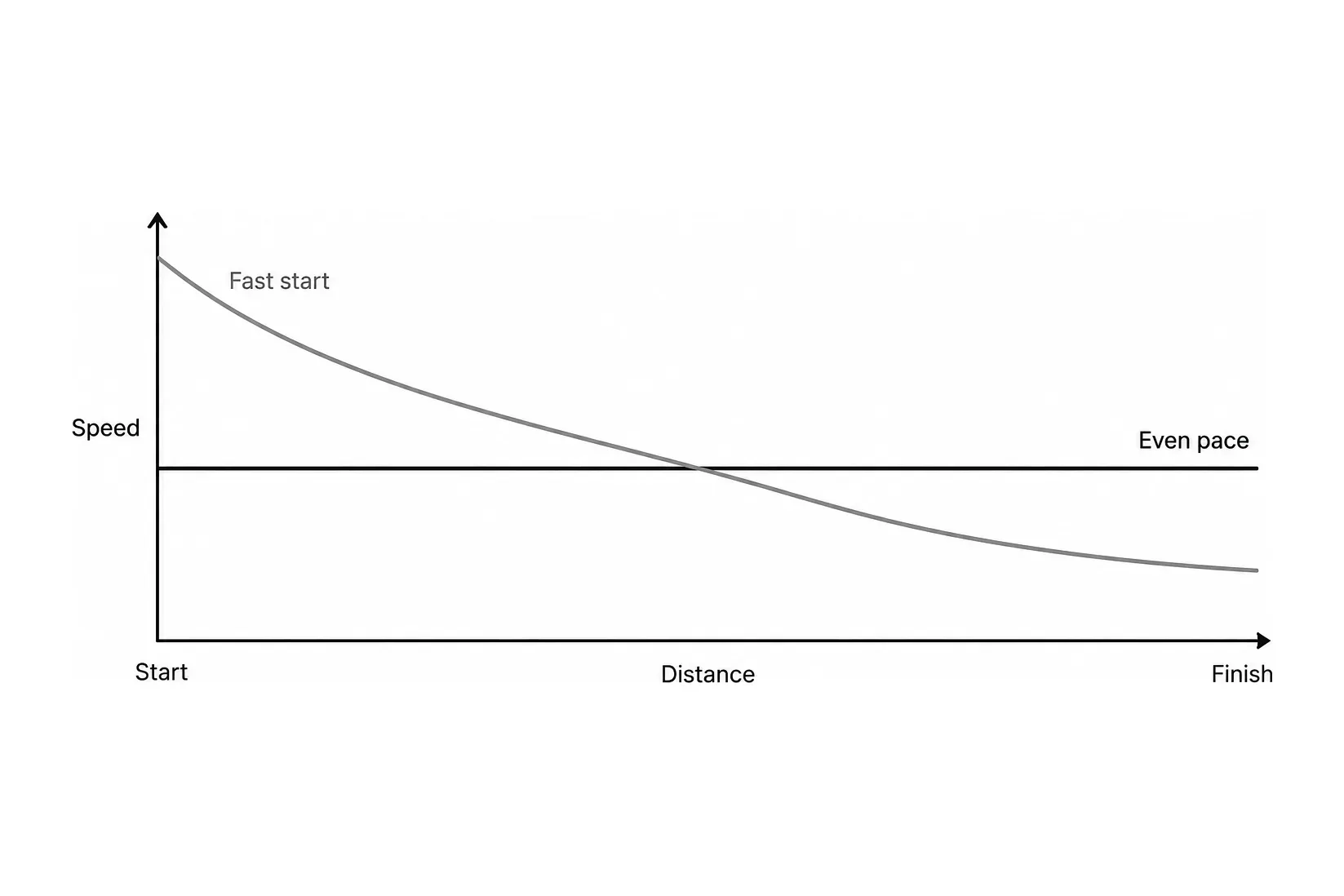
The 10-10-10 approach is a looser version of the same idea: the first 10 miles (16.1 km) a little easier than goal pace, the next 10 miles (16.1 km) at goal pace, then the last 10K (6.2 mi) with whatever is left. If you like it, set the calculator to negative split and use those checkpoint times.
How to use a pace chart on race day
Pick one goal before the start and write down three numbers from its row: your pace per km or per mile, your halfway time and your 30K (18.6 mi) time. Those three are enough to steer the whole race.
| Stretch | What usually goes wrong | What to check |
|---|---|---|
| Start to 5K (3.1 mi) | Crowds, nerves and fresh legs make goal pace feel easy | Arrive within about 30 seconds of your 5K time, slower rather than faster |
| 10K (6.2 mi) to halfway | Small surges to "bank time" | Each checkpoint against the band; ease off if you are well ahead |
| Halfway to 30K (18.6 mi) | Chasing a goal you are already more than a minute behind | Adjust the goal if needed; holding steady beats a chase |
| 30K to the finish | Pace drifts with hills, wind, heat and fueling | Form and effort first; use what is left once the finish is in sight |
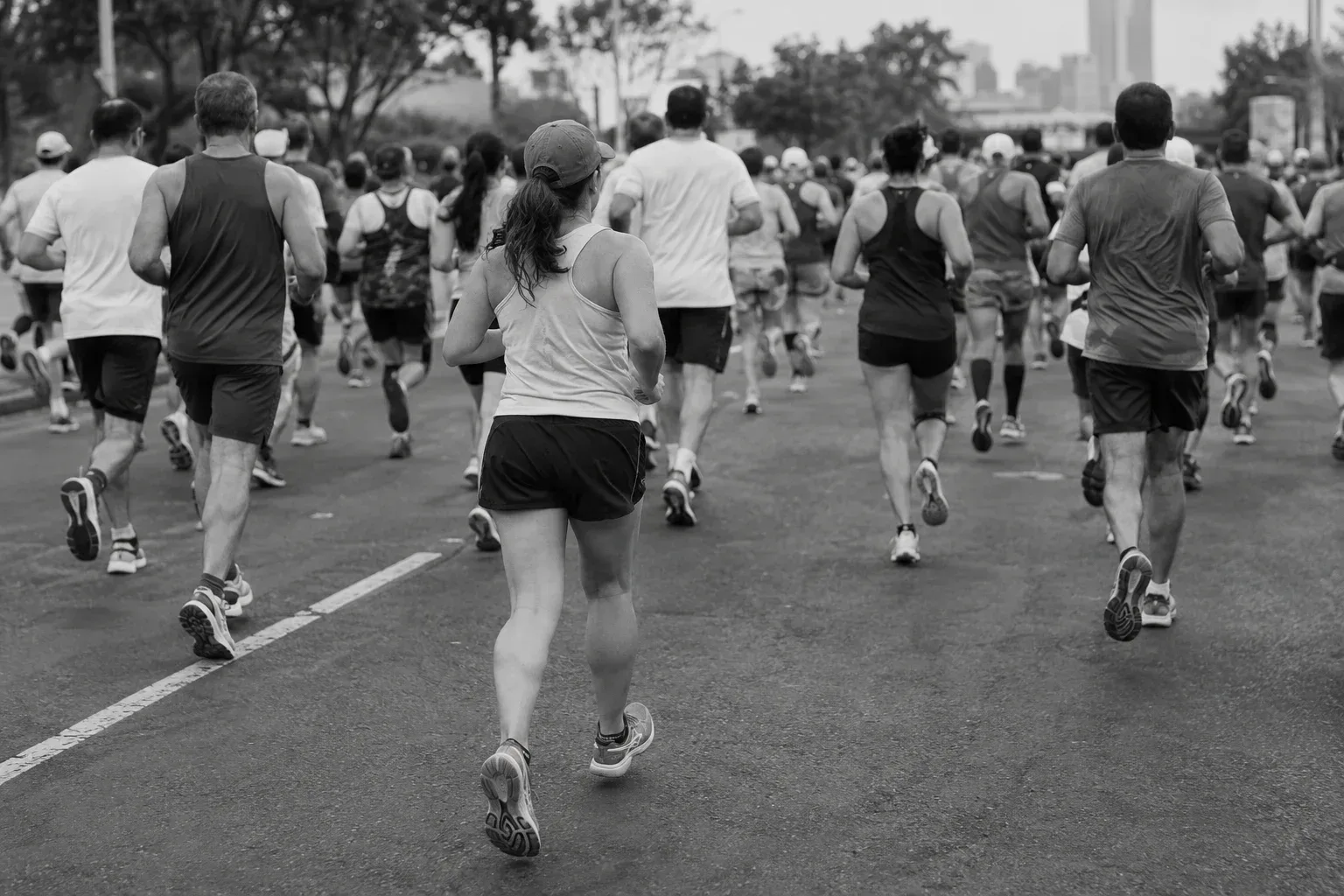
The first 5 km (3.1 mi) is where pacing plans come apart. Running a few seconds per km too fast feels like nothing in the first half hour. Trust your elapsed time at the markers over the live pace on your wrist, because watches drift under trees and between tall buildings, and course markers are not always placed exactly. Treat a few seconds either side of a checkpoint as normal and read the trend over two or three checkpoints rather than reacting to one.
From 10K (6.2 mi) to halfway, settle into the rhythm. If you are well ahead, ease off: a fast first half leaves less in the legs for the last 10K (6.2 mi). If you are more than a minute behind at halfway, that is information too.
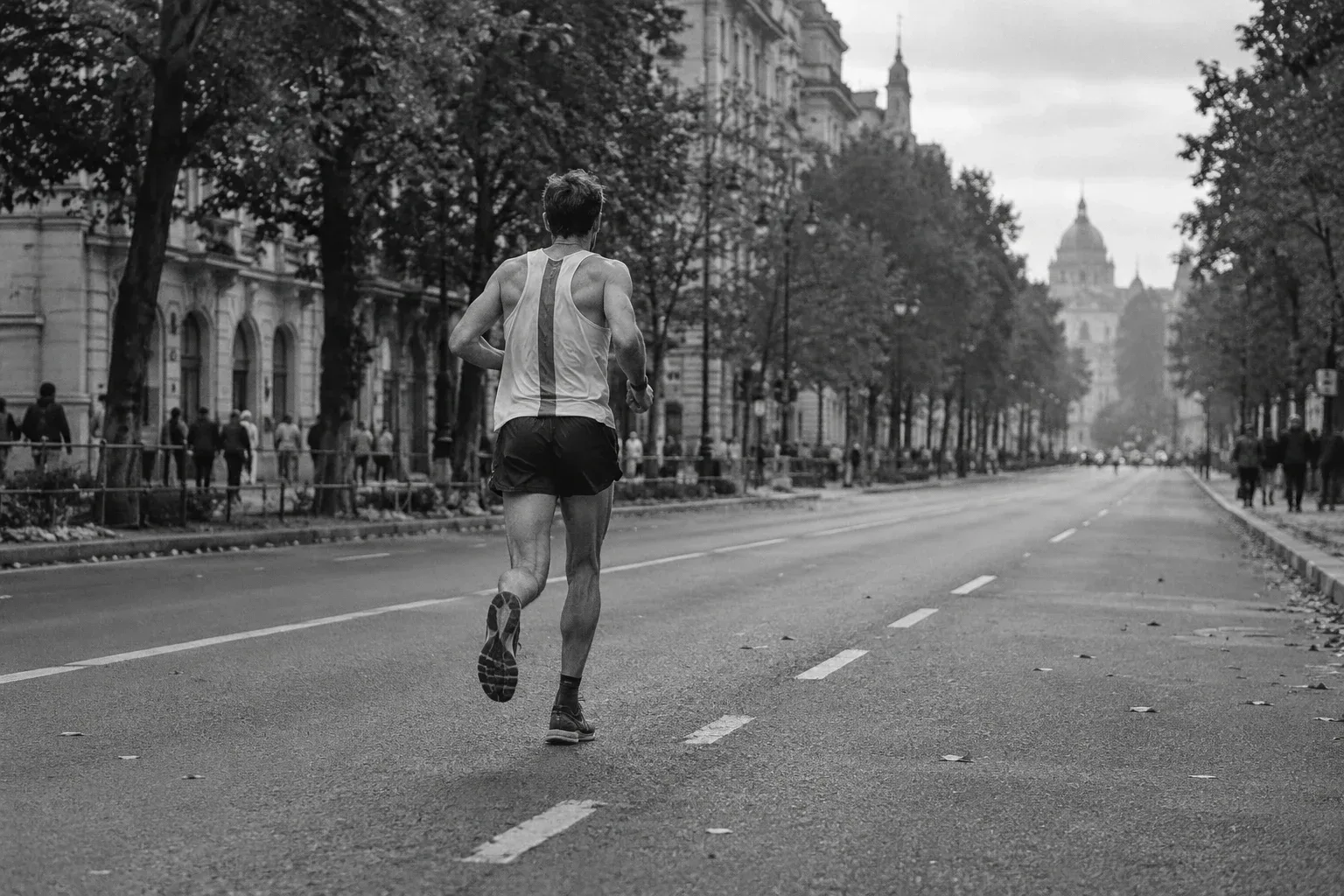
After 30K (18.6 mi), hills, wind, heat and fueling all change what a given effort produces. In the last 12 km (7.5 mi), hold your form and your effort, and treat the chart as a reference rather than a target. On a course with a downhill start and late climbs this matters even more, as our Boston Marathon training guide explains.
Marathon pace band you can print
A pace band is a strip of paper with the clock time you want at each checkpoint. It is the chart reduced to one row, sized for a wrist.
How to make a marathon pace band
- Enter your goal time
Type the goal finish time into the calculator above, for example 4:00:00.
- Pick your checkpoints and pacing
Choose 5 km or 5 mile checkpoints to match the markers on your course, then even pace or negative split.
- Check the times against the chart
Compare your halfway and 30K (18.6 mi) times with your row in the chart. They should match within a second.
- Print and cut out the band
Select Print pace band. The print layout keeps only the band, so you can cut it out and fold it into a pocket.
- Make it race proof
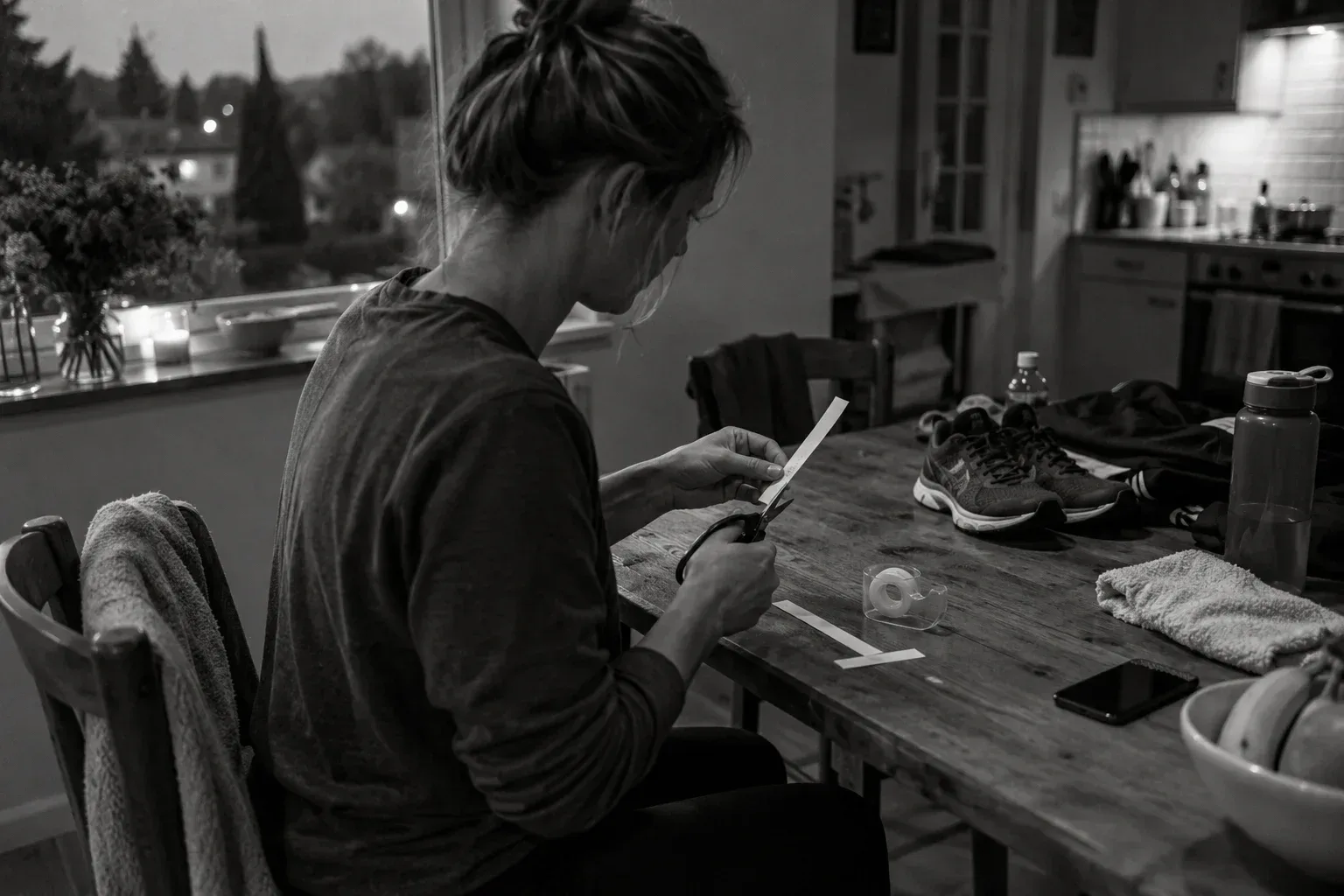
Wrap the band around your wrist and cover it with a layer of clear tape. Plain paper with tape survives a wet morning.
When the goal is right but the weeks aren't
Everything above works without Raceblock: the chart, the calculator, the band and the race-day rules are all free and complete. Where runners get stuck is earlier. A pace chart gives you the number; it does not give you the 16 weeks that make the number realistic, and a printed plan has the same flaw. It doesn't move when your week does. A missed long run in week 10, a cold in week 12 or a race date that shifts by a fortnight, and the plan keeps counting down as if nothing happened.
The fix is a plan that starts from your race date and your goal pace. Build your free plan for your race date. On the Coach plan, next week re-plans itself when you miss a run.
Free training plan
Build your free plan for your race date.
Pick your race and race date. Every week from today to race day is planned for you, with distances in km and miles.
If you are not sure your goal is realistic, test it first: the race time predictor turns a recent 5K, 10K or half result into an estimated marathon range, and you can then find that row in the chart. If you are choosing between apps, here is how Raceblock compares as a Runna alternative, and how Free and Coach compare.
Use this pace chart on your site
Run a club, a race site or a coaching page? You can embed the marathon pace chart and calculator with one snippet.
Use this marathon pace chart on your site
Copy the code to add the tool to a club site, race page or coaching blog. Keep the credit link so readers can find the full guide.
Embed code
<iframe src="https://myraceblock.com/embed/marathon-pace-chart" title="Marathon pace chart" width="100%" height="640" style="border:0" loading="lazy"></iframe> <p>Free <a href="https://myraceblock.com/blog/marathon-pace-chart">marathon pace chart</a> by Raceblock</p>Full guide: Marathon pace chart.
Pick one goal, write down your pace, halfway and 30K (18.6 mi) times, print the band and run the first 5 km (3.1 mi) slower than it feels like you should. That is most of marathon pacing.
For the training behind the number, start with the marathon training plan guide or the 16-week beginner marathon plan, and when race week arrives, the marathon taper guide covers the last 3 weeks. Running a half first? The half marathon pace chart works the same way. Or skip the spreadsheet and build your free plan for your race date with your goal pace already in it.
Frequently asked questions
It is 5:41 per km (9:09 per mile). Halfway comes at 2:00:00 and 30K (18.6 mi) at 2:50:38 at an even pace. With a 1% negative split, the first half takes 2:01:12 and the second 1:58:48.
There is no single standard. A respectable pace is one you can hold for the full 42.2 km (26.2 mi) after a sensible build. For a first marathon, finishing in good shape is a fine goal; a time goal works best when it comes from a recent race result turned into an estimated marathon range.
It splits the marathon into three parts: the first 10 miles (16.1 km) controlled and slightly easier than goal pace, the next 10 miles (16.1 km) at goal pace, and the final 10K (6.2 mi) with whatever you have left. It is a way to avoid starting too fast.
A 2:40:00 marathon is 3:48 per km (6:06 per mile). At an even pace you pass halfway in 1:20:00 and 30K (18.6 mi) in 1:53:45.
Enter your goal time in the calculator, choose 5 km or 5 mile checkpoints and even or negative pacing, then select Print pace band. The print layout shows only the band, so you can cut it out and wrap it around your wrist under clear tape.
Yes. Every result shows pace per km and per mile, with a full split table for each kilometer and each mile, so you can follow whichever markers your race uses.
Free training plan
Build your free plan for your race date.
On the Coach plan, next week re-plans itself when you miss a run.
Share article
About the author
More running training guides
Pacing and race day · 11 min
10K Running Pace Chart: Every Time From 35 to 75 Minutes
A 10K running pace chart for every finish time from 35:00 to 1:15:00: pace per km and per mile, 5 km halfway splits, 400 m laps, treadmill speeds, and what your 10K says about a half or marathon.
Pacing and race day · 10 min
How Long Does It Take to Run a Mile? Times by Age and Pace
Most people run a mile in 9 to 13 minutes at an easy pace and 6 to 8 minutes at race effort. See mile times by age, pace per km and how to get faster.
Pacing and race day · 9 min
How Long to Run a 10K: Finish Times, Miles and Training
A 10k run is 10 km (6.21 mi) and takes about 60 minutes at 6:00 /km (9:39 /mi). See finish times at every pace, how long to train for one and how to pace your first race.
Pacing and race day · 10 min
5K Running Pace Chart: Every Time From 15 to 45 Minutes
A 5K running pace chart for every finish time from 15:00 to 45:00: pace per km and per mile, 400 m lap times, treadmill speeds, and what your 5K says about a half or marathon.
Pacing and race day · 10 min
Average 5K Time by Age for Men and Women (20 to 80)
The average 5K time by age is about 22:41 for men and 27:19 for women in their 20s, slowing by about a minute every five years after 35. Here are the age tables, the race field median of 34:37, and how to find your own time.
Pacing and race day · 10 min
Running Pace Conversion Chart: Km, Mile and Treadmill
Convert any running pace between minutes per km and minutes per mile, and treadmill mph or km/h into pace, with marathon and half marathon finish times in the same charts.