
10 Week Half Marathon Training Plan: Week by Week
Raceblock team October 17, 2026 10 min read
Free half marathon plan for your race date

Free half marathon plan for your race date
Build my free planIn this article
This 10-week half marathon training plan uses four runs a week, building from 27.1 km (16.8 mi) to a peak of 37.6 km (23.4 mi) with a 16 km (9.9 mi) long run. It sits in the middle: more time than the 8-week block, and a bigger weekly total than the three-run 12-week plan.
It is labeled beginner, and the sessions are gentle: no tempo runs, no intervals, just easy running with a steady Thursday in three of the ten weeks. What makes it demanding is where it starts, not how hard it gets.
- Weeks
- 10
- Runs a week
- 4
- Peak week
- 37.6 km (23.4 mi)
- Longest run
- 16 km (9.9 mi)
- Taper
- 2 weeks
Is 10 weeks enough to train for a half marathon?
For a runner who already covers around 27 km (16.8 mi) a week over four runs, yes. The plan reaches a 16 km (9.9 mi) long run and still leaves 2 weeks to taper.
The catch is the starting point. Ten weeks is not the same as "ten weeks from zero". If your current week is closer to 20 km (12.4 mi), the 12-week beginner half marathon plan starts at 21.6 km (13.4 mi) on three runs, and the 16-week half marathon plan starts lower still at 18.5 km (11.5 mi).
Entry check: who the 10-week plan fits
Week one is 27.1 km (16.8 mi) over 4 runs, with an 11.5 km (7.1 mi) long run on Sunday. Put that next to what you ran last week.
| Your current running | Verdict | What to do |
|---|---|---|
| 4 runs a week, 25 to 30 km (15.5 to 18.6 mi) | Good fit | Start week one as written |
| 3 runs a week, about 20 km (12.4 mi) | Possible, but a jump in days | Compare with the 12-week plan, which keeps 3 runs |
| Already near 30 km (18.6 mi) with tempo runs | Fits, may feel easy | The 8-week half marathon plan adds tempo work |
| Under 15 km (9.3 mi) a week | Too big a jump | Start with the 16-week plan |
This version is set to the beginner level, so the harder sessions are steady runs rather than tempo or intervals, and the first two weeks are all easy running. Four runs that add up to 27.1 km (16.8 mi) is still a real week of running.
10 week half marathon training plan for beginners
A beginner label describes the session type, not a universal starting point. Here the first long run is 11.5 km (7.1 mi) and the plan needs 4 days a week for running. Write those commitments into a normal working week before choosing it. If the fourth day keeps falling off, the three-run 12-week plan is the honest pick.
The 10-week half marathon schedule
Paces are worked out from a sample 29:00 time over 5 km (3.1 mi). Every distance is in km and miles, every pace per km and per mile, and lighter weeks are marked under the week number. Use the print button for a PDF.
10-week half marathon training plan
Every distance is in km and miles; every pace is per km and per mile. Lighter weeks are marked under the week number.
| Week | Mon | Tue | Wed | Thu | Fri | Sat | Sun | Total |
|---|---|---|---|---|---|---|---|---|
| Week 1Base | MonEasy5.2 km (3.2 mi)7:15 to 7:50 /km (11:40 to 12:36 /mi) | TueEasy5.2 km (3.2 mi)7:15 to 7:50 /km (11:40 to 12:36 /mi) | WedRest | ThuEasy5.2 km (3.2 mi)7:15 to 7:50 /km (11:40 to 12:36 /mi) | FriRest | SatRest | SunLong11.5 km (7.1 mi)7:15 to 7:50 /km (11:40 to 12:36 /mi) | Week total27.1 km (16.8 mi) |
| Week 2Base | MonEasy5.7 km (3.5 mi)7:15 to 7:50 /km (11:40 to 12:36 /mi) | TueEasy5.6 km (3.5 mi)7:15 to 7:50 /km (11:40 to 12:36 /mi) | WedRest | ThuEasy5.6 km (3.5 mi)7:15 to 7:50 /km (11:40 to 12:36 /mi) | FriRest | SatRest | SunLong12.6 km (7.8 mi)7:15 to 7:50 /km (11:40 to 12:36 /mi) | Week total29.5 km (18.3 mi) |
| Week 3Build | MonEasy6.2 km (3.9 mi)7:15 to 7:50 /km (11:40 to 12:36 /mi) | TueEasy6.2 km (3.9 mi)7:15 to 7:50 /km (11:40 to 12:36 /mi) | WedRest | ThuSteady6.1 km (3.8 mi)6:23 to 6:40 /km (10:16 to 10:44 /mi) | FriRest | SatRest | SunLong13.7 km (8.5 mi)7:15 to 7:50 /km (11:40 to 12:36 /mi) | Week total32.2 km (20 mi) |
| Week 4Build, lighter week | MonEasy5.6 km (3.5 mi)7:15 to 7:50 /km (11:40 to 12:36 /mi) | TueEasy5.6 km (3.5 mi)7:15 to 7:50 /km (11:40 to 12:36 /mi) | WedRest | ThuEasy5.5 km (3.4 mi)7:15 to 7:50 /km (11:40 to 12:36 /mi) | FriRest | SatRest | SunLong12.3 km (7.6 mi)7:15 to 7:50 /km (11:40 to 12:36 /mi) | Week total29 km (18 mi) |
| Week 5Build | MonEasy6.1 km (3.8 mi)7:15 to 7:50 /km (11:40 to 12:36 /mi) | TueEasy6.1 km (3.8 mi)7:15 to 7:50 /km (11:40 to 12:36 /mi) | WedRest | ThuEasy6 km (3.7 mi)7:15 to 7:50 /km (11:40 to 12:36 /mi) | FriRest | SatRest | SunLong13.4 km (8.3 mi)7:15 to 7:50 /km (11:40 to 12:36 /mi) | Week total31.6 km (19.6 mi) |
| Week 6Build | MonEasy6.6 km (4.1 mi)7:15 to 7:50 /km (11:40 to 12:36 /mi) | TueEasy6.6 km (4.1 mi)7:15 to 7:50 /km (11:40 to 12:36 /mi) | WedRest | ThuSteady6.6 km (4.1 mi)6:23 to 6:40 /km (10:16 to 10:44 /mi) | FriRest | SatRest | SunLong14.6 km (9.1 mi)7:15 to 7:50 /km (11:40 to 12:36 /mi) | Week total34.4 km (21.4 mi) |
| Week 7Peak | MonEasy7.2 km (4.5 mi)7:15 to 7:50 /km (11:40 to 12:36 /mi) | TueEasy7.2 km (4.5 mi)7:15 to 7:50 /km (11:40 to 12:36 /mi) | WedRest | ThuSteady7.2 km (4.5 mi)6:23 to 6:40 /km (10:16 to 10:44 /mi) | FriRest | SatRest | SunLong16 km (9.9 mi)7:15 to 7:50 /km (11:40 to 12:36 /mi) | Week total37.6 km (23.4 mi) |
| Week 8Peak, lighter week | MonEasy6.5 km (4 mi)7:15 to 7:50 /km (11:40 to 12:36 /mi) | TueEasy6.5 km (4 mi)7:15 to 7:50 /km (11:40 to 12:36 /mi) | WedRest | ThuEasy6.4 km (4 mi)7:15 to 7:50 /km (11:40 to 12:36 /mi) | FriRest | SatRest | SunLong14.4 km (8.9 mi)7:15 to 7:50 /km (11:40 to 12:36 /mi) | Week total33.8 km (21 mi) |
| Week 9Taper | MonEasy4.9 km (3 mi)7:15 to 7:50 /km (11:40 to 12:36 /mi) | TueEasy4.8 km (3 mi)7:15 to 7:50 /km (11:40 to 12:36 /mi) | WedRest | ThuEasy4.8 km (3 mi)7:15 to 7:50 /km (11:40 to 12:36 /mi) | FriRest | SatRest | SunLong10.8 km (6.7 mi)7:15 to 7:50 /km (11:40 to 12:36 /mi) | Week total25.3 km (15.7 mi) |
| Week 10Taper, race week | MonEasy3.7 km (2.3 mi)7:15 to 7:50 /km (11:40 to 12:36 /mi) | TueEasy3.6 km (2.2 mi)7:15 to 7:50 /km (11:40 to 12:36 /mi) | WedRest | ThuEasy3.6 km (2.2 mi)7:15 to 7:50 /km (11:40 to 12:36 /mi) | FriRest | SatRest | SunLong8.1 km (5 mi)7:15 to 7:50 /km (11:40 to 12:36 /mi) | Week total19 km (11.8 mi) |
Race week. Keep the final week light. Start conservatively and adjust to conditions. Goal pace is a target, not a promised finish time.
- Easy
- Build aerobic endurance at a conversational effort.
- Rest
- Absorb training and recover for the next session.
- Long
- Build time on your feet without racing the session.
- Steady
- Practice controlled quality with easy warm-up and cooldown.
General training guidance, not medical advice. Check with a doctor before increasing training if you have symptoms or a health condition.
General training guidance, not medical advice. Check with a doctor before increasing training if you have symptoms or a health condition.
The weekly layout
Easy runs fall on Monday and Tuesday, Wednesday is rest, Thursday is easy or steady, Friday and Saturday are rest, and Sunday is the long run.
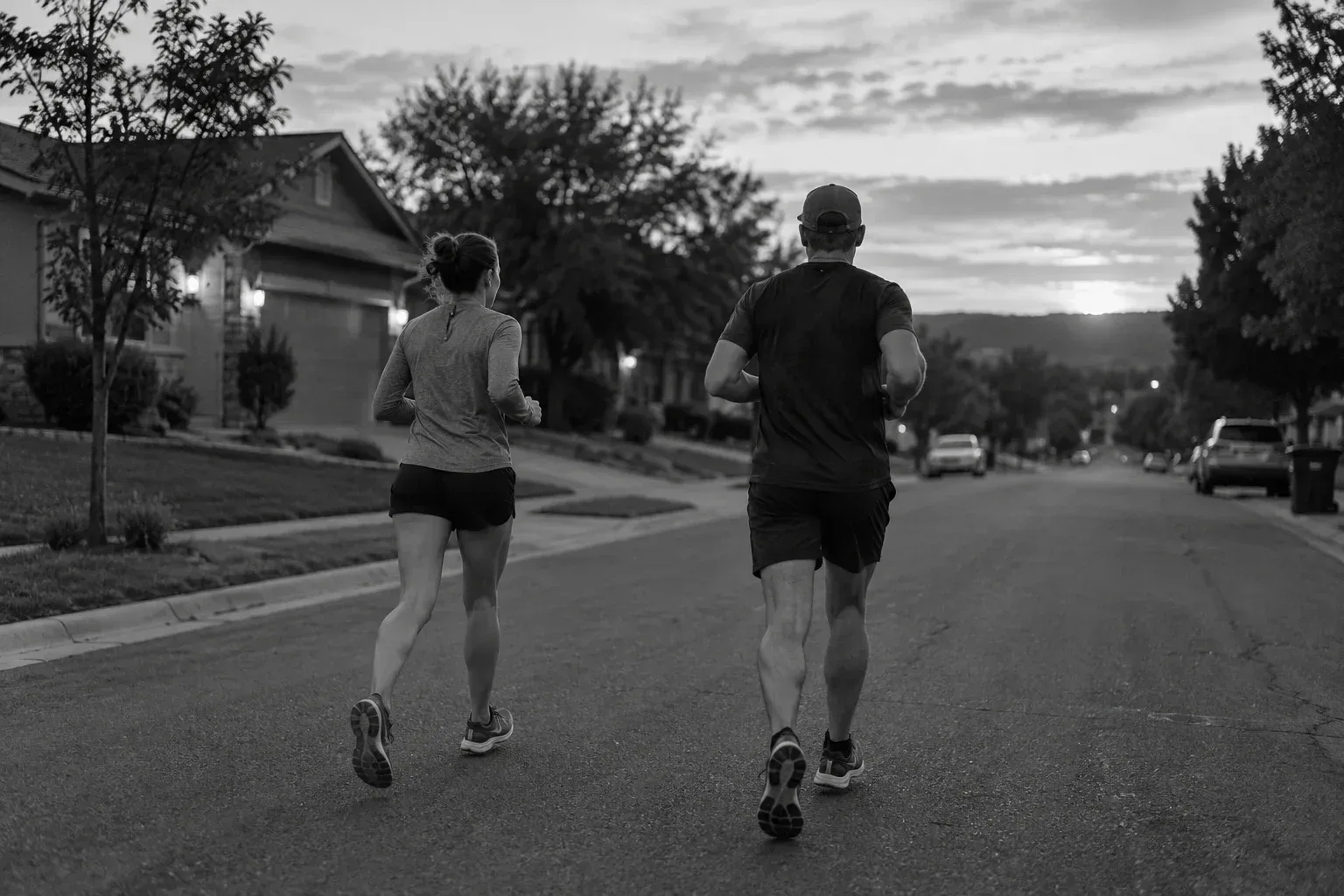
Monday and Tuesday are back-to-back easy days. If that does not suit you, move Monday to Wednesday and keep Thursday as the steadier run. What matters more than the exact day is keeping the long run and the steady run apart, with at least one easy or rest day between them.
| Day | Base weeks (1 to 2) | Build and peak weeks (3 to 8) | Taper weeks (9 to 10) |
|---|---|---|---|
| Monday | Easy | Easy | Easy, shorter |
| Tuesday | Easy | Easy | Easy, shorter |
| Wednesday | Rest | Rest | Rest |
| Thursday | Easy | Steady in weeks 3, 6 and 7, easy otherwise | Easy |
| Friday and Saturday | Rest | Rest | Rest |
| Sunday | Long, 11.5 to 12.6 km (7.1 to 7.8 mi) | Long, 12.3 to 16 km (7.6 to 9.9 mi) | Long, 10.8 then 8.1 km (6.7 then 5 mi) |

You can move the long run to Saturday. The builder lets you pick Saturday or Sunday and moves the rest of the week around it. After changing the day, read the whole generated week, including the rest cells, before you run it.
How the 10 weeks build
- Base weeks 1 to 2
- Build weeks 3 to 6
- Peak weeks 7 to 8
- Taper weeks 9 to 10
- Lighter weeks 4 and 8
- Base, weeks 1 to 2. All easy: 27.1 km (16.8 mi), then 29.5 km (18.3 mi). Check that the opening load fits your current training.
- Build, weeks 3 to 6. The first steady Thursday arrives in week 3. Week 4 drops back to 29 km (18 mi). Weeks 5 and 6 climb to 34.4 km (21.4 mi) with a 14.6 km (9.1 mi) long run.
- Peak, weeks 7 to 8. Week 7 is the biggest week, 37.6 km (23.4 mi), with the longest run of the plan, 16 km (9.9 mi). Week 8 is a lighter peak week at 33.8 km (21 mi).
- Taper, weeks 9 to 10. 25.3 km (15.7 mi), then a race week of 19 km (11.8 mi).
| Week 1 | Peak, week 7 | Race week, week 10 | |
|---|---|---|---|
| Weekly distance | 27.1 km (16.8 mi) | 37.6 km (23.4 mi) | 19 km (11.8 mi) |
| Long run | 11.5 km (7.1 mi) | 16 km (9.9 mi) | 8.1 km (5 mi) on the schedule |
| Thursday | Easy 5.2 km (3.2 mi) | Steady 7.2 km (4.5 mi) | Easy 3.6 km (2.2 mi) |
| Share of peak week | 72% | 100% | 51% |
Two lighter weeks in ten is a deliberate choice. Week 8 sits right after the peak, so you go into the taper already a little fresher. The whole block adds up to 299.5 km (186.1 mi), but that total says nothing about how any single week fits your diary. Read the week, not the sum.
Steady runs and easy runs
For the sample 29:00 time over 5 km (3.1 mi), steady runs sit at 6:23 to 6:40 /km (10:16 to 10:44 /mi) and easy runs at 7:15 to 7:50 /km (11:40 to 12:36 /mi).
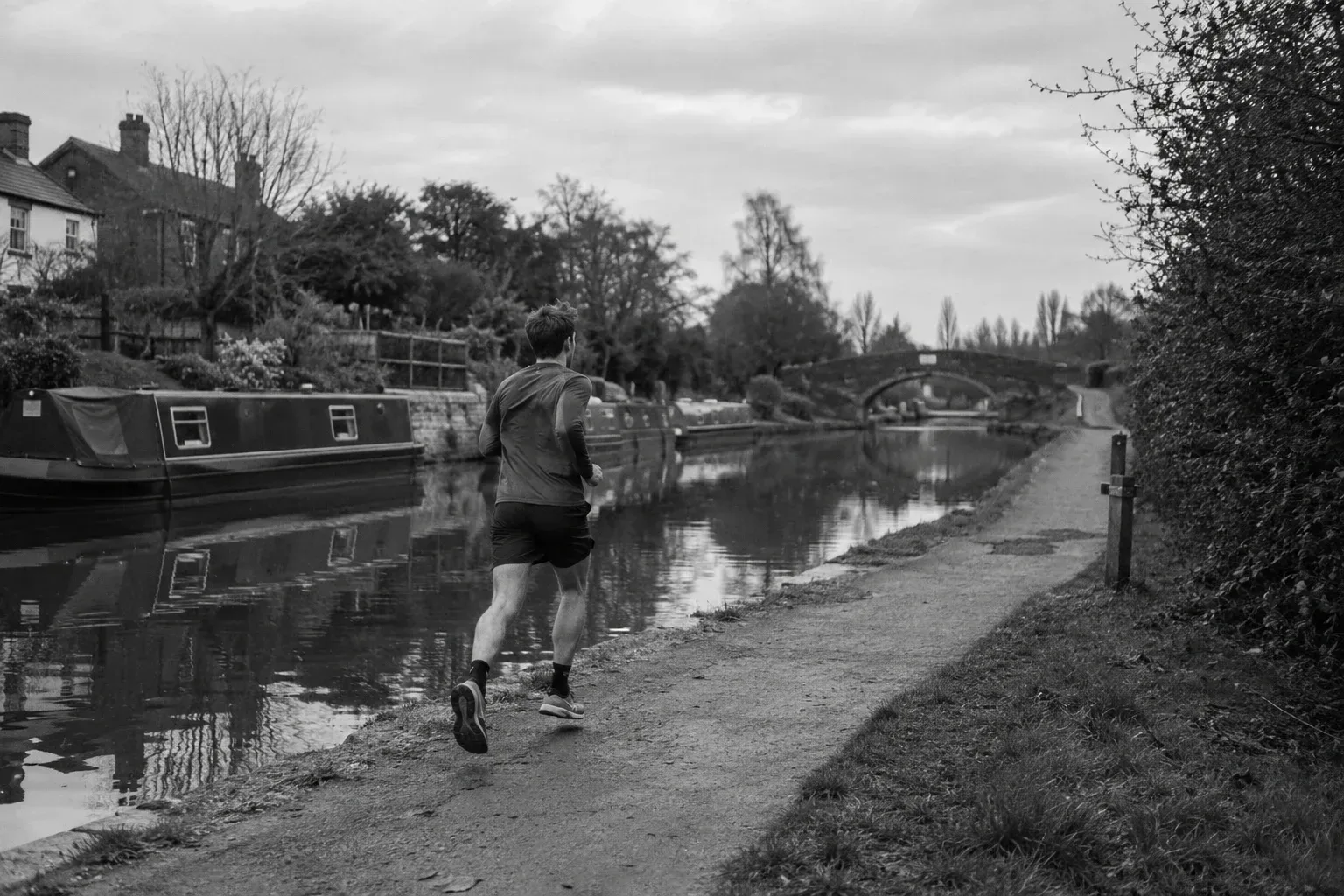
Steady feels purposeful but relaxed. Easy should feel like you could keep going and still talk. Of the 40 runs in this plan, only 3 are steady; the other 37 are easy or long. That is about 92% easy by session count, and it is the reason the plan works.
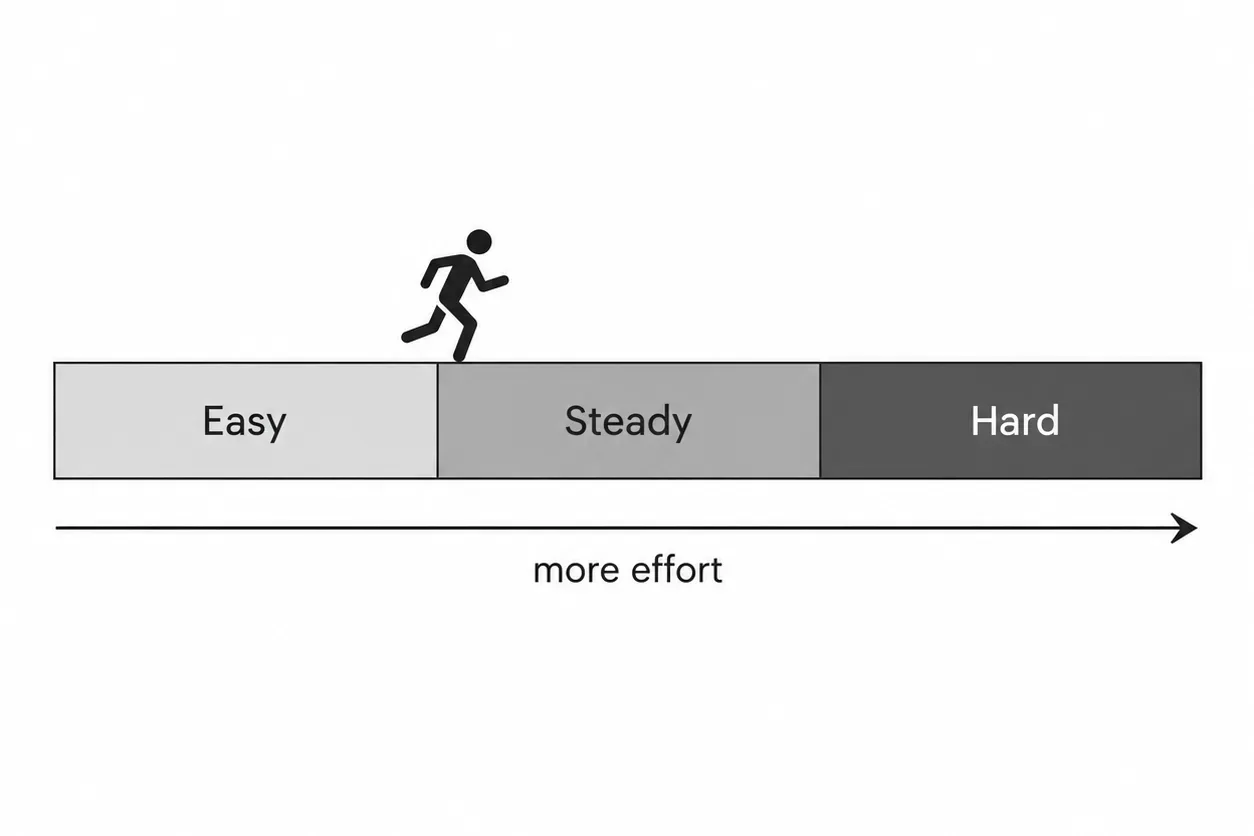
The most common way this plan goes wrong is easy runs drifting toward steady pace. If your easy runs keep creeping faster, slow them down: the long run and the steady run are where the plan asks for effort.
Training paces by 5k time
Find your most recent 5 km (3.1 mi) time in the left column; the row shows the pace range for each kind of run, per km and per mile. Without a recent time, run easy days at a pace where you can talk in full sentences.
Training paces per km and per mile
- Easy
- 7:15 to 7:50 /km (11:40 to 12:36 /mi)
- Steady
- 6:23 to 6:40 /km (10:16 to 10:44 /mi)
- Tempo
- 6:02 to 6:16 /km (9:42 to 10:05 /mi)
- Intervals
- 5:41 to 5:55 /km (9:09 to 9:31 /mi)
- Long
- 7:15 to 7:50 /km (11:40 to 12:36 /mi)
- Goal
- 6:30 to 6:44 /km (10:27 to 10:50 /mi)
| Recent 5k | Easy conversational | Steady comfortably steady | Tempo comfortably hard | Intervals controlled hard efforts | Race effort controlled |
|---|---|---|---|---|---|
| 21:00 | 5:15 to 5:40 /km (8:27 to 9:07 /mi) | 4:37 to 4:50 /km (7:26 to 7:46 /mi) | 4:22 to 4:32 /km (7:02 to 7:18 /mi) | 4:07 to 4:17 /km (6:37 to 6:54 /mi) | 4:42 to 4:52 /km (7:34 to 7:50 /mi) |
| 24:00 | 6:00 to 6:29 /km (9:39 to 10:26 /mi) | 5:17 to 5:31 /km (8:30 to 8:53 /mi) | 5:00 to 5:11 /km (8:02 to 8:21 /mi) | 4:42 to 4:54 /km (7:34 to 7:53 /mi) | 5:23 to 5:34 /km (8:39 to 8:58 /mi) |
| 27:00 | 6:45 to 7:17 /km (10:52 to 11:44 /mi) | 5:56 to 6:13 /km (9:34 to 10:00 /mi) | 5:37 to 5:50 /km (9:02 to 9:23 /mi) | 5:18 to 5:30 /km (8:31 to 8:52 /mi) | 6:03 to 6:16 /km (9:44 to 10:05 /mi) |
| 29:00pace used in the table | 7:15 to 7:50 /km (11:40 to 12:36 /mi) | 6:23 to 6:40 /km (10:16 to 10:44 /mi) | 6:02 to 6:16 /km (9:42 to 10:05 /mi) | 5:41 to 5:55 /km (9:09 to 9:31 /mi) | 6:30 to 6:44 /km (10:27 to 10:50 /mi) |
| 30:00 | 7:30 to 8:06 /km (12:04 to 13:02 /mi) | 6:36 to 6:54 /km (10:37 to 11:06 /mi) | 6:14 to 6:29 /km (10:03 to 10:26 /mi) | 5:53 to 6:07 /km (9:28 to 9:51 /mi) | 6:43 to 6:58 /km (10:49 to 11:12 /mi) |
| 33:00 | 8:15 to 8:55 /km (13:17 to 14:20 /mi) | 7:16 to 7:35 /km (11:41 to 12:13 /mi) | 6:52 to 7:08 /km (11:03 to 11:28 /mi) | 6:28 to 6:44 /km (10:25 to 10:50 /mi) | 7:24 to 7:39 /km (11:54 to 12:19 /mi) |
| 36:00 | 9:00 to 9:43 /km (14:29 to 15:39 /mi) | 7:55 to 8:17 /km (12:45 to 13:20 /mi) | 7:29 to 7:47 /km (12:03 to 12:31 /mi) | 7:03 to 7:21 /km (11:21 to 11:49 /mi) | 8:04 to 8:21 /km (12:59 to 13:26 /mi) |
General training guidance, not medical advice. Check with a doctor before increasing training if you have symptoms or a health condition.
Keep training paces and race paces apart. For checkpoints for a chosen finish time, use the half marathon pace chart. For a realistic range from a recent race, use the race time predictor. A recent result and a hoped-for finish time can give different numbers; label each one where it came from.
How to run the 10-week half marathon plan
- Check week one against last week
Week one is 27.1 km (16.8 mi) over 4 runs with an 11.5 km (7.1 mi) long run. If last week was well below that, pick a longer plan.
- Set your four days
Keep Wednesday, Friday and Saturday as rest, or move Monday to Wednesday. Keep the long run and the Thursday run apart.
- Run the steady Thursdays controlled
In weeks 3, 6 and 7, run Thursday at steady pace after an easy warm-up. Every other Thursday stays easy.
- Take both lighter weeks
Weeks 4 and 8 are lighter on purpose. Do not fill them with missed runs.
- Taper for 2 weeks
Keep the same four days, run shorter and easier, and try nothing new in race week.
When the plan stops matching your weeks

Ten weeks is long enough for something to go wrong. A busy Thursday, a sick week in the build, a long run lost to a wedding. The table does not know about any of it. That is the wall with any fixed plan: it doesn't move when your week does. You can shuffle a single day yourself, but once you lose a full week you are guessing which rows to repeat and which to drop.
The answer is a plan that starts from your race date and re-flows when your week changes. Build your free plan for your race date. On the Coach plan, next week re-plans itself when you miss a run.
Free training plan
Build your free plan for your race date.
Pick your race and race date. Every week from today to race day is planned for you, with distances in km and miles.
To see what each tier includes, read how Free and Coach compare.
Race week

Race week totals 19 km (11.8 mi) on the schedule, about half of the peak week, with three short easy runs before the weekend. Keep the final week light, start the race conservatively and adjust to the conditions on the day. Goal pace is a target, not a promised finish time.
Mistakes that cost you in a 10-week block
- Treating "beginner" as "easy start". Week one is 27.1 km (16.8 mi). That is the number to check, not the label.
- Easy days creeping toward steady. Three steady runs in ten weeks is the plan. Thirty-seven easy runs is the other half of it.
- Steady Thursday the day after a long Sunday move. If you shift the long run, keep a buffer day before the steady run.
- Doubling up after a missed long run. Let it go and pick up the plan where you are.
- Pushing through pain. Sharp pain, pain that changes how you run, or swelling means stop and see a doctor or physio.
The 10-week half marathon plan is four runs a week, mostly easy, with three steady Thursdays, two lighter weeks and a 2-week taper. It starts at 27.1 km (16.8 mi), peaks at 37.6 km (23.4 mi) and builds the long run to 16 km (9.9 mi). If week one looks like a week you already run, it is a calm, well-paced route to the start line.
Not sure it is the right length? The half marathon training plan comparison puts all four plans side by side. Comparing apps too? Our Runna alternative guide shows how a plan that re-plans itself differs. And when your weeks shift, build your free plan for your race date: on the Coach plan, next week re-plans itself when you miss a run.
Distances follow the official half marathon of 21.0975 km (13.1094 mi) from World Athletics.
Frequently asked questions
For a runner who already covers around 27 km (16.8 mi) a week over four runs, yes. The plan reaches a 16 km (9.9 mi) long run and still leaves 2 weeks to taper.
The 10-week plan has four runs a week and starts at 27.1 km (16.8 mi). The 12-week plan has three runs a week, starts at 21.6 km (13.4 mi) and gives newer runners two more weeks to build.
The beginner level holds the steady sessions back until the build phase, so your body settles into four runs a week before any quicker running is added.
Yes. The builder lets you pick Saturday or Sunday for the long run and moves the rest of the week around it. Check the whole new week, including rest days, before you run it.
The longest run is 16 km (9.9 mi) in week 7. That is a training distance, not a requirement to run the full race distance in advance.
For the sample 29:00 time over 5 km (3.1 mi), easy runs sit at 7:15 to 7:50 per km (11:40 to 12:36 per mile). Without a recent time, run at a pace where you can talk in full sentences.
Free training plan
Build your free plan for your race date.
On the Coach plan, next week re-plans itself when you miss a run.
Share article
About the author
More running training guides

Half marathon training · 12 min
Half Marathon Training Routine: The Week to Repeat
A good half marathon training routine fixes the long run, keeps almost every other run easy, and repeats the same 3 or 4 running days from week one to race day. Here is the weekly layout, where strength and rest go, and how to fit it around work.

Half marathon training · 11 min
Average Half Marathon Time by Age and Gender (2:15 Median)
The average half marathon time is about 2:15: the median man runs 1:59:48 and the median woman 2:24:03. Here are the percentiles, times by age, what 2:00 to 3:00 means, and how to predict your own time.

Half marathon training · 9 min
How Long Is a Half Marathon? Distance in Km and Miles
A half marathon is 21.0975 km (13.1094 mi). See the exact distance, pace math, walking and cutoff checks, and how to choose a preparation plan.

Half marathon training · 10 min
16 Week Half Marathon Training Plan: Gentle 3-Day Build
A 16 week half marathon training plan with 3 runs a week, a 4-week easy base, lighter weeks every fourth week and a 2-week taper. Every week, in km and miles, with paces per km and per mile.

Half marathon training · 12 min
Half Marathon Training Plan: Free 8 to 16 Week Plans
Four half marathon training plans compared: week one, peak week, long run and run days for the 8, 10, 12 and 16 week plans, plus a worked 14-week sample and how to pick the right length.

Half marathon training · 11 min
8 Week Half Marathon Training Plan: Full Schedule
A short, four-run half marathon block for runners already at about 30 km (18.6 mi) a week: the entry check, every week in km and miles, two tempo Thursdays and a 2-week taper.