
10K Beginner Training Schedule: 10 Weeks From Run-Walk
Raceblock team November 18, 2026 10 min read
Free training plan for your race date
Free training plan for your race date
Build my free planIn this article
A good 10k beginner training schedule runs for 10 weeks, three days a week, and starts with run-walk intervals: 1 minute of running, 2 minutes of walking. Each week the running blocks get longer and the walks shorter, until you can run about 30 minutes without stopping and your long run lasts about 70 minutes.
The part most beginners get wrong: they count kilometers. This schedule counts minutes. A new runner who chases distance speeds up to "get it done", and that is the habit that ends most first attempts. Run for the time on the plan at a pace where you can talk, and the distance turns up on its own.
Who this 10k schedule is for
This schedule is for you if you can walk briskly for 30 minutes but running for more than a minute or two still feels hard. If you can already run 5 km (3.1 mi) without stopping, skip ahead to our 3-run 10k training routine, which is shorter and builds speed.
Pick your starting week from where you are today, not where you hope to be.
| Where you are today | Start at | Weeks to race day |
|---|---|---|
| Brisk walking for 30 minutes is hard | Walk 30 minutes, 3 times a week, for 2 to 3 weeks, then week 1 | 12 to 13 |
| You can walk 30 minutes, run about 1 minute | Week 1 | 10 |
| You can run 5 minutes without stopping | Week 4 | 7 |
| You can run 10 minutes without stopping | Week 6 | 5 |
| You can run 5 km (3.1 mi) without stopping | The 3-run 10k routine instead | 8 |
If you are starting from a very low base, the free NHS Couch to 5K program uses the same run-walk idea and is a fine first step before week 1 here.
The 10-week 10k beginner training schedule
Run on three days with a rest day between them: Tuesday, Thursday and Sunday works for most people. Every session starts with a 5 minute brisk walk and ends with a 5 minute walk; those minutes are not in the table.
| Week | Tuesday | Thursday | Sunday, long session | Minutes on your feet |
|---|---|---|---|---|
| 1 | 8 x (run 1 min, walk 2 min) | Same as Tuesday | 10 x (run 1 min, walk 2 min) | 78 |
| 2 | 8 x (run 2 min, walk 1 min) | Same as Tuesday | 10 x (run 2 min, walk 1 min) | 78 |
| 3 | 6 x (run 3 min, walk 1 min) | Same as Tuesday | 8 x (run 3 min, walk 1 min) | 80 |
| 4 | 5 x (run 5 min, walk 1 min) | Same as Tuesday | 6 x (run 5 min, walk 1 min) | 96 |
| 5, lighter | 4 x (run 5 min, walk 1 min) | Same as Tuesday | 5 x (run 5 min, walk 1 min) | 78 |
| 6 | 3 x (run 8 min, walk 1 min) | Same as Tuesday | 4 x (run 10 min, walk 1 min) | 98 |
| 7 | 2 x (run 12 min, walk 1 min) | Run 20 min without stopping | 3 x (run 15 min, walk 1 min) | 94 |
| 8 | Run 25 min | Run 25 min, then 4 strides | 3 x (run 18 min, walk 1 min) | 107 |
| 9 | Run 30 min | Run 30 min with 3 x 3 min a little faster | 3 x (run 22 min, walk 1 min) | 129 |
| 10, race week | Run 25 min | Run 20 min, then 4 strides | Race: 10 km (6.2 mi) | Race week |
Week 5 drops back on purpose: a lighter week gives your legs time to absorb four weeks of new running before the jump to longer blocks. Strides are 4 relaxed accelerations of about 20 seconds with a full walk back between; they wake your legs up without tiring them.
General training guidance, not medical advice. Check with a doctor before increasing training if you have symptoms or a health condition.
How to run a run-walk session
- Warm up with a brisk walk
Walk for 5 minutes, fast enough to feel warm. Our 10 minute warm-up before running adds a few drills if you have time.
- Run the first block slowly
Start slower than feels necessary. You should be able to speak in full sentences the whole time.
- Walk briskly, do not stop
Keep moving during the walk block. Standing still makes the next running block harder to start.
- Repeat the blocks on the clock
Use a timer for every block, not landmarks, so a hill or a headwind does not change the session.
- Cool down with a walk
Walk for 5 minutes, then stretch gently if it helps you feel loose.
Count minutes, not kilometers
The schedule is built on time because beginners run at very different speeds. The same 30 minute session might cover 3.5 km (2.2 mi) for one runner and 5 km (3.1 mi) for another, and both get the same training effect if both run at an easy effort. Chasing a distance pushes the slower runner to speed up, and that is where the session turns too hard.
How slow is easy?
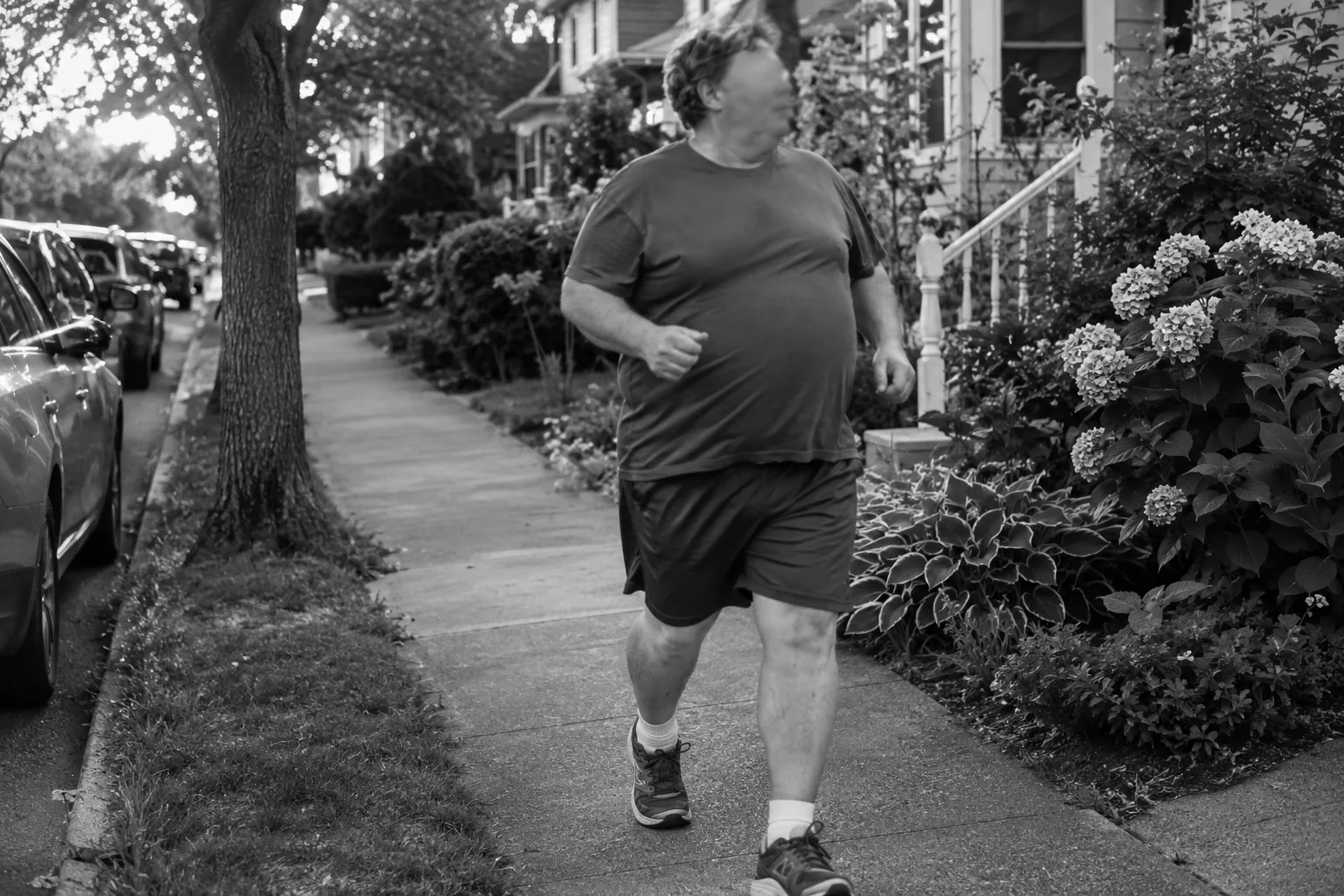
Easy means you could hold a conversation. For many beginners that pace feels almost like a fast walk, and that is fine. Do not check your pace on your watch during the first weeks; check whether you can talk.
What the race clock will say
You do not need a goal time for a first 10k. If you want one, here is what common finish times mean per kilometer and per mile. The 10k running pace chart has the splits for every goal time.
| 10k finish time | Pace per km | Pace per mile | Speed |
|---|---|---|---|
| 60 minutes | 6:00 /km | 9:39 /mi | 10 km/h (6.2 mph) |
| 70 minutes | 7:00 /km | 11:16 /mi | 8.6 km/h (5.3 mph) |
| 80 minutes | 8:00 /km | 12:52 /mi | 7.5 km/h (4.7 mph) |
| 90 minutes | 9:00 /km | 14:29 /mi | 6.7 km/h (4.1 mph) |
At the end of this schedule your long session lasts about 70 minutes. At 8:00 /km (12:52 /mi), including walk breaks, that is about 8.7 km (5.4 mi). You do not need to cover the full 10 km (6.2 mi) in training: race-day energy and a little faster pace carry you the rest. For a fuller look at what to expect, see how long a 10k takes at different paces.
The long session is the one that matters most
If a busy week forces you to drop a session, keep the Sunday one. It is the only session that grows every week, and it is what teaches your legs to keep going for an hour or more. The two short sessions keep the habit alive; the long one builds the 10k.

Run it with a friend if you can. A partner keeps the pace honest, because you both have to be able to talk, and makes 70 minutes go faster.
Strength on two other days
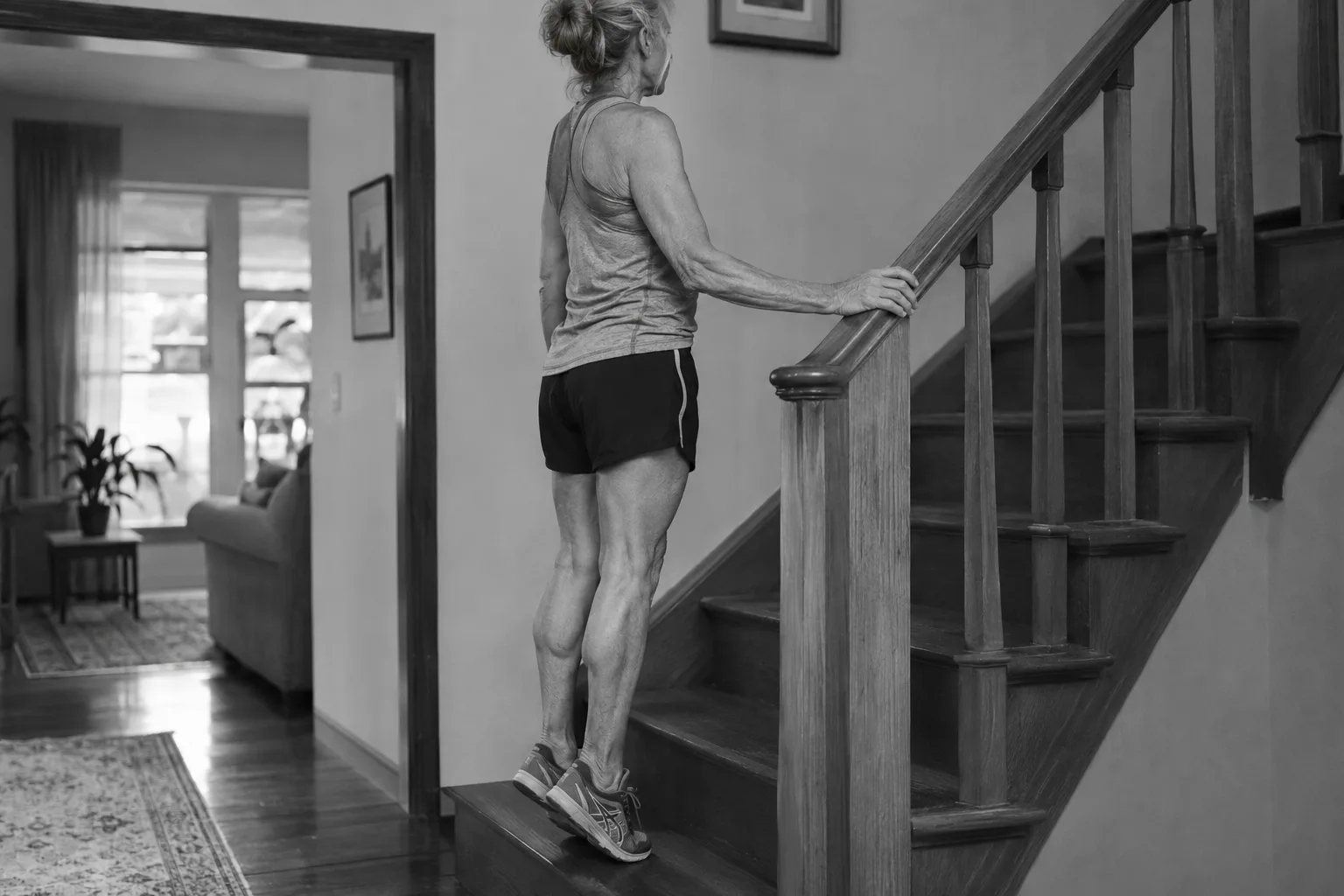
The NHS physical activity guidelines ask adults to do strengthening activities on at least 2 days a week. For a new runner, 15 minutes of calf raises, squats, lunges and a plank is enough. Our two-day strength routine for distance runners lists the sets and reps. Put strength on a non-running day, never the day before the long session.
Adjust the schedule to your situation
The schedule above fits most first-timers. A few situations need a small change, not a different plan.
| Your situation | Change |
|---|---|
| Over 50, or back after years off | Repeat any week that felt hard before moving on; add a day between sessions |
| Race is less than 10 weeks away | Start at the week that matches your current running, never skip ahead of it |
| Race is more than 10 weeks away | Repeat weeks 4 and 6, the two biggest jumps |
| You missed a whole week | Repeat the last week you completed, then carry on |
| A session felt too hard | Repeat it next time instead of moving up |

Your first 10k race day
Start at the back of the field and run the first 2 km (1.2 mi) slower than feels right. If you have been training with walk breaks, use them in the race too: 1 minute of walking every 10 to 20 minutes is normal. Eat a breakfast you have tried before a long session; our guide on what to eat before a 10k run covers timing.
Mistakes that stop beginners before race day
- Running every session too fast. Hard every time means sore every time, and the schedule stops being fun by week 3.
- Skipping the walk breaks. They are what lets you finish the session and come back two days later.
- Making up a missed session the next day. Two days in a row is where beginner aches start. Move on to the next session instead.
- Jumping ahead a week because you feel good. Feeling good is the sign the schedule is working at its current level.
- Running through pain. Sharp pain, swelling or pain that changes how you run means stop and see a doctor or physio.
When your weeks stop matching the schedule
Everything above works with a printed sheet and a pen. Tick off each session and you will reach race week ready to run.
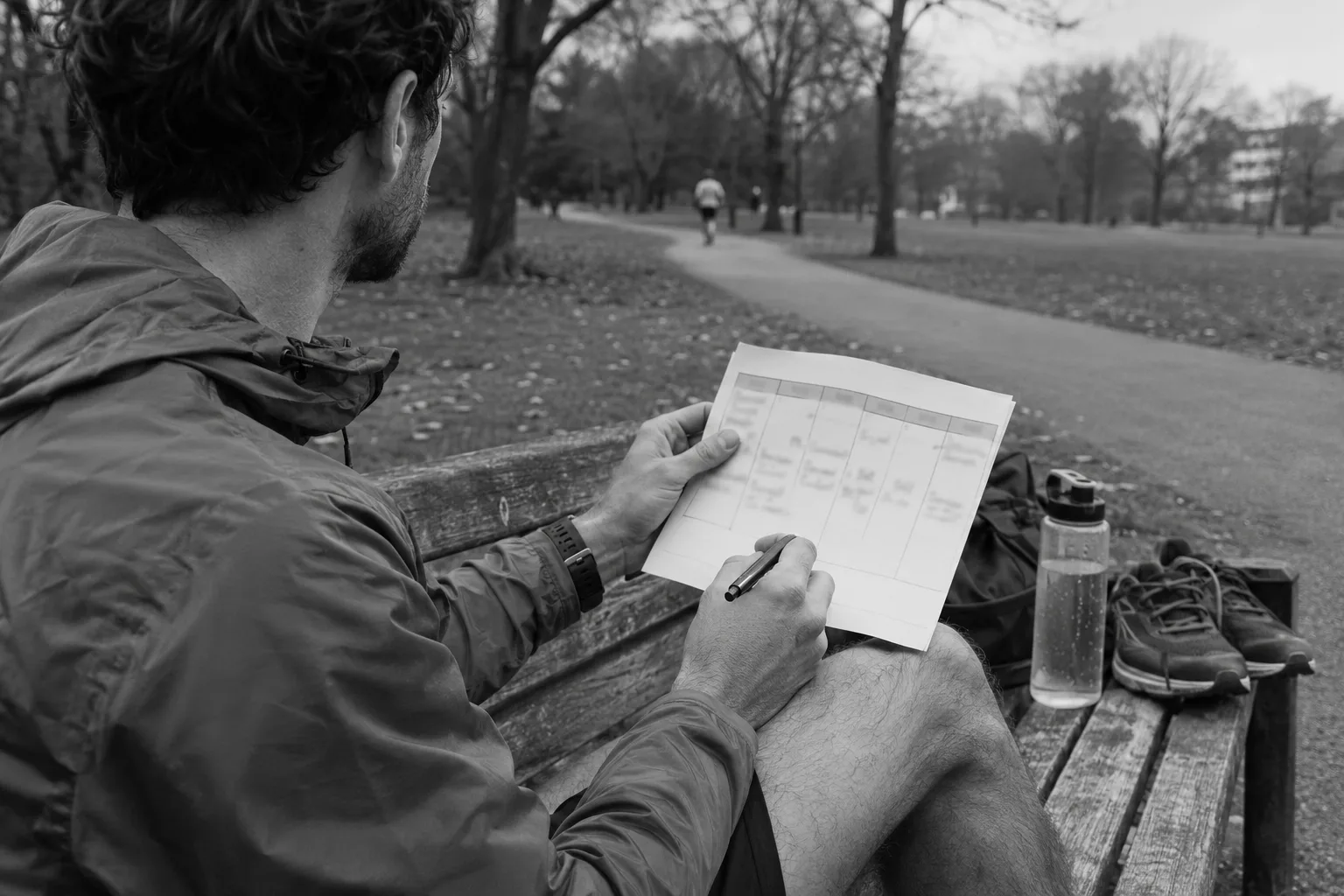
The wall comes when life moves the week. A cold takes out the long session, a work trip lands on Thursday, or your race date changes. A printed schedule does not move when your week does, so you are left guessing which session to repeat and which to drop.
Many runners use a first 10k as the step toward a half marathon. Raceblock builds plans for half marathon, marathon and HYROX race dates. Build your free plan for your race date. On the Coach plan, next week re-plans itself when you miss a run.
Free training plan
Build your free plan for your race date.
Pick your race and race date. Every week from today to race day is planned for you, with distances in km and miles.
The 10k beginner schedule in one line
Three timed sessions a week for 10 weeks, run-walk at first, easy enough to talk, a Sunday session that grows to about 70 minutes, and a lighter week in the middle. Count minutes, keep the walk breaks, and race day becomes the next step, not a test.
When the 10k is done and you want a longer race, the half marathon training routine keeps the same weekly shape, or build a free plan for your race date and let next week follow the week you actually ran.
Paces and minute totals on this page are computed from the schedule above. Strength guidance from the NHS physical activity guidelines for adults.
Frequently asked questions
Plan on about 10 weeks if you can walk briskly for 30 minutes but cannot yet run for long. If you already run 10 minutes without stopping, 5 to 6 weeks is enough; if you can run 5 km (3.1 mi), about 8 weeks of a 3-run routine works. Starting from little or no exercise, add 2 to 3 weeks of walking first.
Any finish is a decent first 10k, because the first race sets your benchmark. In numbers: 70 minutes means 7:00 /km (11:16 /mi), 80 minutes means 8:00 /km (12:52 /mi). Run your first one at an easy effort with your usual walk breaks, then use that time to set a goal for the next.
For most beginners, yes. A 10k lasts about an hour to an hour and a half for a new runner, which is short enough that a normal meal or a banana 1 to 2 hours before the start is usually enough, with no gels during the race. Try the same breakfast before your long Sunday session first.
For a beginner, yes. A 60 minute 10k means 6:00 /km (9:39 /mi) for the whole distance without walking. If your easy runs sit around 7:30 /km (12:04 /mi), that is a big jump. Treat 60 minutes as a goal for a later 10k, not the first one.
Free training plan
Build your free plan for your race date.
On the Coach plan, next week re-plans itself when you miss a run.
Share article
About the author
More running training guides

Running basics · 12 min
What Is a Recovery Run? Pace, Length and When to Skip It
A recovery run is a short, very easy run you do the day after a long run or hard session. Here is how slow to run it, how long, how it differs from an easy run and a rest day, where it fits in a half or marathon week, and when to skip it.

Running basics · 11 min
10K Training Routine: 3 Runs a Week for 8 Weeks
A 10k training routine is three runs a week on fixed days: one easy run, one faster session and a long run that builds to the full 10 km (6.2 mi) at an easy pace. Here is the weekly layout, the 8-week schedule, the paces and the mistakes that break it.

Running basics · 11 min
5K Training Routine: The Weekly Schedule to Repeat
A good 5K training routine is three or four runs a week on fixed days: one key session, one longer easy run and easy running in between. Here are both weekly layouts, your paces, an 8-week schedule and the mistakes that stall it.

Running basics · 11 min
Interval Training Plan for Running: 8 Weeks With Paces
A simple 8-week interval training plan for running: one session a week at 5 km to 10 km effort, with paces per km and per mile, jog recoveries, a sample week and how to adjust it for a half marathon, a marathon or a comeback.
Running basics · 10 min
Running in the Heat: 9 Tips to Train Safely All Summer
Running in the heat tips that work: run early, run by effort instead of pace, drink and add salt on long runs, adapt over two weeks, and know the warning signs that mean stop.
Running basics · 11 min
Side Stitch When Running: What Causes It and How to Stop It
A side stitch when running is a sharp pain under the ribs that eases when you slow down. How to get rid of one mid-run in five steps, what causes it, and the four habits that prevent the next one, starting with what you eat 2 hours before.