
How to Run Faster Sprints: Form, 5 Drills and a 6 Week Plan
Raceblock team Updated November 15, 2026 13 min read
Free training plan for your race date

Free training plan for your race date
Build my free planIn this article
To run faster sprints, practise sprinting fresh: short reps of 10 to 60 m (11 to 66 yd) at true top effort, full rest between them, and sharp form drills, once or twice a week. Then add hill sprints and two short strength sessions a week to give each step more push.
The catch is that most people train sprints like a fitness workout. They run ten 100s with a minute's rest, every rep gets slower, and they come home tired but no quicker. Top speed only improves when you practise it at top speed, so the rule that matters most here is simple: the moment a rep is slower than your best, the session is over. If you want to get faster over 5 km or a half marathon rather than over 50 m, start with our guide on how to run faster instead. This one is about the sprint itself.
How do you run faster sprints?
You run faster sprints by hitting the ground harder in less time, with your foot landing close under your hips. Speed is stride length times stride rate, and at top speed most of the gain comes from more force into the ground, which makes each stride longer.
That is not just coaching folklore. In a 2000 study, Peter Weyand and colleagues measured runners at their top treadmill speeds and found that faster runners did not swing their legs forward any quicker than slower runners. What set them apart was greater force into the ground during shorter contact times (Weyand et al., 2000).
So "quick feet" is the wrong cue. You want strong feet: a hard, short push straight down and back, then a fast knee back to the front. Everything below, the drills, the hill sprints, the strength work, exists to make that push stronger and to let you apply it at full speed without tightening up.
The two parts of a sprint: acceleration and top speed
Every sprint has two phases, and they need different form. Train both, but know which one you are working on in each rep.
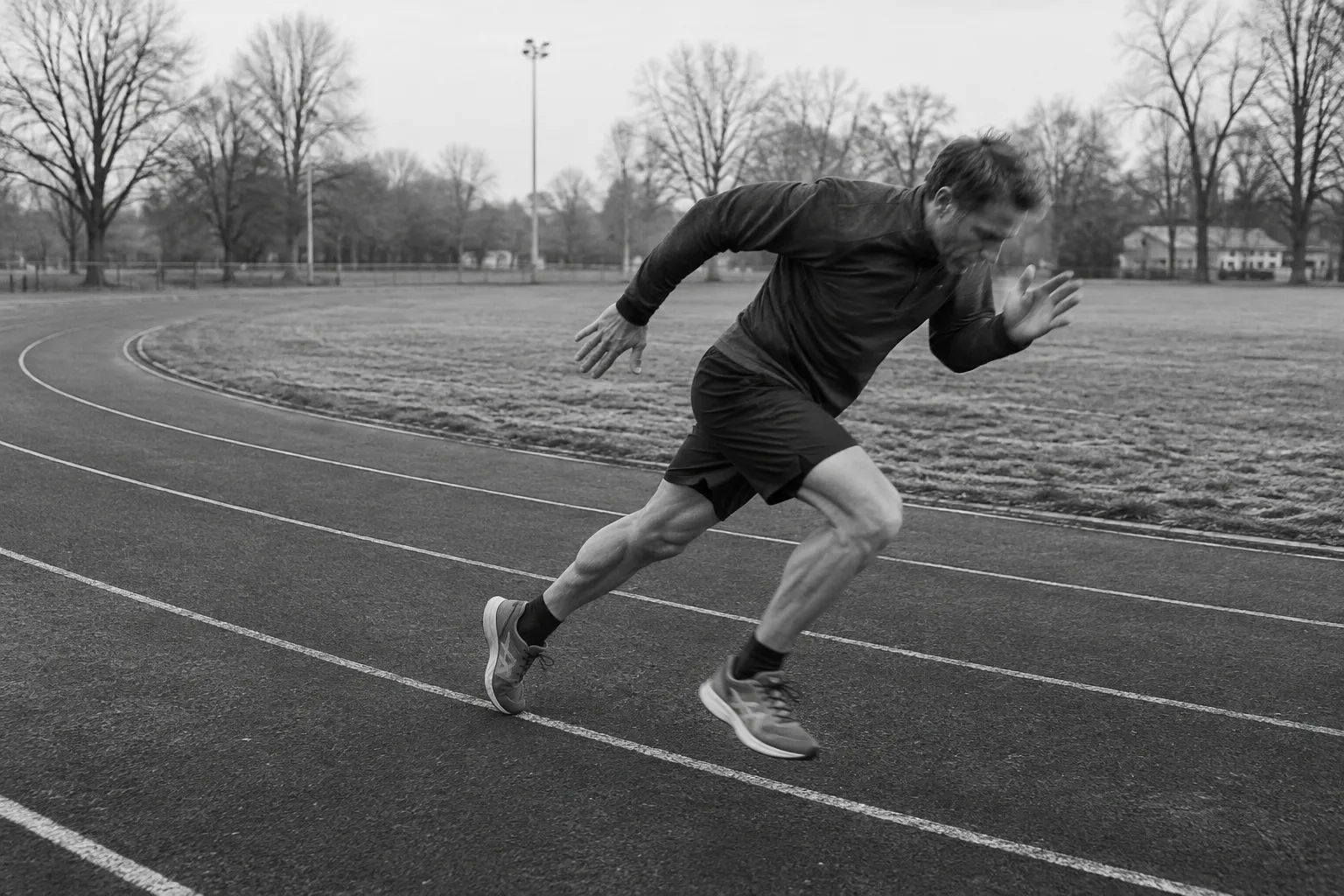
Acceleration: the first 10 to 30 m (11 to 33 yd)
In the first steps you lean forward in one straight line from ankle to head and push the ground behind you, like shoving a car. Steps start short and get longer. Your head stays in line with your back, not up looking at the finish. Arms swing big and hard, because they balance a big leg drive.
The common mistake is standing up straight after one step. You lose the lean and the push goes up instead of forward.
Top speed: from about 30 m (33 yd) onward
Once you are up to speed you run tall. Hips high, chest proud, front knee coming up in front of you, and the foot striking down just in front of or under your hips rather than reaching out ahead. Hands and jaw stay loose.

Most recreational runners lose speed here by tensing up. Shoulders creep toward the ears, fists clench, and the stride gets choppy. Try sprinting at about 90% of your best effort with a loose face: it often feels faster than 100% with gritted teeth. For the distance running side of form, our guide to proper form when running has a short self check, and cadence when running explains why step rate matters more on easy runs than in a sprint.
The sprint sessions that work
These four sessions cover almost everything you need. All of them are short, and all of them are run fresh.
| Session | Reps | Rest | What it trains |
|---|---|---|---|
| Strides | 4 to 6 x 80 to 100 m (87 to 109 yd) at about 90% effort | Walk back to the start | Relaxed speed and form |
| Accelerations | 4 to 6 x 20 to 30 m (22 to 33 yd) from a standing start | 2 to 3 minutes | The lean and the push off |
| Hill sprints | 6 to 8 x 8 to 10 seconds up a steep hill | Walk down, then 1 to 2 minutes | Power and a strong forward drive |
| Flying sprints | 3 to 5 x 20 m (22 yd) at top speed after a 20 to 30 m (22 to 33 yd) build up | 3 to 4 minutes | Maximum speed |
A useful coaching rule of thumb for rest: about 1 minute for every 10 m (11 yd) you sprint at full effort. A 30 m (33 yd) rep earns 3 minutes. It feels lazy. It is the point.
How to run a sprint session
- Warm up for 10 to 15 minutes
Jog easily for 8 to 10 minutes, then do leg swings and a few walking lunges. Our guide on how to warm up before running has a full routine you can reuse here.
- Run the drills
Do 2 x 20 m (22 yd) each of A-skips, high knees and fast leg cycles at a relaxed effort.
- Build up to speed
Run 2 or 3 strides of 60 to 80 m (66 to 87 yd), each a little faster, so the first real rep is not a shock.
- Run the main reps
Do the session for the week at full effort with full rest. Time a rep or two on your phone if you can.
- Stop when you slow down
If a rep is clearly slower than your best rep, or your form falls apart, end the session there, even if reps are left.
- Cool down
Jog or walk for 5 to 10 minutes. Leave stretching for later in the day if you like; our list of stretches for after running works fine.
Sprint drills that carry over
Drills slow the sprint action down so you can practise the shape: knee up, foot under the hip, push down. Do them at the start of every sprint session, 2 x 20 m (22 yd) each.
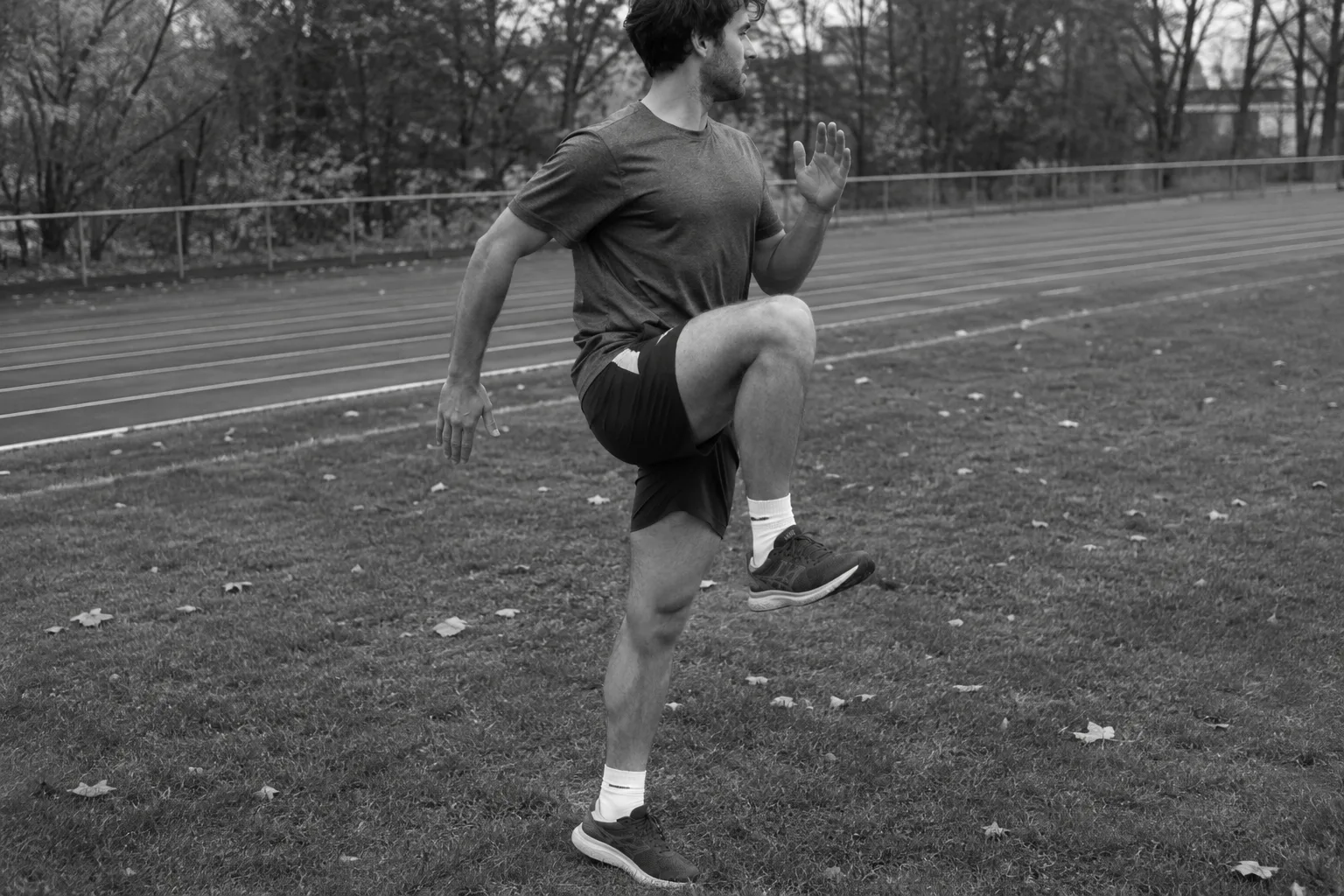
- A-skip. Skip forward, driving one knee up to hip height with the toes pulled up, then punch that foot down under your hip. Opposite arm swings with it.
- High knees. Quick, short steps with the knees coming up in front. Stay tall; do not lean back.
- Fast leg cycles. Standing beside a wall or fence, cycle one leg through the sprint action: knee up, foot down under the hip, heel up behind. 5 to 8 each side.
- Wall drill. Lean into a wall at the angle of your acceleration, hands on it, and switch legs fast in place. It teaches the forward lean in the first steps.
- Pogo hops. Small, stiff, quick bounces on the balls of your feet for 15 to 20 contacts. They train a short, springy ground contact.
Two or three drills done well beat eight done sloppily. If one feels awkward after a few weeks, keep it slow before you make it fast.
Hill sprints: the safest place to start
Hill sprints are the best first sprint session for most runners. A steep slope forces the forward lean and the strong push of acceleration, and it caps how fast you can go, so you practise the push without running at full flat out speed.

Find a hill steep enough that you have to work to keep your knees up, and long enough for 8 to 10 seconds of running. Sprint up hard, walk down slowly, rest another minute or two, repeat 6 to 8 times. That is the whole session. It fits after an easy run, so it costs a race runner no extra day.
Rest is part of the rep
Full rest is what separates speed training from conditioning. Short rest makes every rep a little slower, and slower reps train you to sprint at a slower speed.
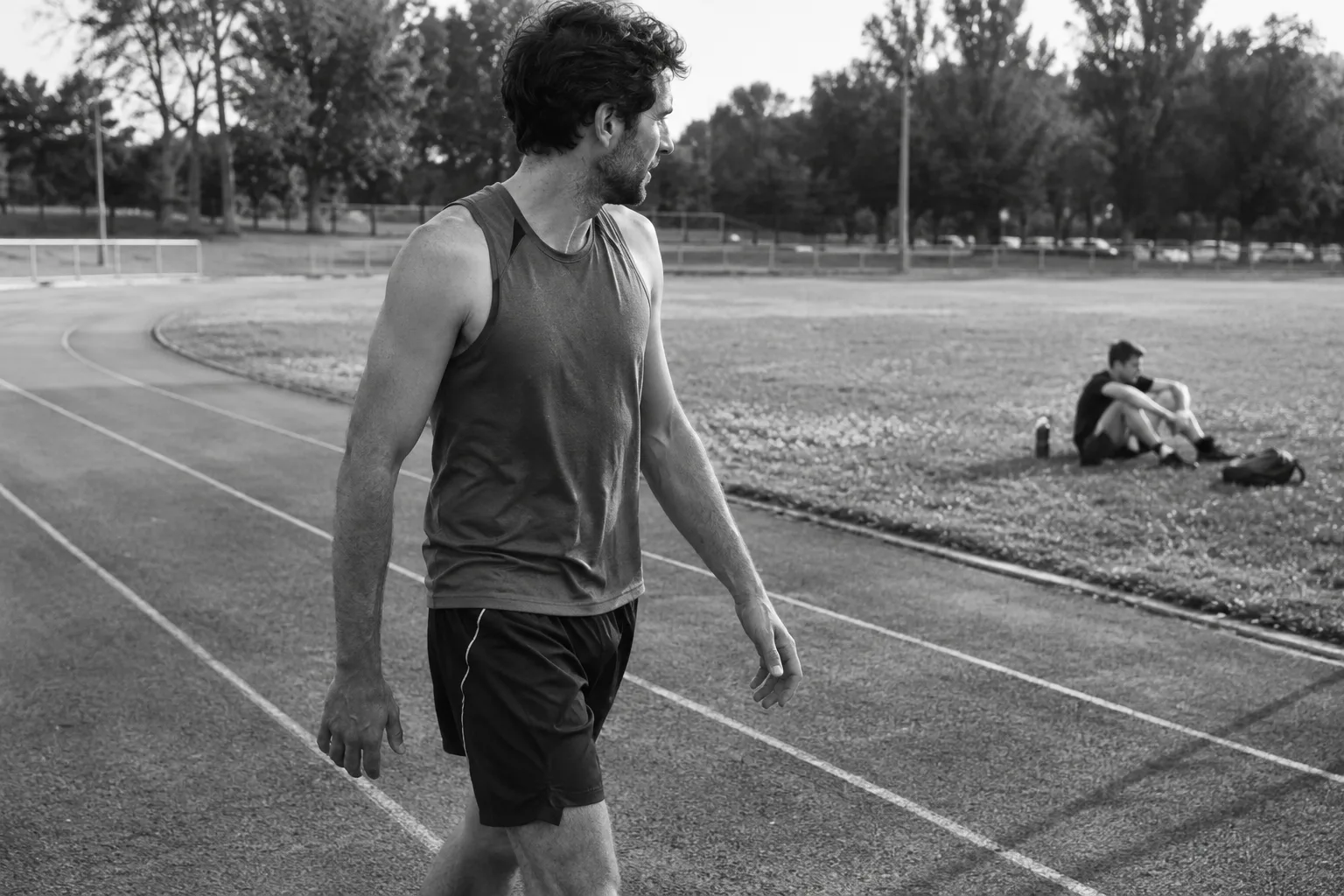
Walk back slowly, breathe, and start the next rep only when your legs feel ready to go at full effort again. A whole sprint session might only hold 150 to 300 m (164 to 328 yd) of actual sprinting. If you finish feeling sharp rather than wrecked, you did it right.
Strength work for a stronger push
A stronger push into the ground is the thing the Weyand study points to, and strength work is where most of that comes from. Two short sessions a week of 20 to 30 minutes are enough to start.
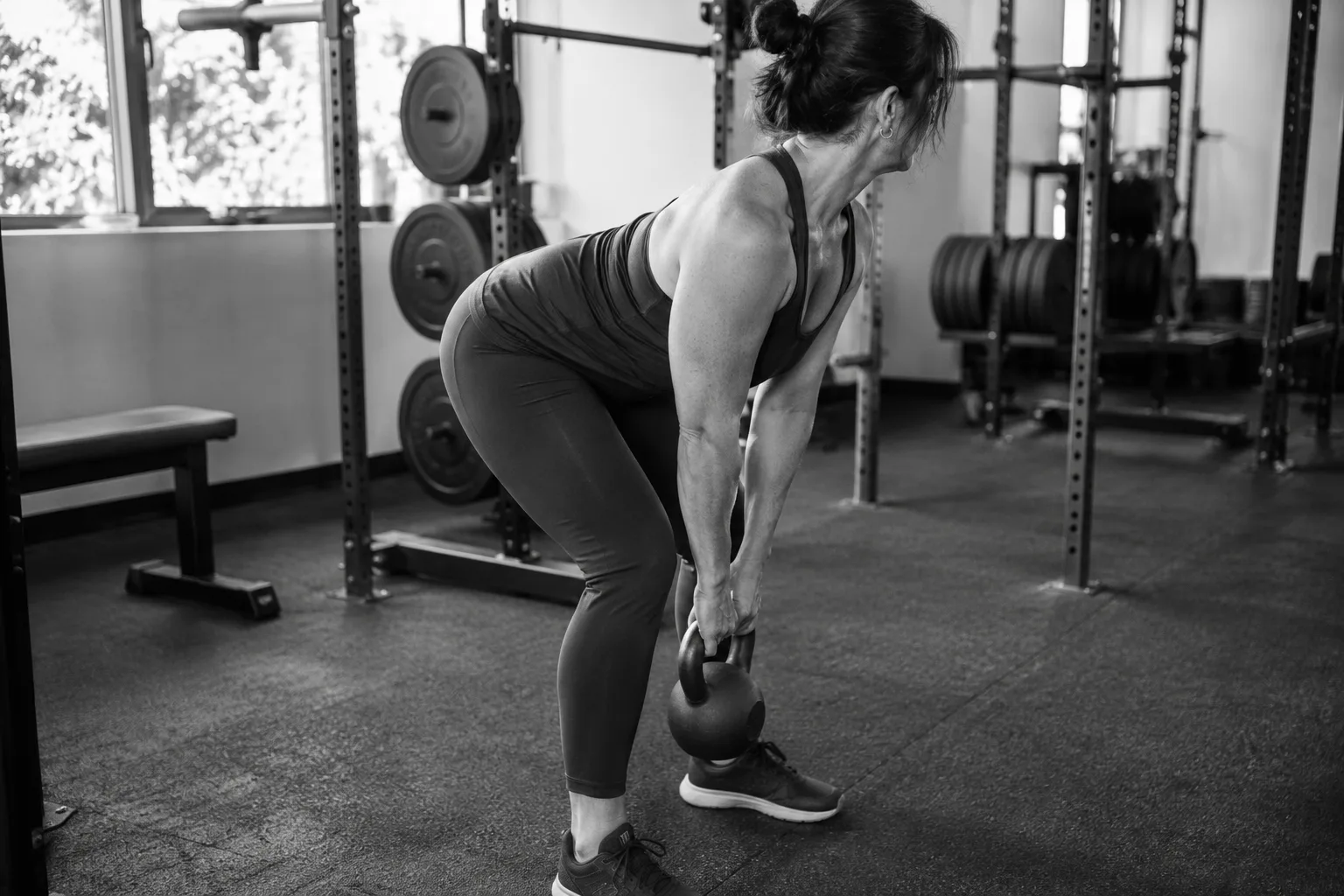
- Romanian deadlift: 3 x 8, hips back, back flat, weight close to the shins. Builds the hamstrings and glutes that drive the leg back.
- Split squat: 3 x 8 each leg. Single leg strength for each push.
- Calf raise: 3 x 12 to 15, slow on the way down. Stiff, strong ankles for short contacts.
- Bounds or skips for height: 3 x 6 to 8 contacts once the rest feels easy. They teach you to put force into the ground fast.
Lift on a sprint day or the day after an easy run, not the day before a sprint session, so you show up fresh for the reps that count.
Where to start, by the runner you are
Pick the row closest to you. The order matters more than the exact numbers.
| You are | Start with | Add after 3 weeks | Hold off on |
|---|---|---|---|
| New to fast running | Drills, strides, hill sprints | 20 m (22 yd) accelerations | Flying sprints at full effort |
| A road runner training for 5 km to a marathon | Strides after easy runs, hill sprints | Accelerations, then flying 20s | Long sprint repeats of 150 m (164 yd) or more |
| Someone who played a field or court sport | Drills, accelerations | Flying sprints | High rep counts with short rest |
| Back after a long break | Hill sprints only | Flat accelerations at 80 to 90% effort | Any full effort flat sprint for the first 4 weeks |
When your race is a half marathon or marathon
Sprinting will not decide a long race, but short, fresh speed work keeps your stride relaxed at race pace and gives you a kick for the last 200 m (219 yd). Keep it to strides and hill sprints after easy runs, so the long run and the key session of the week stay untouched. A half marathon training plan shows where those easy days sit. If your key session is intervals, keep sprints well away from it and build the reps with a week-by-week interval plan.
A 6 week plan to sprint faster
Two sessions a week on non-consecutive days, each after a full warm-up and drills. Keep your normal easy running around them.
| Week | Session 1 | Session 2 |
|---|---|---|
| 1 | 4 x 80 m (87 yd) strides | 6 x 8 seconds hill sprints |
| 2 | 4 x 20 m (22 yd) accelerations | 8 x 8 seconds hill sprints |
| 3 | 5 x 20 m (22 yd) accelerations, 2 x flying 20 m (22 yd) | 8 x 10 seconds hill sprints |
| 4 | 4 x 30 m (33 yd) accelerations, 3 x flying 20 m (22 yd) | 4 x 100 m (109 yd) strides |
| 5 | 4 x 30 m (33 yd) accelerations, 4 x flying 20 m (22 yd) | 6 x 10 seconds hill sprints |
| 6 | 3 x 20 m (22 yd) accelerations, easy | Test: 2 x timed 40 m (44 yd) from a standing start |
For the test, use the same stretch of track or path, the same shoes and the same warm-up, and time it the same way each time, so the numbers are comparable when you retest after another block.
Mistakes that keep sprints slow
- Short rest. It turns a speed session into a fitness session. Rest longer.
- Too many reps. Quality falls off after a handful of real sprints. Stop when you slow down.
- Sprinting tired. The day after a long run or a hard workout is the worst day for speed.
- Reaching with the foot. A foot landing far in front of you acts as a brake. Land under the hips.
- Tensing up. Clenched fists and raised shoulders cost speed. Stay loose at 90% before you go to 100%.
- Skipping the warm-up. Never sprint flat out on cold legs.
- Going flat out from week one. Start on hills and strides; full effort flat sprints come later.
General training guidance, not medical advice. Check with a doctor before increasing training if you have symptoms or a health condition. A sharp pain in the back of the thigh, swelling, chest pain or feeling faint means stop and see a doctor or physio.
When your week stops matching the plan
Everything above works with a notebook and a stretch of track. Write the 6 weeks into your calendar, keep the sessions short and run them fresh.
The wall comes when sprints have to share a week with a race build. A cold wipes out three days, a work trip moves your long run, or your race date shifts. Now the sprint session lands the day before your long run, and a written plan does not move when your week does. You end up either skipping speed work for weeks or doing it on tired legs, which is the one thing that does not work.
That is the part Raceblock handles. Build your free plan for your race date. On the Coach plan, next week re-plans itself when you miss a run.
Free training plan
Build your free plan for your race date.
Pick your race and race date. Every week from today to race day is planned for you, with distances in km and miles.
Sprint faster in one line
Sprint short, sprint fresh and stop when you slow down: drills and hill sprints first, then accelerations and flying 20s, with two short strength sessions a week to put more force into the ground. Give it 6 weeks, retest your 40 m (44 yd), and keep the rest of your week easy. If you train for a race, the race time predictor turns a recent 5 km or 10 km into a realistic goal for the longer distances.
Frequently asked questions
Neither is better; they do different jobs. Sprinting trains top speed and power in very small doses, while easy running builds the aerobic base that carries you through anything longer than a minute or two. For a runner training for a race, easy running is most of the week and short sprints are a small, useful add-on.
Once or twice a week is enough for most runners, with at least 48 hours between sessions. Each session needs fresh legs, so put it after an easy day, not after a long run or a hard workout. Beginners can start with one session a week of hill sprints or strides.
Practise sprinting at true top speed with full rest, and get stronger. Flying sprints of 20 m (22 yd) after a build up train the top speed itself, and strength work such as Romanian deadlifts, split squats and bounds increases how hard you can push into the ground.
In the first steps, lean forward in a straight line and push the ground behind you. At top speed, run tall with high hips, bring the knee up in front and strike the foot down under your hips. Keep your hands, jaw and shoulders loose throughout.
A-skips, high knees, fast leg cycles, the wall drill and pogo hops cover the main parts of the sprint action. Do 2 x 20 m (22 yd) of two or three of them at the start of each sprint session, and keep them crisp rather than piling on more.
It usually means keeping about 80% of your running easy and 20% hard. Sprint training fits inside the hard 20%, and because sprint sessions are so short and well rested, they add speed without tiring you much for the rest of the week.
Free training plan
Build your free plan for your race date.
On the Coach plan, next week re-plans itself when you miss a run.
Share article
About the author
More running training guides

Running basics · 12 min
What Is a Recovery Run? Pace, Length and When to Skip It
A recovery run is a short, very easy run you do the day after a long run or hard session. Here is how slow to run it, how long, how it differs from an easy run and a rest day, where it fits in a half or marathon week, and when to skip it.

Running basics · 10 min
10K Beginner Training Schedule: 10 Weeks From Run-Walk
A 10k beginner training schedule for runners starting from run-walk: 10 weeks, three timed sessions a week, a long session that grows to about 70 minutes, the paces behind common finish times and how to adjust the plan to your week.

Running basics · 11 min
10K Training Routine: 3 Runs a Week for 8 Weeks
A 10k training routine is three runs a week on fixed days: one easy run, one faster session and a long run that builds to the full 10 km (6.2 mi) at an easy pace. Here is the weekly layout, the 8-week schedule, the paces and the mistakes that break it.

Running basics · 11 min
5K Training Routine: The Weekly Schedule to Repeat
A good 5K training routine is three or four runs a week on fixed days: one key session, one longer easy run and easy running in between. Here are both weekly layouts, your paces, an 8-week schedule and the mistakes that stall it.
Running basics · 11 min
Interval Training Plan for Running: 8 Weeks With Paces
A simple 8-week interval training plan for running: one session a week at 5 km to 10 km effort, with paces per km and per mile, jog recoveries, a sample week and how to adjust it for a half marathon, a marathon or a comeback.
Running basics · 10 min
Running in the Heat: 9 Tips to Train Safely All Summer
Running in the heat tips that work: run early, run by effort instead of pace, drink and add salt on long runs, adapt over two weeks, and know the warning signs that mean stop.