
Half Marathon Pace Chart: Goal Times, km and Mile Splits
Raceblock team Updated November 10, 2026 10 min read
Free half marathon plan for your race date
Free half marathon plan for your race date
Build my free planIn this article
A 2:00:00 half marathon means running 5:41 per km (9:09 per mile) for 21.1 km (13.1 mi), passing 10K (6.2 mi) in 56:53 and 20K (12.4 mi) in 1:53:45. The calculator and the half marathon pace chart below cover every goal from 1:10 to 3:30 in 5-minute steps, with pace per km and per mile and your time at 5K, 10K, 15K and 20K.
For the reasoning behind those exact distance inputs, see why a half marathon is slightly more than the rounded distance.
The number most runners skip is the last one. The 20K mark sits 1.1 km (0.7 mi) from the line, and it is the final checkpoint where a small change in pace still moves your finish time.
Half marathon pace calculator and time calculator
Enter a goal time to get a split for every kilometer and every mile of the 21.1 km (13.1 mi) course, plus a band you can print. Your inputs stay in your browser.
Half marathon pace calculator
Splits for a 2:00:00 half marathon, even pace
- Average pace per km
- 5:41 /km
- Average pace per mile
- 9:09 /mi
- Halfway
- 1:00:00
- Second half
- 1:00:00
Kilometer splits
| km | mi | Split | Elapsed |
|---|---|---|---|
| 1 | 0.6 | 5:41 | 5:41 |
| 2 | 1.2 | 5:41 | 11:23 |
| 3 | 1.9 | 5:41 | 17:04 |
| 4 | 2.5 | 5:41 | 22:45 |
| 5 | 3.1 | 5:41 | 28:26 |
| 6 | 3.7 | 5:41 | 34:08 |
| 7 | 4.3 | 5:41 | 39:49 |
| 8 | 5 | 5:41 | 45:30 |
| 9 | 5.6 | 5:41 | 51:11 |
| 10 | 6.2 | 5:41 | 56:53 |
| 11 | 6.8 | 5:41 | 1:02:34 |
| 12 | 7.5 | 5:41 | 1:08:15 |
| 13 | 8.1 | 5:41 | 1:13:57 |
| 14 | 8.7 | 5:41 | 1:19:38 |
| 15 | 9.3 | 5:41 | 1:25:19 |
| 16 | 9.9 | 5:41 | 1:31:00 |
| 17 | 10.6 | 5:41 | 1:36:42 |
| 18 | 11.2 | 5:41 | 1:42:23 |
| 19 | 11.8 | 5:41 | 1:48:04 |
| 20 | 12.4 | 5:41 | 1:53:45 |
| 21 | 13 | 5:41 | 1:59:27 |
| 21.1 | 13.1 | 0:33 | 2:00:00 |
Mile splits
| Mile | km | Split | Elapsed |
|---|---|---|---|
| 1 | 1.6 | 9:09 | 9:09 |
| 2 | 3.2 | 9:09 | 18:18 |
| 3 | 4.8 | 9:09 | 27:28 |
| 4 | 6.4 | 9:09 | 36:37 |
| 5 | 8 | 9:09 | 45:46 |
| 6 | 9.7 | 9:09 | 54:55 |
| 7 | 11.3 | 9:09 | 1:04:05 |
| 8 | 12.9 | 9:09 | 1:13:14 |
| 9 | 14.5 | 9:09 | 1:22:23 |
| 10 | 16.1 | 9:09 | 1:31:32 |
| 11 | 17.7 | 9:09 | 1:40:41 |
| 12 | 19.3 | 9:09 | 1:49:51 |
| 13 | 20.9 | 9:09 | 1:59:00 |
| 13.1 | 21.1 | 1:00 | 2:00:00 |
2:00:00 half marathon · even pace
- 5 km28:26
- 10 km56:53
- 15 km1:25:19
- 20 km1:53:45
- 21.1 km2:00:00
Raceblock pace band · myraceblock.com
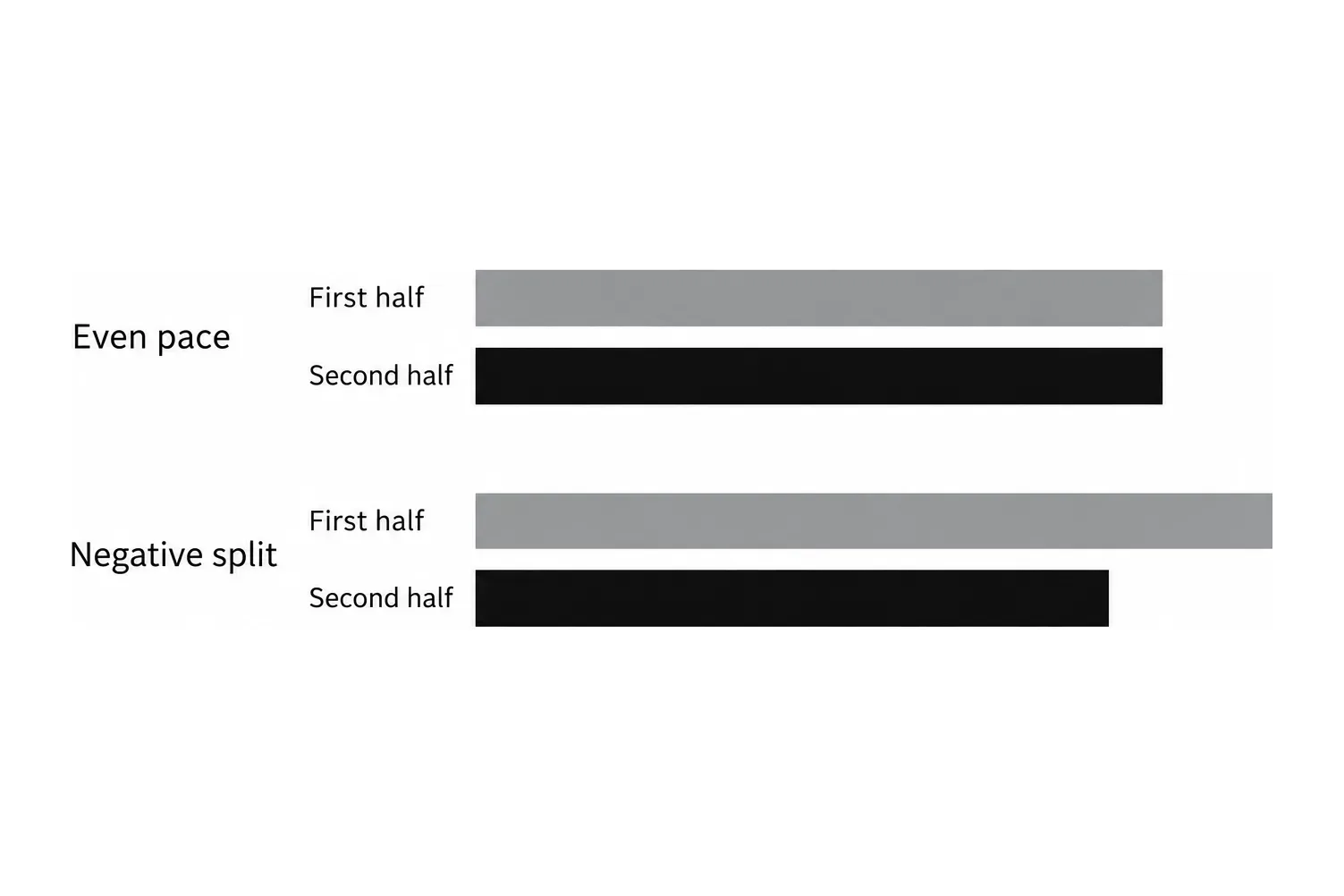
The even option holds one pace throughout. The negative split option starts 1% slower than average and finishes 1% faster, which on a 2:00:00 goal means 1:00:36 at halfway and 59:24 for the second half.
Working backward is just as useful, which makes the chart a half marathon time calculator too. If you know the pace you can hold, find it in the pace columns and read the finish time on the left. If a recent race says you can hold 6:24 per km (10:18 per mile) for the full distance, for example, you are looking at the 2:15:00 row. If you want that sustainable pace to come down, the guide to running faster on an 80/20 week shows which sessions to add. To switch an easy or tempo pace between per km, per mile and treadmill mph, use this km to mile pace chart.
Half marathon pace chart from 1:10 to 3:30
Each row divides the goal time by 21.0975 km (13.1 mi), the official distance on the World Athletics half marathon page, to give one average pace, then multiplies it out to the 5K, 10K, 15K and 20K marks.
Half marathon pace chart
| Goal time | Pace per km | Pace per mile | 5K 5 km (3.1 mi) | 10K 10 km (6.2 mi) | 15K 15 km (9.3 mi) | 20K 20 km (12.4 mi) |
|---|---|---|---|---|---|---|
| 1:10:00 | 3:19 /km | 5:20 /mi | 16:35 | 33:11 | 49:46 | 1:06:22 |
| 1:15:00 | 3:33 /km | 5:43 /mi | 17:46 | 35:33 | 53:19 | 1:11:06 |
| 1:20:00 | 3:48 /km | 6:06 /mi | 18:58 | 37:55 | 56:53 | 1:15:50 |
| 1:25:00 | 4:02 /km | 6:29 /mi | 20:09 | 40:17 | 1:00:26 | 1:20:35 |
| 1:30:00 | 4:16 /km | 6:52 /mi | 21:20 | 42:40 | 1:03:59 | 1:25:19 |
| 1:35:00 | 4:30 /km | 7:15 /mi | 22:31 | 45:02 | 1:07:33 | 1:30:03 |
| 1:40:00 | 4:44 /km | 7:38 /mi | 23:42 | 47:24 | 1:11:06 | 1:34:48 |
| 1:45:00 | 4:59 /km | 8:01 /mi | 24:53 | 49:46 | 1:14:39 | 1:39:32 |
| 1:50:00 | 5:13 /km | 8:23 /mi | 26:04 | 52:08 | 1:18:12 | 1:44:17 |
| 1:55:00 | 5:27 /km | 8:46 /mi | 27:15 | 54:31 | 1:21:46 | 1:49:01 |
| 2:00:00 | 5:41 /km | 9:09 /mi | 28:26 | 56:53 | 1:25:19 | 1:53:45 |
| 2:05:00 | 5:55 /km | 9:32 /mi | 29:37 | 59:15 | 1:28:52 | 1:58:30 |
| 2:10:00 | 6:10 /km | 9:55 /mi | 30:49 | 1:01:37 | 1:32:26 | 2:03:14 |
| 2:15:00 | 6:24 /km | 10:18 /mi | 32:00 | 1:03:59 | 1:35:59 | 2:07:59 |
| 2:20:00 | 6:38 /km | 10:41 /mi | 33:11 | 1:06:22 | 1:39:32 | 2:12:43 |
| 2:25:00 | 6:52 /km | 11:04 /mi | 34:22 | 1:08:44 | 1:43:06 | 2:17:27 |
| 2:30:00 | 7:07 /km | 11:27 /mi | 35:33 | 1:11:06 | 1:46:39 | 2:22:12 |
| 2:35:00 | 7:21 /km | 11:49 /mi | 36:44 | 1:13:28 | 1:50:12 | 2:26:56 |
| 2:40:00 | 7:35 /km | 12:12 /mi | 37:55 | 1:15:50 | 1:53:45 | 2:31:41 |
| 2:45:00 | 7:49 /km | 12:35 /mi | 39:06 | 1:18:12 | 1:57:19 | 2:36:25 |
| 2:50:00 | 8:03 /km | 12:58 /mi | 40:17 | 1:20:35 | 2:00:52 | 2:41:09 |
| 2:55:00 | 8:18 /km | 13:21 /mi | 41:28 | 1:22:57 | 2:04:25 | 2:45:54 |
| 3:00:00 | 8:32 /km | 13:44 /mi | 42:40 | 1:25:19 | 2:07:59 | 2:50:38 |
| 3:05:00 | 8:46 /km | 14:07 /mi | 43:51 | 1:27:41 | 2:11:32 | 2:55:23 |
| 3:10:00 | 9:00 /km | 14:30 /mi | 45:02 | 1:30:03 | 2:15:05 | 3:00:07 |
| 3:15:00 | 9:15 /km | 14:52 /mi | 46:13 | 1:32:26 | 2:18:39 | 3:04:51 |
| 3:20:00 | 9:29 /km | 15:15 /mi | 47:24 | 1:34:48 | 2:22:12 | 3:09:36 |
| 3:25:00 | 9:43 /km | 15:38 /mi | 48:35 | 1:37:10 | 2:25:45 | 3:14:20 |
| 3:30:00 | 9:57 /km | 16:01 /mi | 49:46 | 1:39:32 | 2:29:18 | 3:19:05 |
What pace is a 2 hour half marathon?
A 2 hour half marathon needs 5:41 per km (9:09 per mile). At an even pace you pass 5K (3.1 mi) in 28:26, 10K (6.2 mi) in 56:53 and 15K (9.3 mi) in 1:25:19.
These are the goals runners search for most, with the checkpoint times you would see at even pace:
| Goal time | Pace per km | Pace per mile | 5K (3.1 mi) | 10K (6.2 mi) | 15K (9.3 mi) | 20K (12.4 mi) |
|---|---|---|---|---|---|---|
| 1:30:00 | 4:16 /km | 6:52 /mi | 21:20 | 42:40 | 1:03:59 | 1:25:19 |
| 1:45:00 | 4:59 /km | 8:01 /mi | 24:53 | 49:46 | 1:14:39 | 1:39:32 |
| 2:00:00 | 5:41 /km | 9:09 /mi | 28:26 | 56:53 | 1:25:19 | 1:53:45 |
| 2:15:00 | 6:24 /km | 10:18 /mi | 32:00 | 1:03:59 | 1:35:59 | 2:07:59 |
| 2:30:00 | 7:07 /km | 11:27 /mi | 35:33 | 1:11:06 | 1:46:39 | 2:22:12 |
| 3:00:00 | 8:32 /km | 13:44 /mi | 42:40 | 1:25:19 | 2:07:59 | 2:50:38 |
A goal pace is something you rehearse, not something you hope for. A common way to practice it is a tempo or goal-pace block of 3 to 6 km (2 to 4 mi) inside a midweek run, growing toward 8 to 10 km (5 to 6 mi) in the last month, with the rest of the week at easy pace. General training guidance, not medical advice. Check with a doctor before increasing training if you have symptoms or a health condition.
Can you double your half marathon time to get a marathon time?
Not reliably. A 2:00:00 half held for a full marathon would give 4:00:00, but doubling assumes you can hold the same pace twice as long, and almost nobody can. Pace slows as the distance grows.
Riegel's formula, the most common correction, multiplies a half marathon time by about 2.085 instead of 2:
| Half marathon | Simply doubled | Riegel's formula |
|---|---|---|
| 1:30:00 | 3:00:00 | 3:07:39 |
| 1:45:00 | 3:30:00 | 3:38:55 |
| 2:00:00 | 4:00:00 | 4:10:12 |
| 2:15:00 | 4:30:00 | 4:41:28 |
| 2:30:00 | 5:00:00 | 5:12:44 |
Even the Riegel column assumes marathon-specific training: weekly long runs, fueling practice and enough weekly distance. The race time predictor gives a range from two methods and explains why marathon estimates run optimistic, and the marathon pace chart shows what each marathon goal means per kilometer and per mile.
Even pace or negative split over 21.1 km (13.1 mi)
A slight negative split is the safer plan for most half marathons. Our guide on how to run a negative split covers the race-day steps and the training sessions behind a faster second half. The cost of a fast start shows up after 15K (9.3 mi), exactly where you want the most left.
| Goal time | Even pace | First half (1% slower) | Second half (1% faster) | Halfway clock time |
|---|---|---|---|---|
| 1:45:00 | 4:59 /km (8:01 /mi) | 5:02 /km (8:05 /mi) | 4:56 /km (7:56 /mi) | 53:02 |
| 2:00:00 | 5:41 /km (9:09 /mi) | 5:45 /km (9:15 /mi) | 5:38 /km (9:04 /mi) | 1:00:36 |
| 2:15:00 | 6:24 /km (10:18 /mi) | 6:28 /km (10:24 /mi) | 6:20 /km (10:12 /mi) | 1:08:10 |
| 2:30:00 | 7:07 /km (11:27 /mi) | 7:11 /km (11:33 /mi) | 7:02 /km (11:20 /mi) | 1:15:45 |
How to use a half marathon pace chart on race day
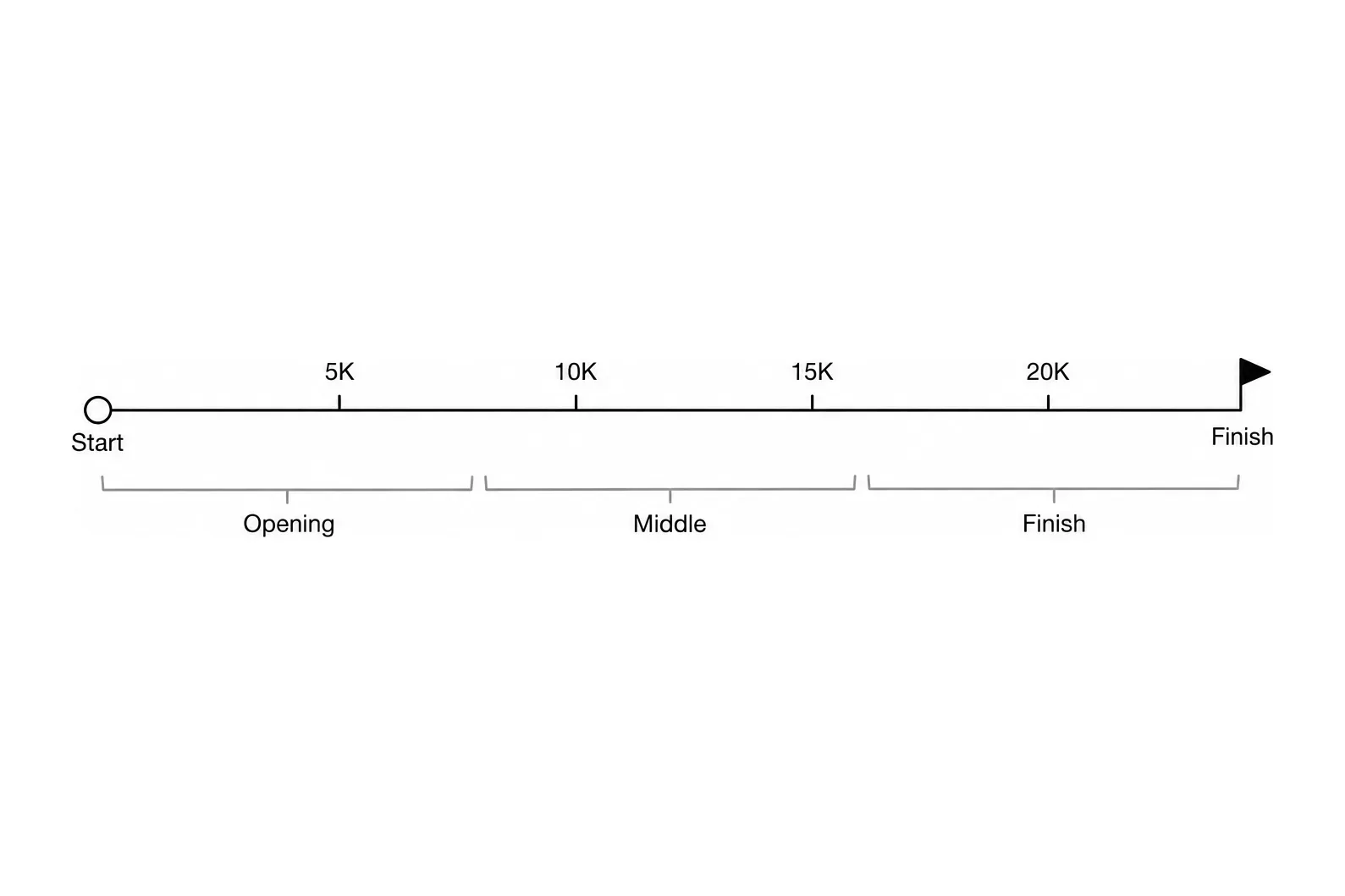
A half marathon is short enough that a fast start can still feel fine at 10K (6.2 mi) and long enough that it shows up after 15K (9.3 mi). Before the start, note three times from your row: 5K, 10K and 15K. They split the race into an opening, a middle and a finish.
| Part of the race | Distance | What to aim for |
|---|---|---|
| Opening | Start to 5K (3.1 mi) | Within about 20 seconds of your chart time; let the field spread out |
| Middle | 5K to 15K (3.1 to 9.3 mi) | Adjust by a few seconds per km at each checkpoint; even effort on hills |
| Finish | 15K to the line, 6.1 km (3.8 mi) | Press if you are on time or ahead; hold steady if you are behind |
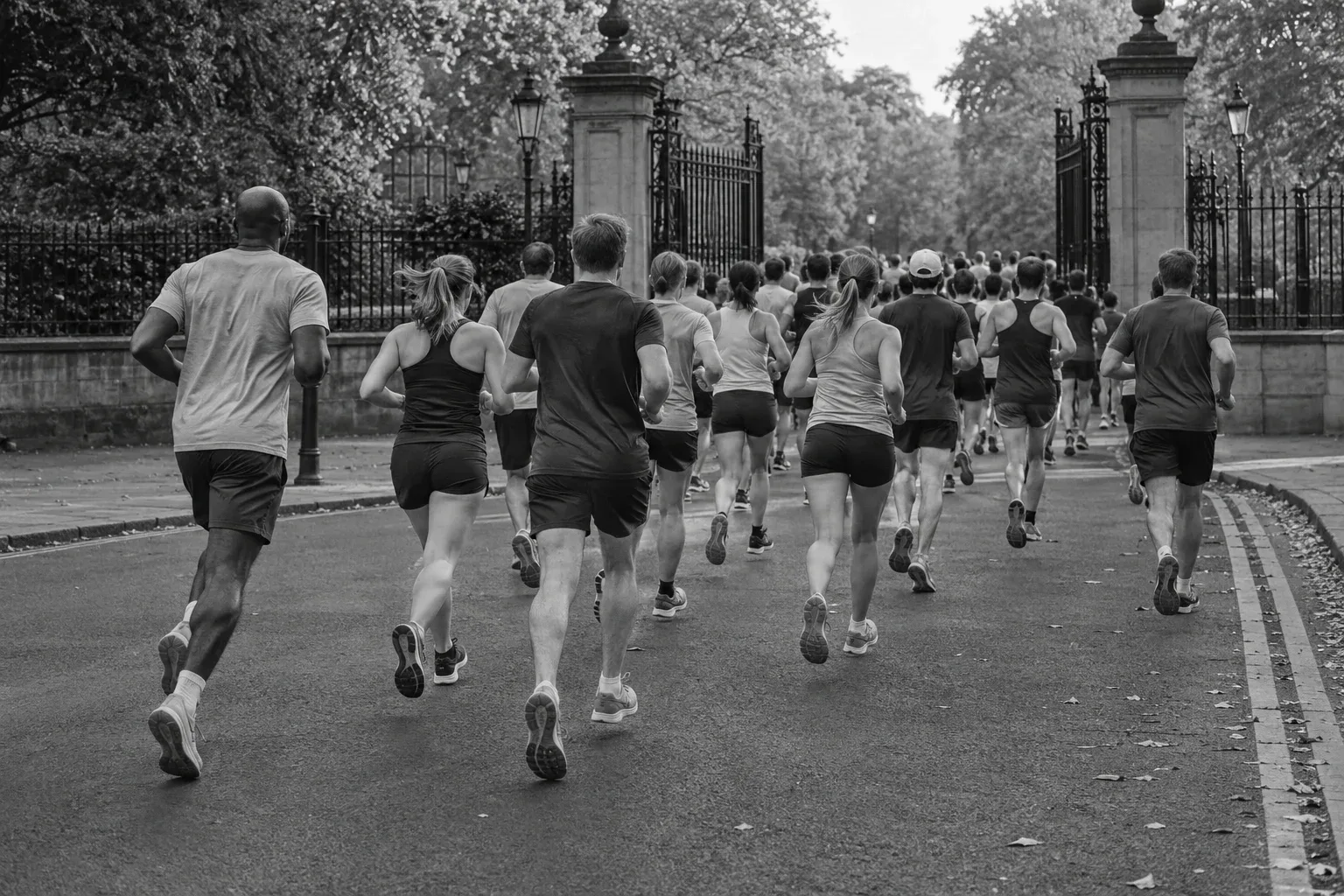
In the opening, many courses start on wide roads and narrow early, so a slow first kilometer is common. Spread any catch-up over the next few kilometers instead of taking it back in one surge.
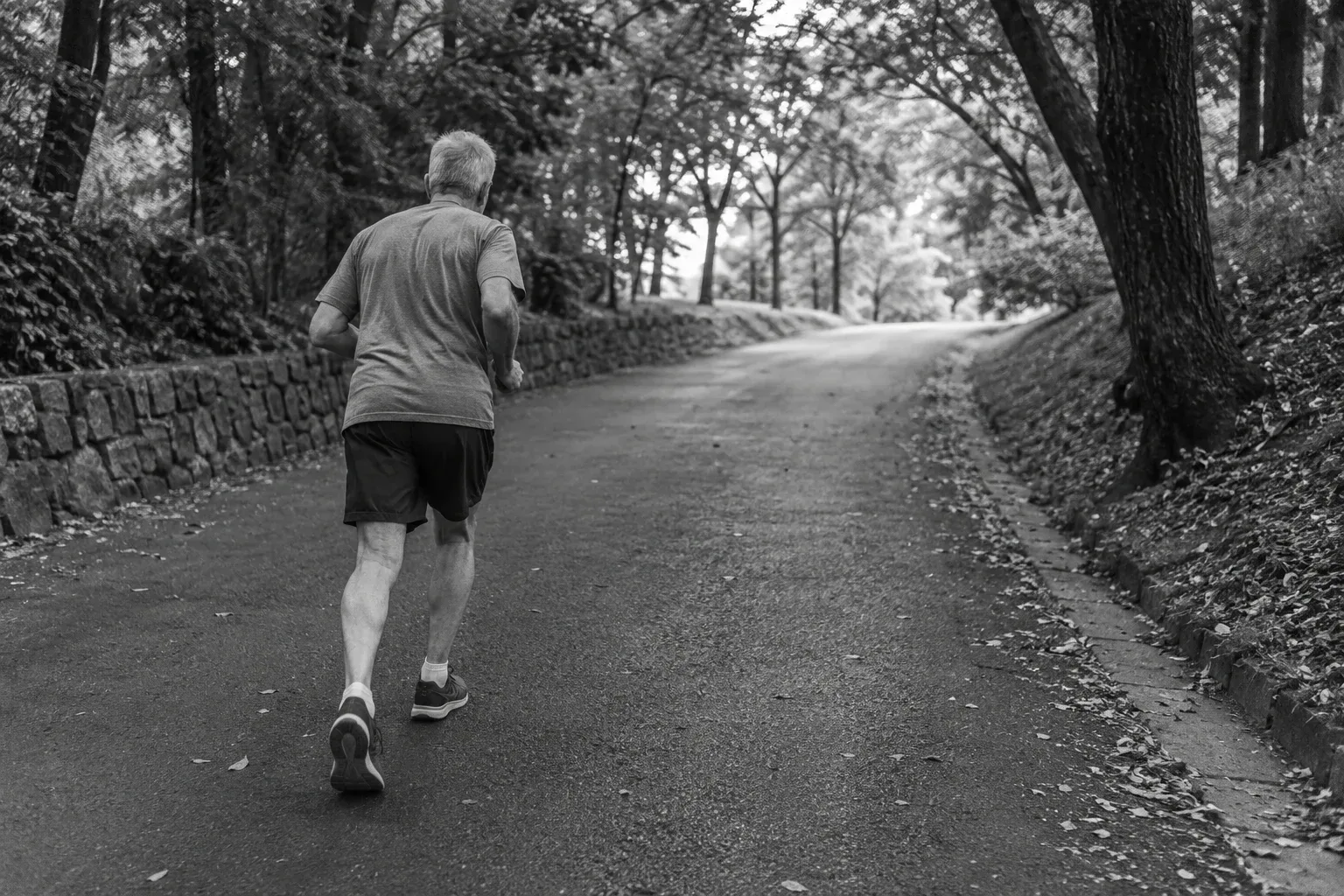
In the middle, the band does most of the work. Compare each checkpoint and run hills at an even effort, letting the pace come back on the way down.
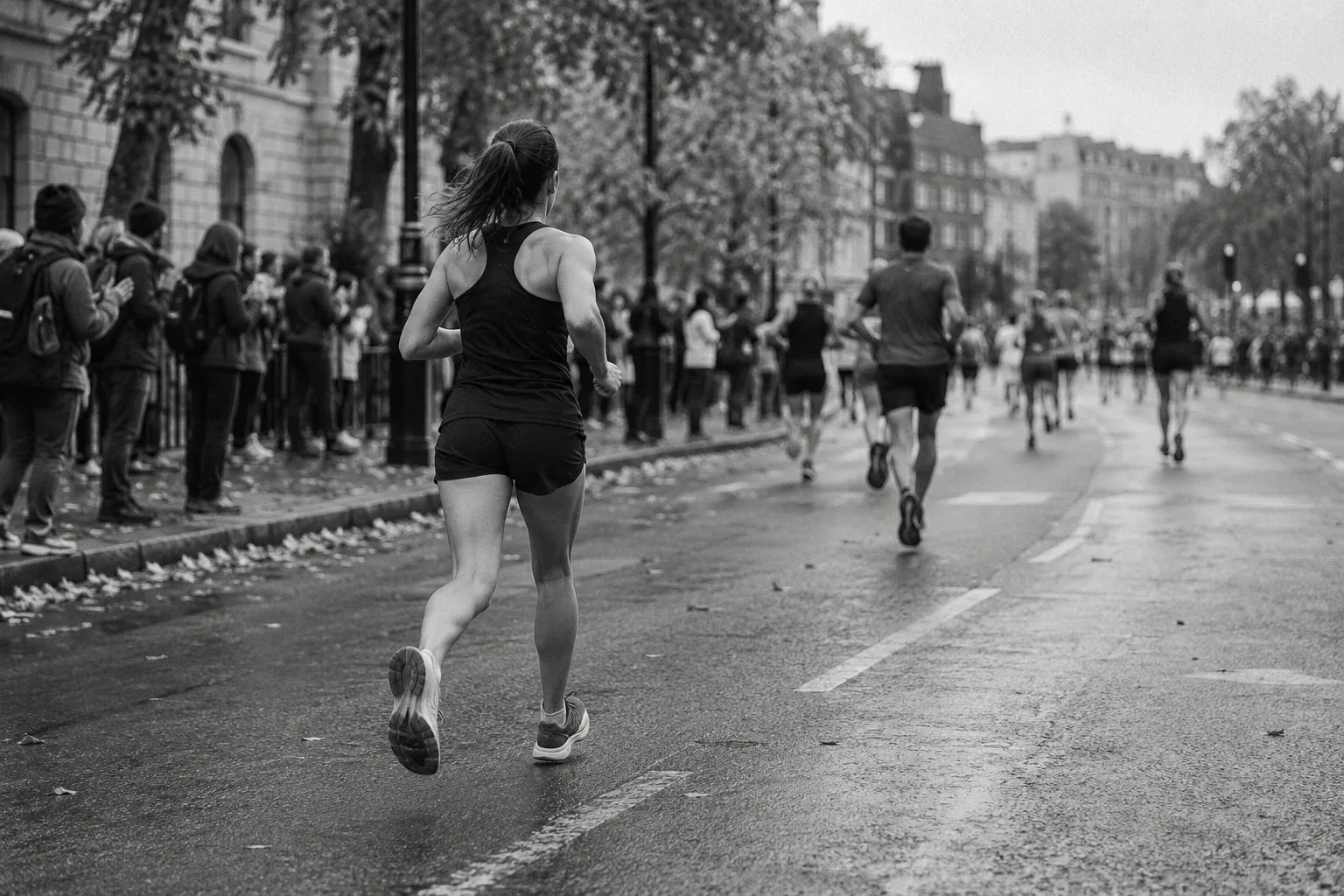
In the finish, the last 6.1 km (3.8 mi) is the place to press if you are on time or ahead. If you are behind, holding a steady pace is safer than a late chase that fades before the line. The 20K split tells you, with 1.1 km (0.7 mi) to go, whether it is worth emptying the tank.
Print a half marathon pace band
A half marathon band is short: four checkpoints and the finish for 5 km markers, or two and the finish for 5 mile markers.
How to print a half marathon pace band
- Enter your goal
Type your goal time into the calculator above, for example 2:00:00.
- Match your course markers
Choose kilometers or miles to match the distance markers on your course.
- Choose even or negative split
Pick even pace, or the negative split if you want a slightly easier opening.
- Open the print view
The print layout drops everything except the band, with cumulative checkpoint times for your goal.
- Carry it where you can read it
Fold it into a pocket or tape it to the back of a gel you will hold anyway.
When race day is fine but the weeks before it are not
You can do all of the above for free and without an account: the chart, the calculator and the band are the whole method. The part a pace chart cannot help with is the training block. Picking a 2:00:00 row is easy; arriving at the start ready to hold 5:41 per km (9:09 per mile) is ten or twelve weeks of work, and a printed plan has a blind spot. It doesn't move when your week does. Miss a long run to a cold or a work trip and the plan simply carries on to the next row.
The fix is a plan built from your race date that adjusts when life does. Build your free plan for your race date. On the Coach plan, next week re-plans itself when you miss a run.
Free training plan
Build your free plan for your race date.
Pick your race and race date. Every week from today to race day is planned for you, with distances in km and miles.
Not sure which plan length fits? The 12-week half marathon plan suits most first-timers, the 8-week plan is for runners who already cover 8 to 10 km (5 to 6 mi), and the 16-week plan starts with a base phase. If you are comparing apps, see how Raceblock works as a Runna alternative and how Free and Coach compare.
Embed this half marathon pace chart
Club, race or coaching site? The half marathon pace chart and calculator can sit on your page with one snippet.
Use this half marathon pace chart on your site
Copy the code to add the tool to a club site, race page or coaching blog. Keep the credit link so readers can find the full guide.
Embed code
<iframe src="https://myraceblock.com/embed/half-marathon-pace-chart" title="Half marathon pace chart" width="100%" height="640" style="border:0" loading="lazy"></iframe> <p>Free <a href="https://myraceblock.com/blog/half-marathon-pace-chart">half marathon pace chart</a> by Raceblock</p>Full guide: Half marathon pace chart.
Choose one row, note your 5K, 10K and 15K times, and let the first kilometer be slow. Check the 20K split before deciding how hard to finish. That covers most of half marathon pacing.
For the training behind your row, the half marathon training plan guide compares every plan length side by side, or you can build a free plan for your race date with your goal pace already in it.
Frequently asked questions
It is 5:41 per km (9:09 per mile). At an even pace you pass 5K in 28:26, 10K in 56:53 and 15K in 1:25:19.
A respectable pace is one you can hold for 21.1 km (13.1 mi) after the training you have done. If you are unsure, start from a recent 5K or 10K result in a race time predictor and plan around the slower end of the predicted range. To see where a finish time sits against other runners, check the median half marathon times for men and women.
A 2:30:00 half marathon is 7:07 per km (11:27 per mile), and covering 21.1 km (13.1 mi) at that pace takes steady training. Whether it is a good time depends on your history and goals, not on a universal standard.
Check your race's published cutoff time first, since that is the only limit that matters on the day. A 3:00:00 half is 8:32 per km (13:44 per mile). Run/walk intervals can help you hold an even overall pace at that speed.
They are hard in different ways. A half marathon covers 21.1 km (13.1 mi), more than four times the 5 km (3.1 mi) of a 5K, at a pace that is slower but held far longer. The half asks for more endurance training; the 5K asks for more speed at a higher effort.
Yes. Choose a goal time and kilometers or miles, then open the print view. It includes cumulative checkpoints for the selected goal so you can compare your elapsed time on the course.
Free training plan
Build your free plan for your race date.
On the Coach plan, next week re-plans itself when you miss a run.
Share article
About the author
More running training guides
Pacing and race day · 11 min
10K Running Pace Chart: Every Time From 35 to 75 Minutes
A 10K running pace chart for every finish time from 35:00 to 1:15:00: pace per km and per mile, 5 km halfway splits, 400 m laps, treadmill speeds, and what your 10K says about a half or marathon.
Pacing and race day · 10 min
How Long Does It Take to Run a Mile? Times by Age and Pace
Most people run a mile in 9 to 13 minutes at an easy pace and 6 to 8 minutes at race effort. See mile times by age, pace per km and how to get faster.
Pacing and race day · 9 min
How Long to Run a 10K: Finish Times, Miles and Training
A 10k run is 10 km (6.21 mi) and takes about 60 minutes at 6:00 /km (9:39 /mi). See finish times at every pace, how long to train for one and how to pace your first race.
Pacing and race day · 10 min
5K Running Pace Chart: Every Time From 15 to 45 Minutes
A 5K running pace chart for every finish time from 15:00 to 45:00: pace per km and per mile, 400 m lap times, treadmill speeds, and what your 5K says about a half or marathon.
Pacing and race day · 10 min
Average 5K Time by Age for Men and Women (20 to 80)
The average 5K time by age is about 22:41 for men and 27:19 for women in their 20s, slowing by about a minute every five years after 35. Here are the age tables, the race field median of 34:37, and how to find your own time.
Pacing and race day · 10 min
Running Pace Conversion Chart: Km, Mile and Treadmill
Convert any running pace between minutes per km and minutes per mile, and treadmill mph or km/h into pace, with marathon and half marathon finish times in the same charts.