
What to Eat Before a Run: Timing, Best Foods and a Simple Carb Rule
Raceblock team Updated November 19, 2026 14 min read
Free training plan for your race date
Free training plan for your race date
Build my free planIn this article
What to eat before a run depends on how long you have until you start. Three to four hours out, eat a normal carb-based meal; one to two hours out, a small snack like toast with honey or a banana; under an hour, something tiny and easy like half a banana, or just water. For an easy run under an hour, you can skip food entirely if you feel fine.
That is the one idea this guide turns on: the clock picks the menu, not the run. Most stomach trouble on runs doesn't come from eating the wrong food. It comes from eating the right food too close to the start.
What and when to eat before a run: the timing table
The closer you get to the start, the smaller and plainer the food should be. Fat, fiber and protein are good for you but slow down digestion, so they belong in the meal hours before, not the snack minutes before. Carbs digest fastest and are the fuel you burn most of on a run.
| Time before your run | What to eat | Examples |
|---|---|---|
| 3 to 4 hours | A full meal: mostly carbs, some protein, a little fat | Rice or pasta with chicken, eggs on toast with fruit, a bagel with peanut butter and a banana |
| 1 to 2 hours | A small snack: mostly carbs, low fat, low fiber | Toast with honey or jam, a bowl of oats, a plain bagel, yogurt with a banana |
| 30 to 60 minutes | A few bites of fast carbs | Half a banana, a handful of pretzels or crackers, a few dried dates |
| Under 30 minutes | Water, or nothing | If you need something: a sip of sports drink |
Use the table as a starting point, then adjust to your own stomach. Some runners eat a full bagel 45 minutes before and feel great. Others need two clear hours after breakfast. You only find out by testing it on training runs.
How much to eat before a run: the simple carb rule
The joint sports nutrition position statement from the American College of Sports Medicine recommends 1 to 4 g of carbohydrate per kg of body weight, eaten 1 to 4 hours before exercise that lasts longer than an hour (ACSM, 2016). An easy way to use that range: about 1 g per kg for every hour you have before the run.
Here is the math for a 70 kg (154 lb) runner:
- 1 hour out: about 70 g of carbs
- 2 hours out: about 140 g
- 3 to 4 hours out: about 210 to 280 g, which is a full breakfast or lunch
To put grams into food terms, a medium banana is about 27 g of carbs, a slice of white toast about 15 g, a tablespoon of honey about 17 g, a plain bagel about 50 g, and a cup of cooked white rice about 45 g. So a 70 kg (154 lb) runner with one hour to go could have a banana plus two slices of toast with honey and land near 74 g.
You don't need to weigh anything for an easy 5 km (3.1 mi) jog. The math matters for long runs, hard sessions and race mornings, where running out of fuel shows up as legs that suddenly feel heavy in the last third of the run. On runs of several hours the fueling carries on during the run itself: here is how to build up carbs per hour on ultra long runs, from about 30 g an hour toward race day.

What is best to eat before a run?
The best pre-run food is something mostly carbs, low in fat and fiber, that you have eaten before without trouble. That's it. There is no magic food, but there are reliable ones:
- Banana. About 27 g of carbs, easy to digest, portable. The default for a reason.
- Toast or a bagel with honey or jam. Plain white bread digests faster than whole grain before a run. Save the seeded loaf for after.
- Oats. Great 2 hours out. Closer than that, the fiber can sit heavy, so keep the bowl small.
- Rice, pasta or potatoes. The base of a good meal 3 to 4 hours before an afternoon or evening run.
- Yogurt. Fine for many runners about 2 hours out, but test it first if dairy ever bothers you on the move.
- Pretzels, crackers, dates. Small, salty or sweet, quick. Good for the 30 to 60 minute slot.
Coffee is fine if you already drink it. Many runners like it before a morning run, and it often helps get the bathroom visit done before you leave the house. Just don't try your first double espresso on a race morning.
What to eat before a morning run
Most runners who ask what to eat before a run are asking about the morning, when there is no time for a meal. Your choice depends on what kind of run it is.
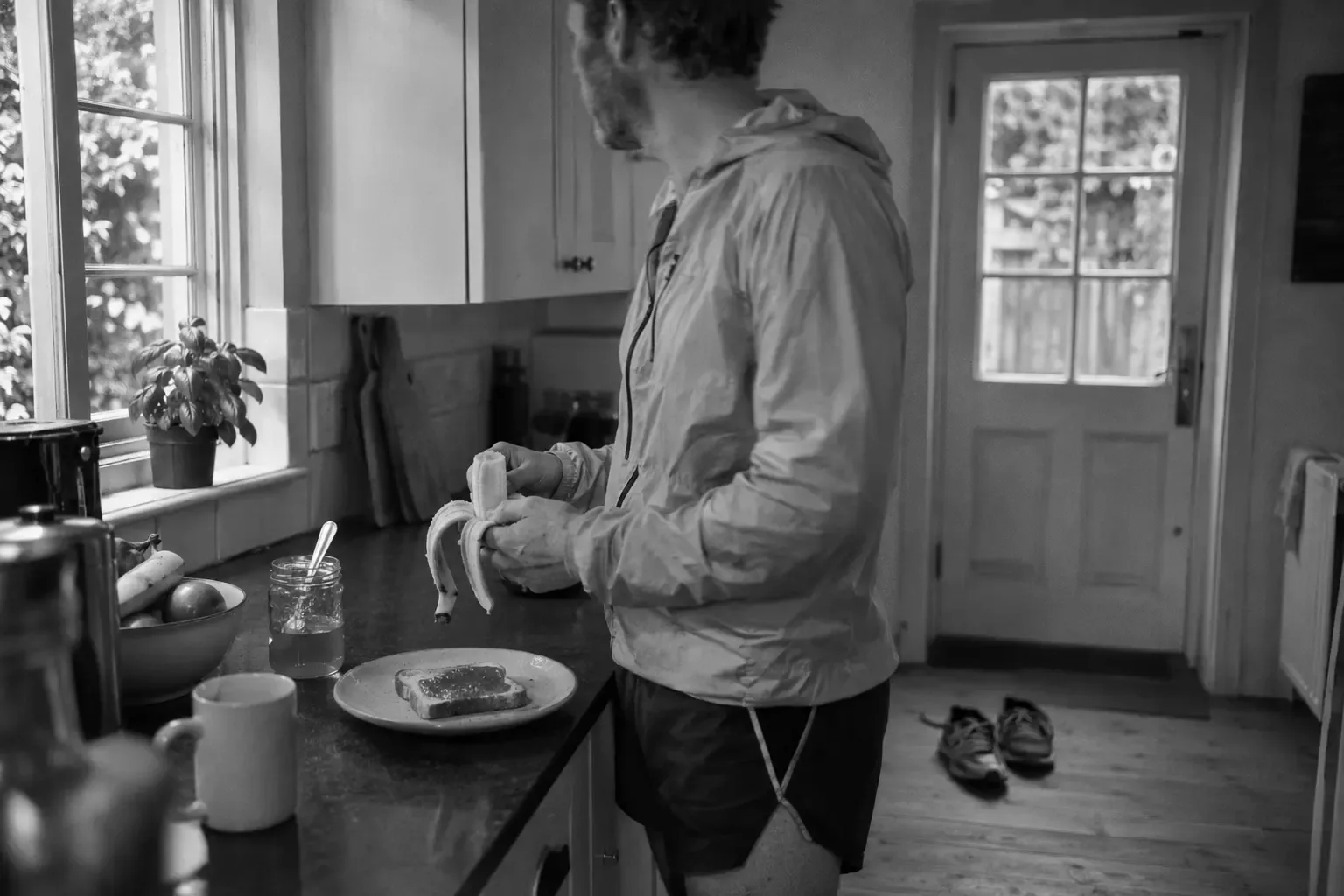
An easy run under 60 minutes. You can run without eating. Your body still has carbs stored in the muscles and liver from dinner. If you feel shaky or flat when you run fasted, eat half a banana or a slice of toast with honey as you get dressed, plus a glass of water.
A hard session or a run over 60 minutes. Eat something. Set the alarm 30 to 60 minutes earlier and have a small carb snack: a banana and a slice of toast, or a plain bagel with jam. If you can't face food that early, a sports drink is easier on the stomach and still gives you carbs.
A long run on the weekend. Treat it like a dress rehearsal for race morning. Eat 2 to 3 hours before if you can, or get up, eat and go back to bed for an hour. Most long runs in a marathon training plan start early, so practising this pays off twice.
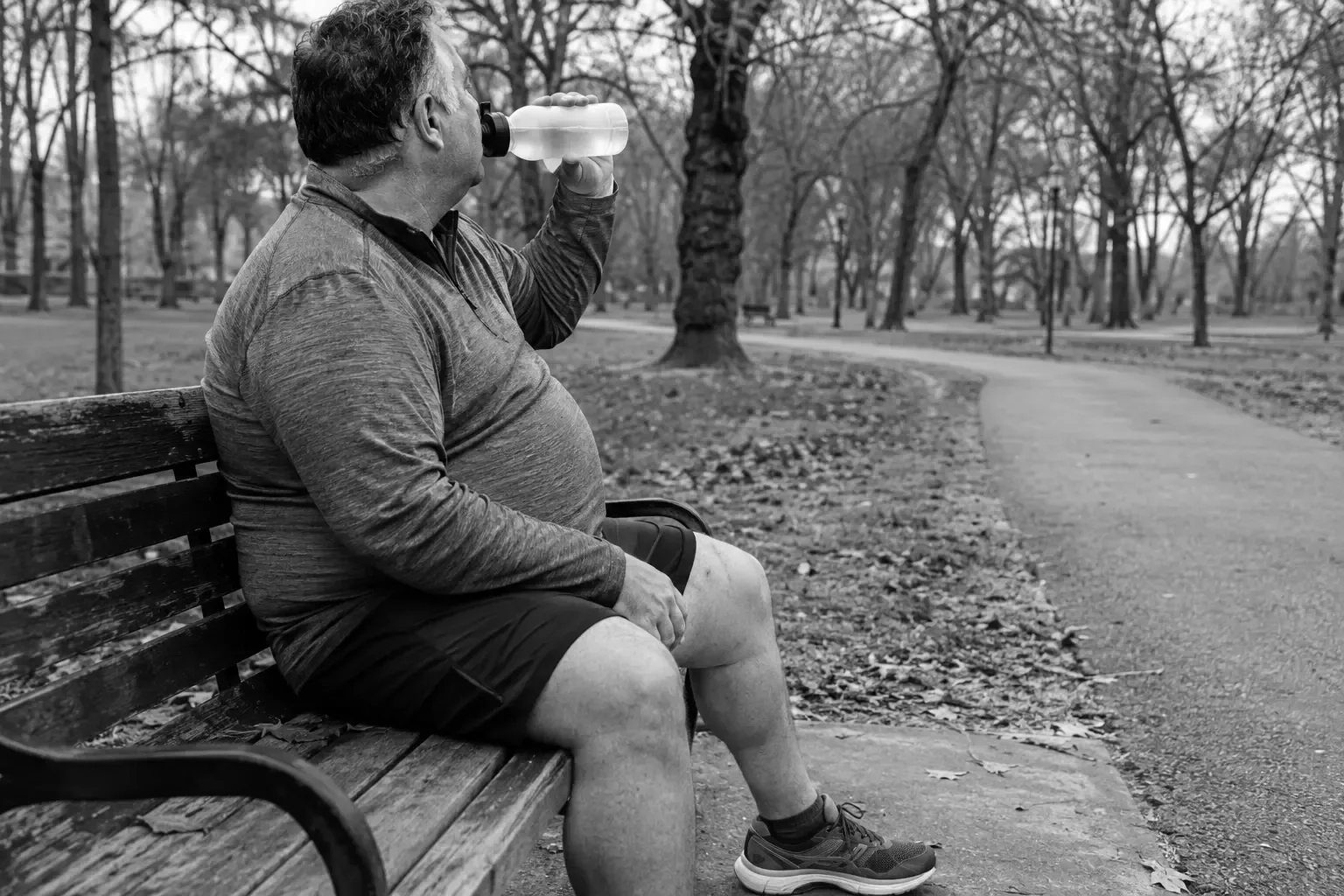
Drink with breakfast too. A glass or two of water, around 300 to 500 ml (10 to 17 fl oz), in the couple of hours before you go is plenty for most runs. Gulping a full bottle just before the start mostly sends you looking for a bathroom.
What to eat before a run, by type of run
The run you are about to do changes how much fuel you need. Here is the verdict for each:
| Run | Eat before? | What to have |
|---|---|---|
| Easy run under 60 min | Optional | Nothing, or half a banana 30 min before |
| Intervals or tempo run | Yes | A small carb snack 1 to 2 hours before |
| Long run, 90 min or more | Yes, and carry fuel | A real breakfast 2 to 3 hours before, plus carbs on the run |
| Evening run after work | Yes | A normal lunch, then a snack 1 to 2 hours before |
| Race morning, 5k or 10k | Yes, light | Your usual pre-run snack 1 to 2 hours before |
| Race morning, half or marathon | Yes, practised | The breakfast you tested on long runs, 2 to 4 hours before |
Easy runs
Easy runs are the bulk of any good training week and the safest place to run with an empty or nearly empty stomach. The effort is low, so your body burns a larger share of fat and needs little extra fuel. If you get hungry by the end, that is your sign to eat a little more next time.
Intervals, tempo runs and hill sessions
Hard sessions burn carbs fast. Run them on empty and the last reps feel slow and heavy, which defeats the point of the session. If speed is your goal, as in how to run faster, eat a small carb snack 1 to 2 hours before. Keep it low in fat and fiber, because hard running jostles the stomach more than easy running does.
Long runs
Long runs are the backbone of any marathon training routine, and for a run of 90 minutes or more, breakfast is only half the job. You also need carbs during the run. The ACSM statement suggests 30 to 60 g of carbs per hour once exercise runs past about an hour (ACSM, 2016). Gels, chews, a sports drink or a few dates all work. Start eating 30 to 45 minutes in, before you feel you need it. The meal afterwards counts too: refueling after a long run means carbs plus about 20 g of protein within 2 hours.

Evening runs

An evening runner has the opposite problem: food all day, but at random times. Eat a normal lunch, then have a small carb snack about 1 to 2 hours before you head out, such as a banana and a few crackers or a slice of toast. Running 30 minutes after a big lunch is how many runners get side stitches. If stitches are your issue, how to breathe while running covers what to do in the moment.
Race mornings
Race morning is not the day to experiment. For a 5k or 10k, eat the same light snack you eat before a hard session, 1 to 2 hours before the start; our guide on what to eat before a 5k run covers that morning in detail. For a half or a full marathon, eat the breakfast you practised on long runs, 2 to 4 hours before, using the 1 g per kg per hour rule. How to run race week itself, with less mileage and nothing new, is in our marathon taper guide.
How to test your pre-run food
Your stomach is trainable, and the only way to know what works is to try it on runs that don't matter. Use this routine over three or four weeks:
How to test what to eat before a run
- Pick one food and one timing
Choose one snack from the table above, say a bagel with jam 90 minutes before. Change only one thing at a time.
- Try it before a normal run
Eat it before an easy or steady run, not a race or a key session. Note what you ate, when, and how your stomach and legs felt.
- Move it closer or make it bigger
If it went well, try it 60 minutes before, or add a banana. If it didn't, go smaller or eat earlier.
- Repeat it before long runs
Once a breakfast works, use it before every long run so it becomes routine by race day.

Mistakes that cost you on the run
- Eating too close to the start. A big meal 30 minutes before is the most common cause of cramps and stitches. Push it back or make it smaller, and if one hits anyway, here is how to stop a side stitch when running.
- High fat, high fiber or spicy food before running. A greasy breakfast, a big salad or a bean burrito can sit in your gut for hours. Eat those after the run.
- Running long or hard on empty. Fine for an easy 30 minutes. For a 25 km (15.5 mi) long run or an interval session it costs you the last third of the run.
- Trying something new on race day. A new gel, a new breakfast or an energy drink handed out at the expo. Stick to what you tested in training.
- Too much water at once. Sip through the morning instead of draining a bottle at the start line.
- Ignoring the evening before. For an early long run, dinner is part of your fuel. A normal carb-based dinner does more than any snack at 5 am.
Fueling only works if the training happens
Getting your pre-run food right makes good runs feel better. It won't fix a plan that falls apart when life gets in the way. That's the wall most runners hit on their own: a sick week, a work trip or a missed long run, and the paper plan doesn't move when your week does. You end up skipping the session or cramming it in tired.
Build your free plan for your race date. On the Coach plan, next week re-plans itself when you miss a run. If your race is a half marathon, a 12-week half marathon training plan is a good length to start from.
Free training plan
Build your free plan for your race date.
Pick your race and race date. Every week from today to race day is planned for you, with distances in km and miles.
General training guidance, not medical advice. Check with a doctor before increasing training if you have symptoms or a health condition. If you have diabetes, a digestive condition or a history of disordered eating, talk to a doctor or registered dietitian before changing how you eat around exercise.
What to eat before a run comes down to the clock. With 3 to 4 hours, eat a real meal built on carbs. With 1 to 2 hours, have a small, plain carb snack. With less than an hour, eat a few bites or nothing at all. Go light before easy runs, eat properly before long and hard ones, and test every breakfast in training before you trust it on race day.
Then put it into a full training block: build your free plan for your race date and practise your race breakfast on every long run. The research on timing is summarised well in the ISSN position stand on nutrient timing if you want to dig deeper.
Frequently asked questions
For an easy run under about 60 minutes, running on an empty stomach is fine for most people and can feel more comfortable. For hard sessions and runs longer than an hour, eating carbs beforehand helps you hold your pace to the end, so it is the better choice.
Yes, for a short, easy morning run, if you feel good doing it. Dinner the night before still leaves fuel stored in your muscles. If you feel dizzy, shaky or flat, eat half a banana or a slice of toast with honey before you go, and always drink some water.
About 30 to 60 minutes before a run works for most people, since a banana is easy to digest. Before a long or hard run, pair it with toast or a bagel and eat it 1 to 2 hours out instead, so you get more carbs without a full stomach.
A donut is a poor choice right before a run. It has quick sugar, but the fat slows digestion and can leave you feeling heavy. If you want something sweet and fast, a bagel with jam or a banana gives you the same carbs with far less fat.
Avoid fatty, fried, very high fiber and spicy food in the 2 to 3 hours before running, plus big portions of beans, raw vegetables or heavy dairy if they bother you. Also avoid anything new on a race morning. Stick to plain carbs you have tested in training.
If you only have 15 to 30 minutes, the best choice is something tiny and fast: half a banana, a few pretzels, a couple of dates or a sip of sports drink. Anything bigger has no time to digest. If you don't need it for an easy run, water alone is fine.
Free training plan
Build your free plan for your race date.
On the Coach plan, next week re-plans itself when you miss a run.
Share article
About the author
More running training guides

Running basics · 12 min
What Is a Recovery Run? Pace, Length and When to Skip It
A recovery run is a short, very easy run you do the day after a long run or hard session. Here is how slow to run it, how long, how it differs from an easy run and a rest day, where it fits in a half or marathon week, and when to skip it.
Running basics · 10 min
10K Beginner Training Schedule: 10 Weeks From Run-Walk
A 10k beginner training schedule for runners starting from run-walk: 10 weeks, three timed sessions a week, a long session that grows to about 70 minutes, the paces behind common finish times and how to adjust the plan to your week.

Running basics · 11 min
10K Training Routine: 3 Runs a Week for 8 Weeks
A 10k training routine is three runs a week on fixed days: one easy run, one faster session and a long run that builds to the full 10 km (6.2 mi) at an easy pace. Here is the weekly layout, the 8-week schedule, the paces and the mistakes that break it.

Running basics · 11 min
5K Training Routine: The Weekly Schedule to Repeat
A good 5K training routine is three or four runs a week on fixed days: one key session, one longer easy run and easy running in between. Here are both weekly layouts, your paces, an 8-week schedule and the mistakes that stall it.
Running basics · 11 min
Interval Training Plan for Running: 8 Weeks With Paces
A simple 8-week interval training plan for running: one session a week at 5 km to 10 km effort, with paces per km and per mile, jog recoveries, a sample week and how to adjust it for a half marathon, a marathon or a comeback.
Running basics · 10 min
Running in the Heat: 9 Tips to Train Safely All Summer
Running in the heat tips that work: run early, run by effort instead of pace, drink and add salt on long runs, adapt over two weeks, and know the warning signs that mean stop.