
What to Eat Before a 5k Run: Timing and 6 Race Breakfasts
Raceblock team Updated November 11, 2026 13 min read
Free training plan for your race date
Free training plan for your race date
Build my free planIn this article
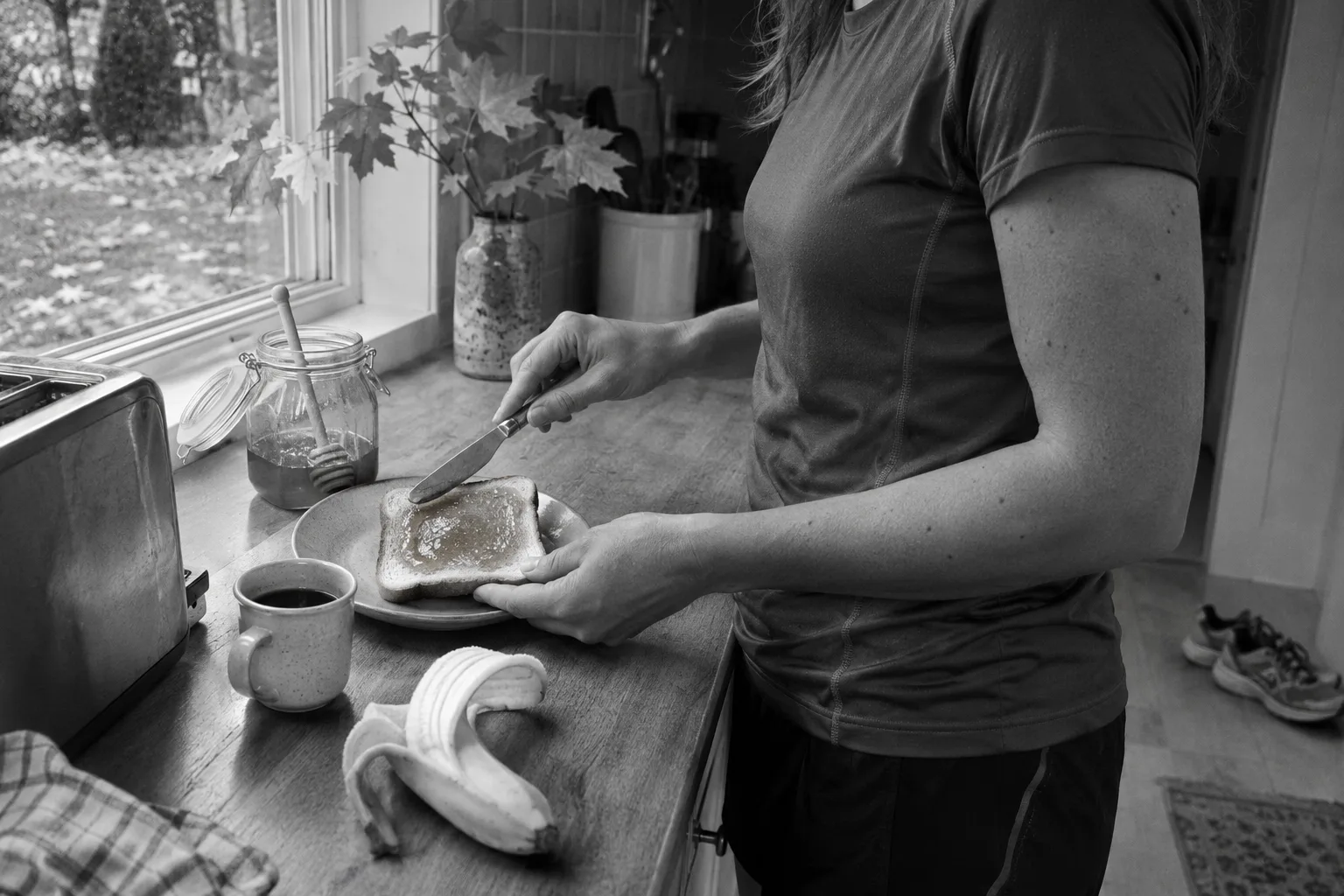
Before a 5k run, eat a small, mostly carb breakfast you already know sits well, about 2 to 3 hours before the start: toast with honey and a banana, a plain bagel, or a bowl of oatmeal. If you only have an hour, have half a banana or a few crackers, sip water, and stop eating solid food about 60 minutes before the gun.
A 5 km (3.1 mi) race lasts 15 to 45 minutes for most runners, which is too short to run out of fuel. The real risk on 5k morning is the opposite: too much food, too late, or something new, sloshing around while you run hard. So the goal is simple: not hungry, not full, nothing new. For everyday training runs and longer distances, see our full guide on what to eat before a run. The middle finisher at a typical race takes about 35 minutes, and our guide to how 5K times change with age has the full tables.
Why a 5k needs less food than you think
Your muscles store enough carbohydrate for well over an hour of hard running, and a 5k uses a fraction of it. That is why carb loading is meant for races longer than about 90 minutes, according to the American College of Sports Medicine position stand on nutrition and athletic performance. A 5k is not one of them.
What a 5k does demand is a hard effort from the first minute. Your heart rate climbs fast, blood goes to your legs instead of your gut, and a full stomach becomes a side stitch or a dash to the portable toilets at 3 km (1.9 mi). That is the whole game: a 5k breakfast is about comfort, not fuel.
How long before a 5k should you eat?
Eat a small meal 2 to 3 hours before the start, or a light snack 60 minutes before if that is all the time you have. The closer you get to the start, the smaller and simpler the food should be.
| Time before the start | What to eat | Example |
|---|---|---|
| 3 to 4 hours | A normal small meal, mostly carbs, a little protein, low fat | Bagel with a thin layer of peanut butter and a banana |
| 2 to 3 hours | A light carb breakfast | Two slices of white toast with honey |
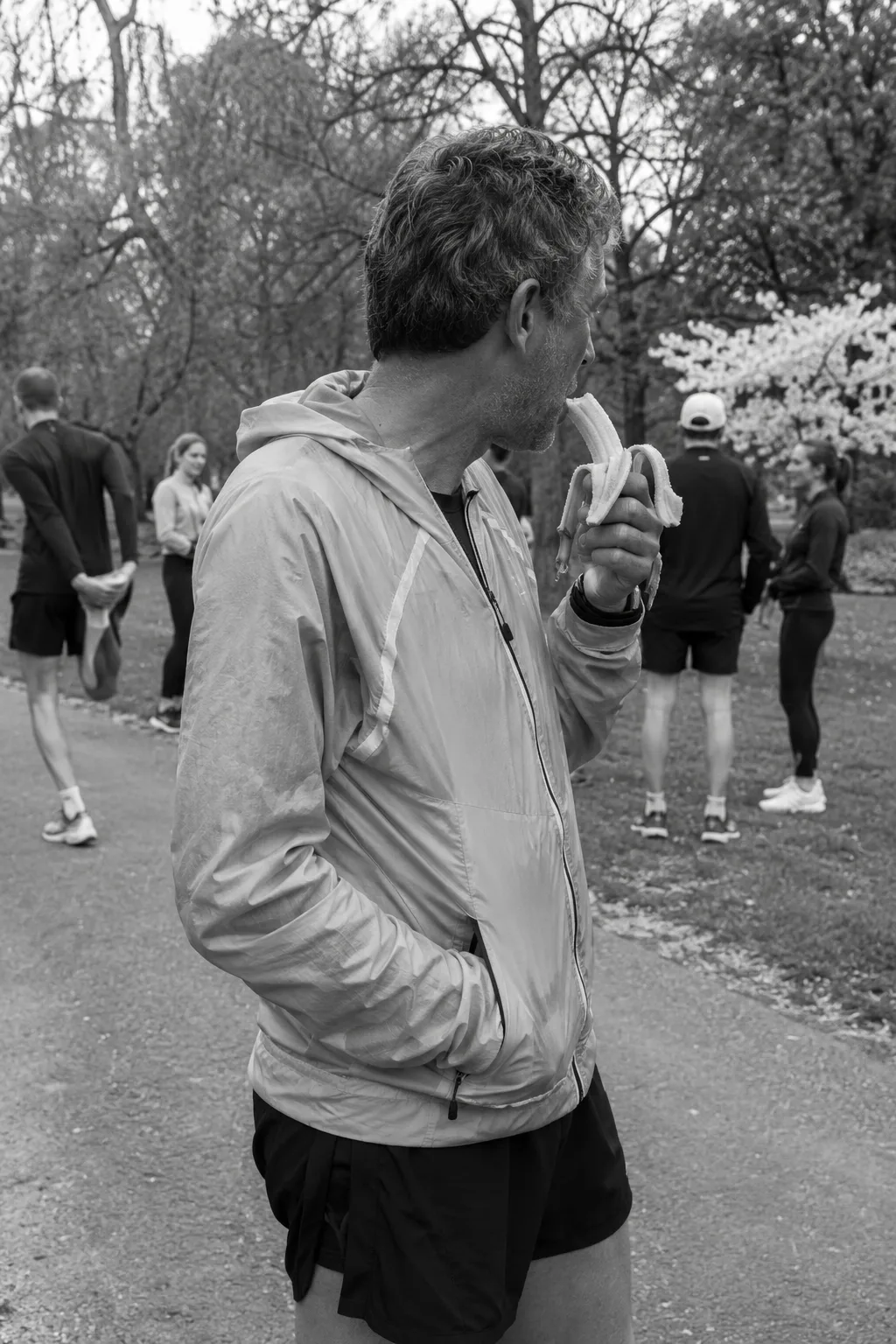
| 60 to 90 minutes | A small snack | Half a banana, a few crackers or a rice cake |
| 15 to 60 minutes | Sips of water only | 150 to 250 ml (5 to 8 fl oz) of water |
| At the start | Nothing |
The ACSM guidelines suggest 1 to 4 g of carbohydrate per kg of body weight in the 1 to 4 hours before exercise that lasts longer than an hour. For a 70 kg (154 lb) runner the low end is 70 g. A 5k is shorter than that, so most runners do well at 30 to 60 g in the 2 to 3 hours before, which is about the size of a normal light breakfast.
What to eat before a 5k, by race start time
Race time changes the plan more than anything else. Find your start time and work back.
| Your race | When to eat | What to eat |
|---|---|---|
| Early start, 7 or 8 am | 5:30 to 6:00 am, or a snack at 6:30 am | Toast with honey, or a banana and a sports drink |
| Mid-morning, 9 or 10 am | 6:30 to 7:30 am | A full light breakfast: bagel, oatmeal or toast |
| Evening race, 6 or 7 pm | Normal breakfast and lunch, snack at 3 to 4 pm | Lunch as usual, then a banana or a rice cake with jam |
| Nervous stomach on race day | 3 hours out, then nothing solid | White toast or a sports drink, both low in fiber |
| Easy fun run, not racing | Whatever you usually eat before a run | Your normal pre-run snack |
Early morning 5k: eat small, or eat early
If your race starts at 8 am, you have two good options. Get up at 5:30 am, eat a light breakfast and go back to resting, or sleep in and eat a small snack like half a banana about 60 to 90 minutes before. Both work. Pick the one you have practiced.
Many runners run an early 5k with nothing but water and feel fine, because a night's fast does not empty the carbs in your muscles. If you feel shaky or lightheaded when you run on empty, eat something small.
Evening 5k: protect your lunch
An evening race gives you a whole day to get it wrong. Eat a normal breakfast and a normal lunch, keep lunch away from heavy, greasy or very spicy food, and have a small carb snack 2 to 3 hours before the start. Then stop.
Race-day breakfasts that work before a 5k
These are simple, low in fat and fiber, and easy to repeat. The carb numbers are approximate, so check your own labels.
| Breakfast | Approx. carbs | Best for |
|---|---|---|
| Two slices of white toast with 1 tbsp honey | About 45 g | Most runners, 2 to 3 hours out |
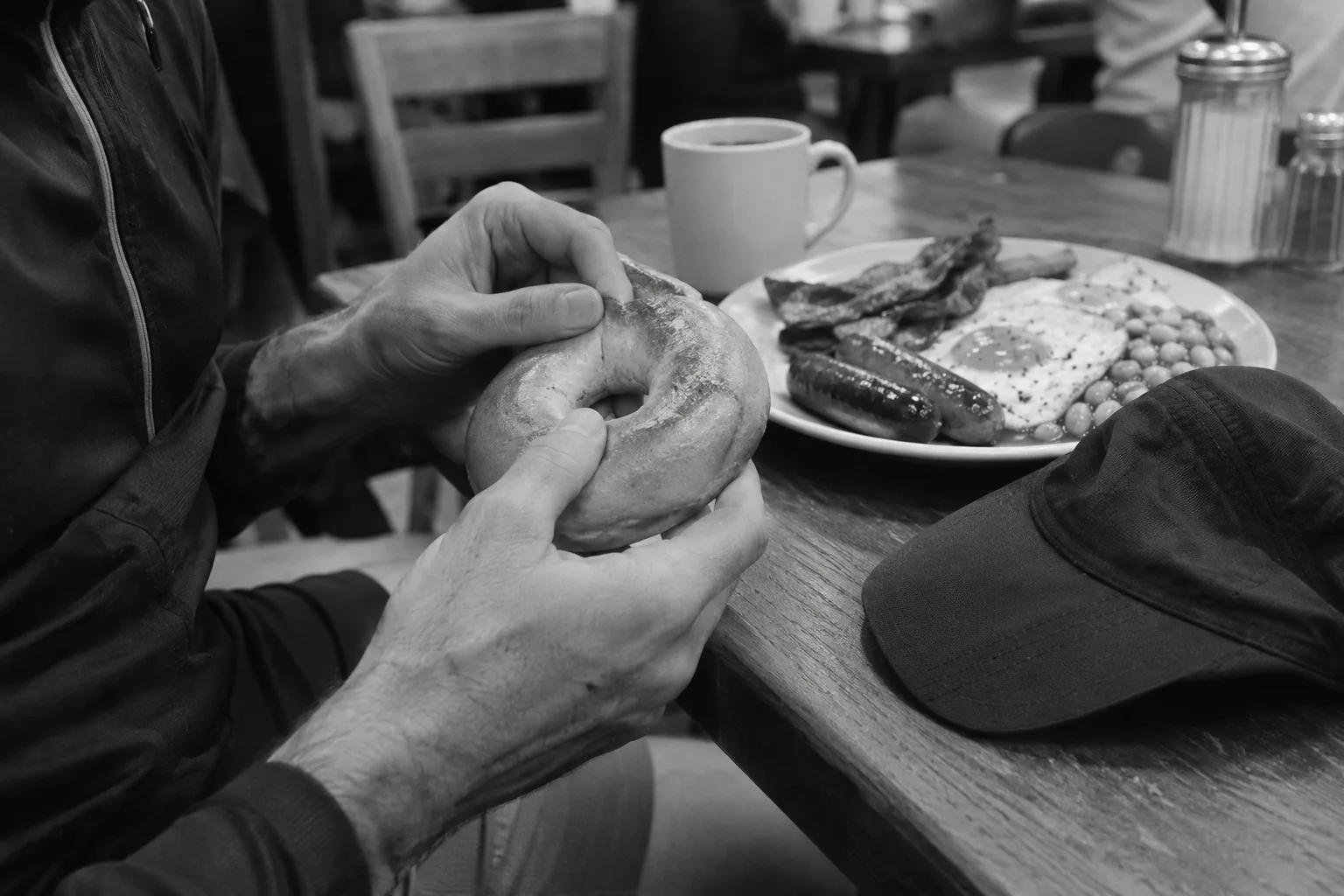
| Plain bagel with a thin layer of peanut butter | About 50 g | Mid-morning races, 3 hours out |
| 1 cup cooked oatmeal with a sliced banana | About 55 g | Runners who eat oats before training runs |
| One medium banana | About 27 g | Last snack, 60 to 90 minutes out |
| Two rice cakes with jam | About 25 g | Nervous stomachs |
| 500 ml (17 fl oz) sports drink | About 30 g | When solid food will not go down |
If you are aiming for a fast time, the toast with honey is hard to beat: quick to digest, easy to carry to a race and almost no fiber. If you want more calories because your race is mid-morning, the bagel holds you longer.
What to eat the night before a 5k
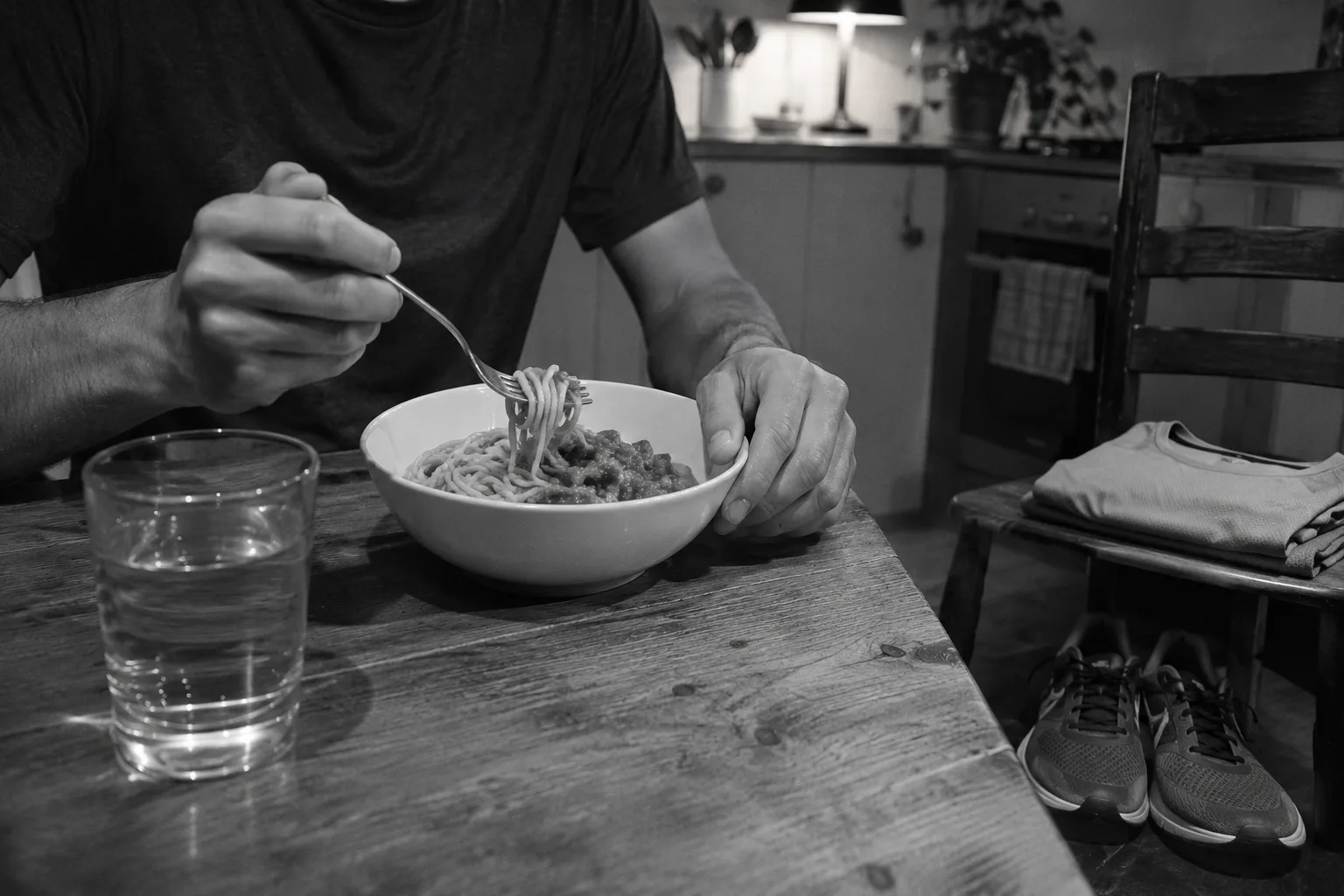
Eat a normal dinner the night before a 5k, built around a carb you like (pasta, rice, potatoes or bread), with some protein and not much grease or spice. No carb loading, no giant plate, no new restaurant.
The night before matters less for a 5k than for a half marathon or a marathon. Your muscle carbs are topped up by your normal eating over the last day or two. A huge pasta dinner usually just means a heavy, bloated feeling on the start line. If you have a big race week coming up, the same logic runs through a marathon taper: keep eating normally, do not add bulk.
Should you drink coffee before a 5k?
Yes, if you already drink coffee before training runs. Caffeine can help a hard effort feel easier, and the International Society of Sports Nutrition position stand on caffeine puts the useful range at 3 to 6 mg per kg of body weight, taken about 60 minutes before. One regular cup of coffee is at the low end of that for most runners.
Two rules. Never try caffeine for the first time on race day, and if coffee sends you to the toilet, drink it early enough that this happens before the warm-up, not during the race. Heart conditions, pregnancy or caffeine sensitivity: ask a doctor first.
How much water to drink before a 5k
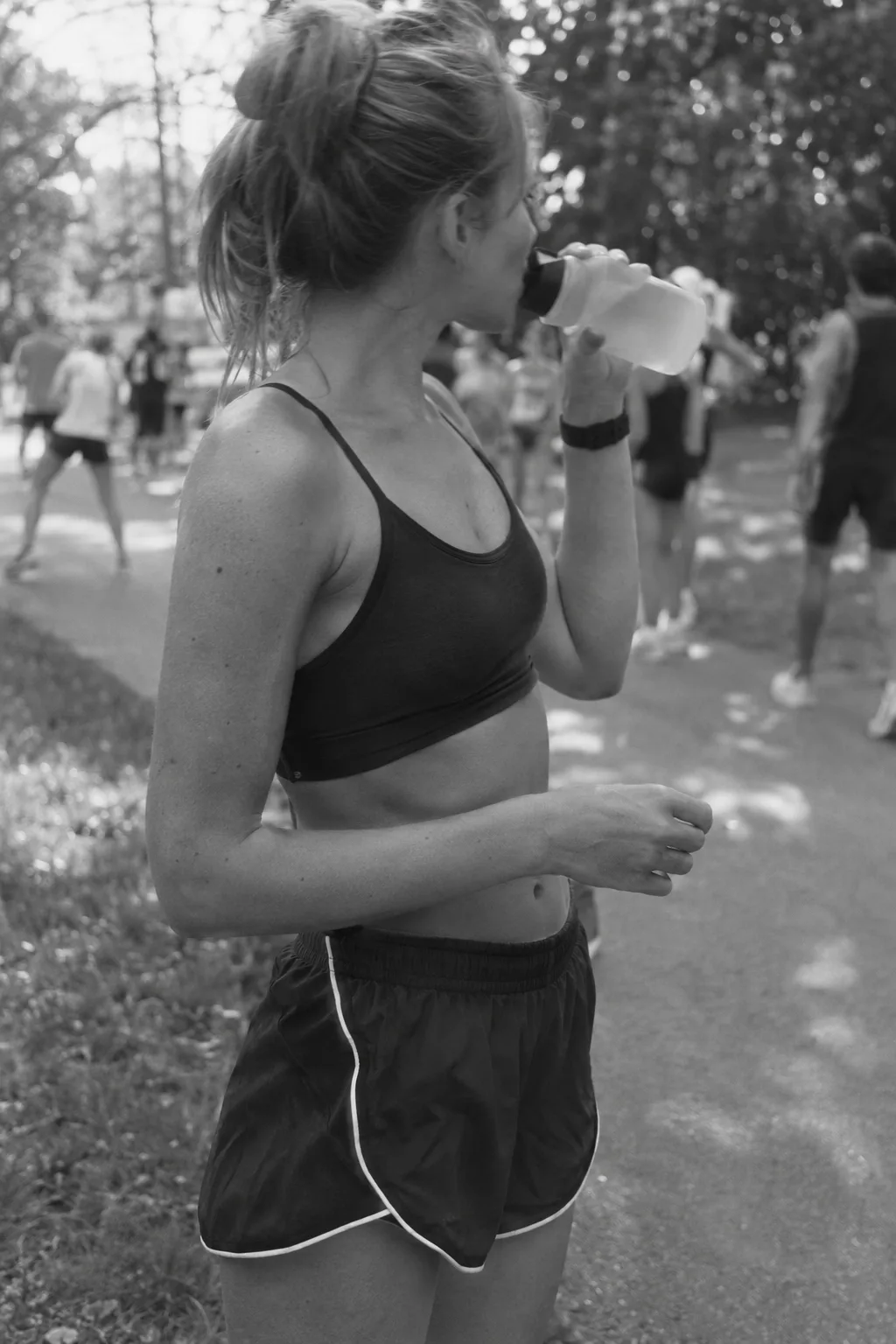
Drink normally the day before, have a glass of water with breakfast, and take small sips up to about 15 minutes before the start. ACSM suggests about 5 to 7 ml per kg of body weight at least 4 hours before exercise, which is 350 to 500 ml (12 to 17 fl oz) for a 70 kg (154 lb) runner.
More is not better. Chugging a full bottle at the start line is one of the most common causes of a side stitch in a short race. In hot weather you may need more, so follow the race guidance and see a professional if heat is a concern for you.
What to skip before a 5k
The fastest way to ruin a 5k is to eat something your gut has never met at race pace. Skip these on race morning:
- High-fat food. Fried breakfasts, pastries, bacon, a lot of nut butter. Fat sits in your stomach for hours.
- High-fiber food. Bran cereals, big salads, beans, lentils, a lot of fruit with skins. Good food, bad timing.
- A big protein meal. Eggs and toast is fine for some runners at 3 hours out; a steak breakfast is not.
- Anything new. A new gel, a new energy bar, a new cafe, the free samples at the race expo.
- Energy drinks and fizzy drinks. Lots of caffeine and gas, a stitch waiting to happen.
- Dairy, if it ever bothers you. A latte on race morning is a gamble only some runners win.
- Spicy food the night before. It can come back to visit at 4 km (2.5 mi).
Do you need to eat during a 5k?
No. A 5k is too short for food during the race to help, and trying to eat at 5k effort mostly causes problems. If the race has a water stop, a sip or two is fine on a warm day. Leave gels for races over about an hour, such as a half marathon.
What changes for a 10k
A 10 km (6.2 mi) race takes most runners 40 to 70 minutes, so the plan is the same with slightly more food. Eat your light breakfast 2 to 3 hours before, lean toward the bigger options in the table (the bagel or the oatmeal), and a normal carb-based dinner the night before is still enough. Most runners do not need a gel during a 10k; if yours will take more than about 70 minutes, practice with one in training first.
Practice race morning in training
Your 5k breakfast is a skill, so test it before a hard session. Pick your next interval or tempo workout (the fast sessions in this guide to running faster are a good start), eat the exact breakfast you plan to race on, at the same time gap, and note how you feel. Repeat it once or twice and lock it in.
Do the same with your warm-up: 10 to 15 minutes of easy running and a few strides, finishing about 10 minutes before the start. The full routine, with drills and how long to warm up for each race distance, is in how to warm up before running. If your stomach knots up when you breathe hard, it can help to settle your rhythm first; this guide on how to breathe while running covers the patterns.
Mistakes that cost you a 5k
- Eating too close to the start. A full breakfast 45 minutes before means a stitch by 2 km (1.2 mi).
- Carb loading for a 5k. Extra pasta adds weight and bloating, not speed.
- Trying a new food on race day. Every new food is a risk you did not need to take.
- Drinking a liter (34 fl oz) at the start line. Sip, do not chug.
- Skipping food because of nerves, then feeling empty. If nerves kill your appetite, use a sports drink or white toast instead.
- Treating the 5k like a marathon. It needs far less food, but more care about timing.
When your 5k is part of a bigger plan
Everything above works with a sticky note on the fridge: breakfast, time, water, done. And if you want to see what your 5k says about longer races, put your time into the race time predictor.
Many runners use a 5k as a tune-up inside a half marathon training plan or an 8 week half marathon plan. That is where the wall appears. The race moves, a cold takes out a week, or you miss a long run, and a written plan does not move when your week does. You are left guessing which runs to keep around the race.
That is the part Raceblock handles. Build your free plan for your race date. On the Coach plan, next week re-plans itself when you miss a run.
Free training plan
Build your free plan for your race date.
Pick your race and race date. Every week from today to race day is planned for you, with distances in km and miles.
What to eat before a 5k in one line
Eat a small, familiar carb breakfast 2 to 3 hours before the start, stop solid food about an hour out, sip water, and skip anything fatty, fibrous or new. A 5k does not need more fuel, it needs better timing.
If your 5k is a step toward a half marathon or a marathon, build a free plan for your race date and practice your race breakfast before the hard sessions in it.
General guidance, not medical advice. If you have diabetes, a digestive condition or any other health condition, check with a doctor or dietitian before changing what you eat around exercise. Chest pain, fainting or feeling unwell while running means stop and see a doctor.
Sources: carbohydrate and fluid timing from the American College of Sports Medicine joint position statement on nutrition and athletic performance (2016); caffeine dose from the International Society of Sports Nutrition position stand on caffeine and exercise performance (2021). Carb counts are approximate.
Frequently asked questions
Eat a light carb breakfast 2 to 3 hours before the start. If you only have an hour, eat a small snack like half a banana 60 to 90 minutes before and nothing solid after that. Keep sipping water until about 15 minutes before the start.
You can, especially for an early race. Your muscles still hold plenty of carbohydrate after a night's sleep, and many runners race a morning 5k on water alone. If running on empty makes you shaky or lightheaded, eat half a banana or a slice of toast about an hour before.
Skip high-fat food, high-fiber food, big protein meals, energy drinks and anything you have not tried before a training run. Fried breakfasts, bran cereal, beans and a new gel are the usual culprits behind race-day stomach trouble.
A normal dinner built around a carb you like, such as pasta, rice or potatoes, with some protein and little grease or spice. You do not need to carb load for a 5k, and an extra large plate usually just leaves you feeling heavy in the morning.
No. A 5k is too short for food during the race to help. Take a sip of water at the water stop on a warm day if you want one, and save gels for races longer than about an hour.
The same kind of breakfast, slightly bigger: a bagel or a bowl of oatmeal 2 to 3 hours before. A normal carb-based dinner the night before is still enough. Most runners do not need a gel during a 10k unless they expect to take longer than about 70 minutes.
Free training plan
Build your free plan for your race date.
On the Coach plan, next week re-plans itself when you miss a run.
Share article
About the author
More running training guides
Pacing and race day · 11 min
10K Running Pace Chart: Every Time From 35 to 75 Minutes
A 10K running pace chart for every finish time from 35:00 to 1:15:00: pace per km and per mile, 5 km halfway splits, 400 m laps, treadmill speeds, and what your 10K says about a half or marathon.
Pacing and race day · 10 min
How Long Does It Take to Run a Mile? Times by Age and Pace
Most people run a mile in 9 to 13 minutes at an easy pace and 6 to 8 minutes at race effort. See mile times by age, pace per km and how to get faster.
Pacing and race day · 9 min
How Long to Run a 10K: Finish Times, Miles and Training
A 10k run is 10 km (6.21 mi) and takes about 60 minutes at 6:00 /km (9:39 /mi). See finish times at every pace, how long to train for one and how to pace your first race.
Pacing and race day · 10 min
5K Running Pace Chart: Every Time From 15 to 45 Minutes
A 5K running pace chart for every finish time from 15:00 to 45:00: pace per km and per mile, 400 m lap times, treadmill speeds, and what your 5K says about a half or marathon.
Pacing and race day · 10 min
Average 5K Time by Age for Men and Women (20 to 80)
The average 5K time by age is about 22:41 for men and 27:19 for women in their 20s, slowing by about a minute every five years after 35. Here are the age tables, the race field median of 34:37, and how to find your own time.
Pacing and race day · 10 min
Running Pace Conversion Chart: Km, Mile and Treadmill
Convert any running pace between minutes per km and minutes per mile, and treadmill mph or km/h into pace, with marathon and half marathon finish times in the same charts.