
How Long to Run a 10K: Finish Times, Miles and Training
Raceblock team Updated November 18, 2026 9 min read
Free training plan for your race date
Free training plan for your race date
Build my free planIn this article
A 10k run is 10 km (6.2 mi). How long it takes depends on your pace: at 6:00 /km (9:39 /mi) it takes exactly 60 minutes, and most newer runners finish somewhere between 60 and 80 minutes at their easy pace.
So "how long" has two answers. The distance is fixed. The time is yours to work out, and the math is simple: your average pace per kilometer times 10.
How long is a 10k run in miles?
A 10k is 10 kilometers, which is 6.21 miles (6.2137 mi to be exact, using 1 mi = 1.609344 km). World Athletics lists the 10 km as one of its standard road race distances, and certified courses are measured to it.
| Race | Kilometers | Miles |
|---|---|---|
| 5K | 5 km | 3.11 mi |
| 10K | 10 km | 6.21 mi |
| Half marathon | 21.1 km | 13.1 mi |
| Marathon | 42.2 km | 26.2 mi |
A 10k is exactly two 5Ks and a little under half of a half marathon. If you are already looking further ahead, our guide to how long a half marathon is carries on from here.
How long does it take to run a 10k?
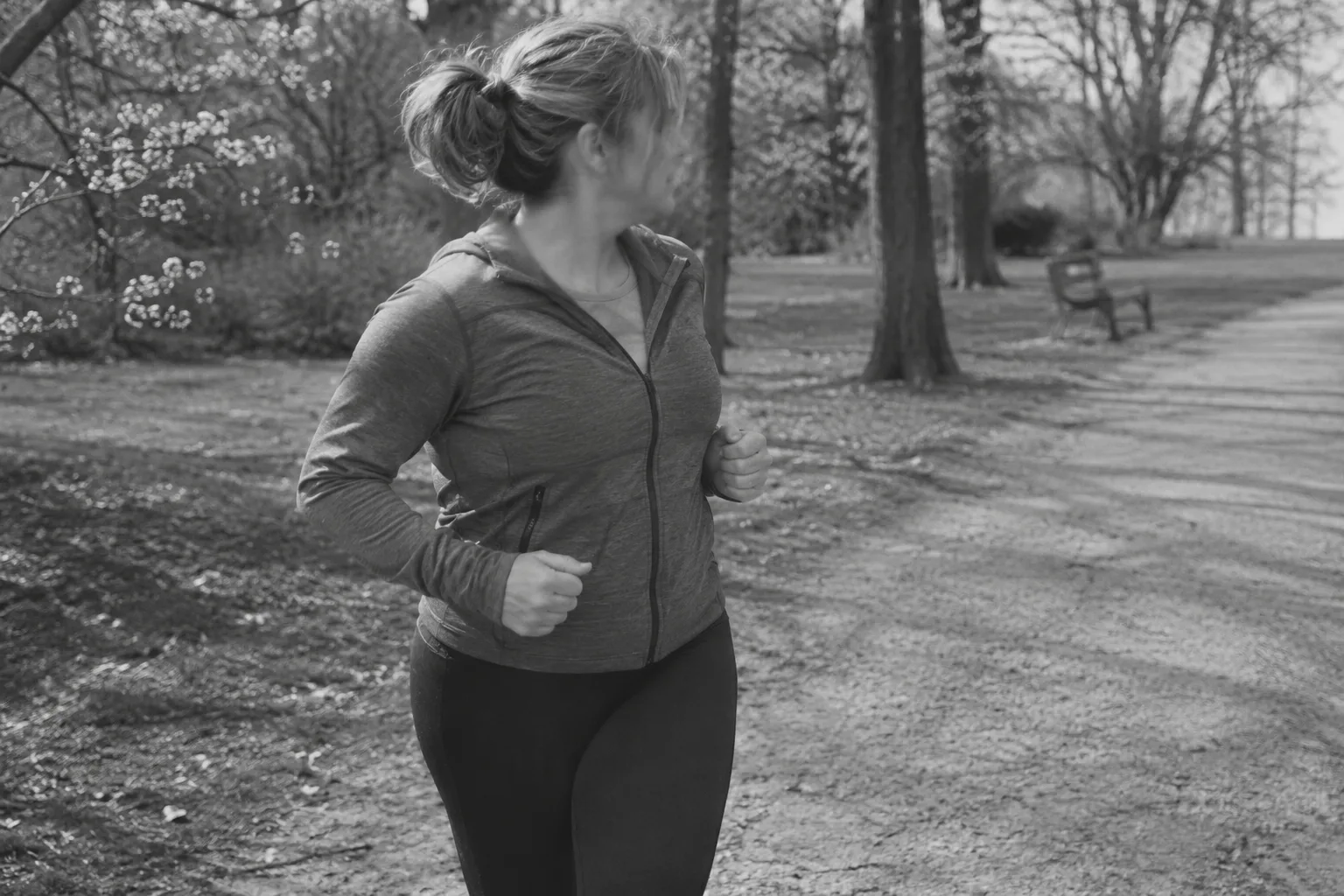
For most newer runners, 60 to 80 minutes. For regular club runners, often 40 to 55 minutes. Your own number comes from one line of arithmetic: 10 x your average pace per kilometer, or 6.21 x your pace per mile.
| 10k finish time | Pace per km | Pace per mile |
|---|---|---|
| 40:00 | 4:00 /km | 6:26 /mi |
| 45:00 | 4:30 /km | 7:15 /mi |
| 50:00 | 5:00 /km | 8:03 /mi |
| 55:00 | 5:30 /km | 8:51 /mi |
| 60:00 | 6:00 /km | 9:39 /mi |
| 65:00 | 6:30 /km | 10:28 /mi |
| 70:00 | 7:00 /km | 11:16 /mi |
| 75:00 | 7:30 /km | 12:04 /mi |
| 80:00 | 8:00 /km | 12:52 /mi |
| 90:00 | 9:00 /km | 14:29 /mi |
These rows are arithmetic, not a forecast. To see where you sit, look at the pace your watch shows on a normal easy run and find that row. If you have a recent 5K result, the race time predictor turns it into a realistic 10k range, and the 5K pace chart shows what the same paces mean over half the distance. For every whole minute from 35:00 to 1:15:00, with halfway splits and track laps, use the 10K pace chart.
A brisk walk of 15:00 /mi (9:19 /km) covers a 10k in about 93 minutes. Many local 10k races welcome walkers, but check the time limit before you enter.
Is it hard to run 10km in 1 hour?
A 1 hour 10k means averaging 6:00 /km (9:39 /mi) for the whole distance. For someone who runs three or four times a week, it is a common and reachable goal. For a true beginner it is a stretch target for a later race, not the first one. Finish the first 10k at a pace you can hold, then use that time as the baseline.
The counterintuitive part: a 10k is an hour, not a sprint
Here is what catches most first-timers. A 10k sounds like "a long 5K", so people start it at 5K effort. But for many runners a 10k lasts close to an hour, and an hour of running is closer to a long steady run than to a race you can grit your teeth through.
The cost of starting too fast is real. Run the first 2 km (1.2 mi) just 20 seconds per kilometer quicker than you can hold, and you will usually give back more than that in the last 3 km (1.9 mi). The runners who finish strongest tend to run the first half at a pace that feels slightly too easy.
A simple way to pace it:
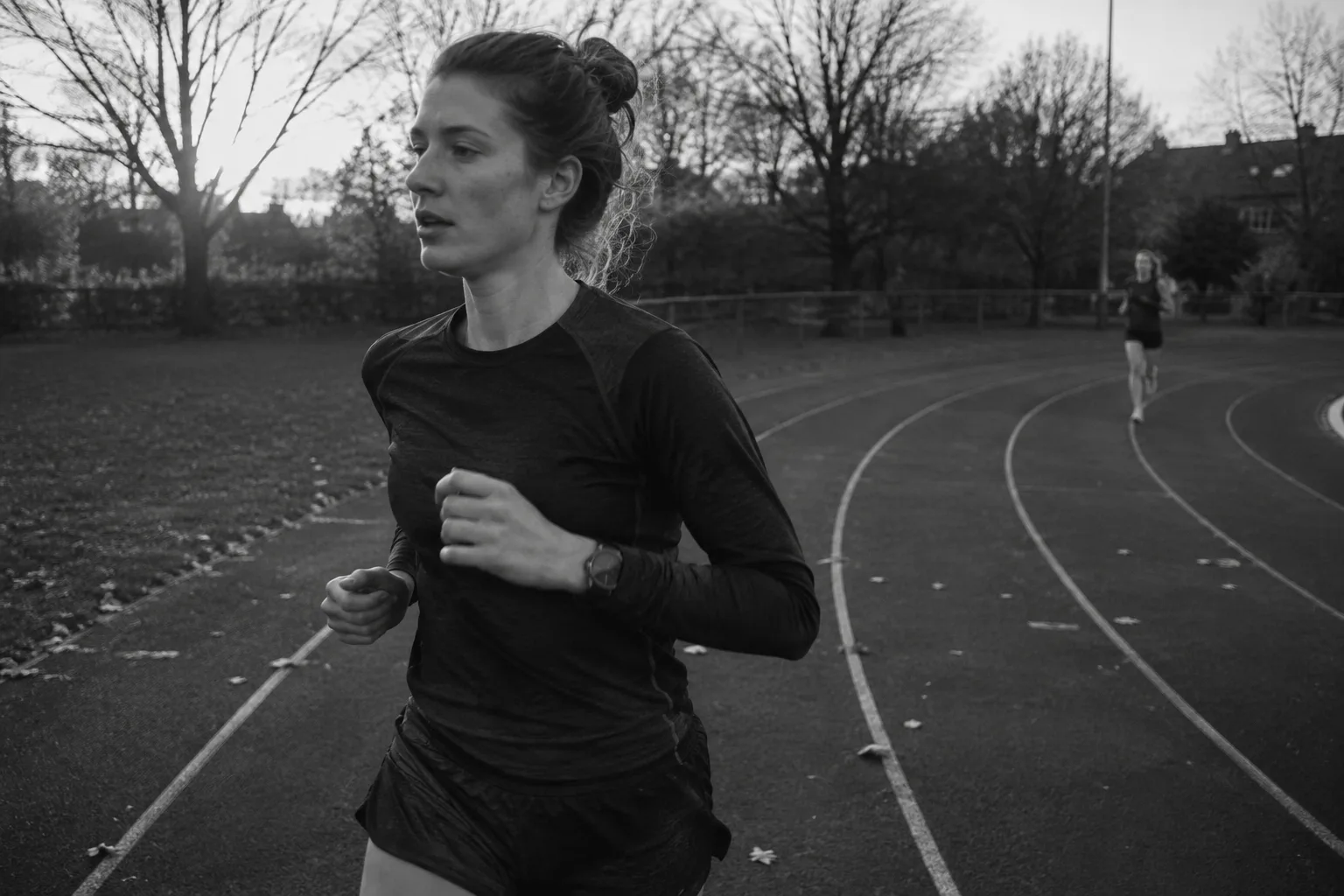
- Kilometers 1 to 3 (mi 1 to 2): easier than goal pace. You should be able to say a full sentence.
- Kilometers 4 to 7 (mi 2.5 to 4.3): settle at goal pace. Breathing harder, still in control.
- Kilometers 8 to 10 (mi 5 to 6.2): if you have anything left, use it here.
If you are unsure what "easy" means in numbers, our guide to pace when running explains how to find your easy, steady and hard paces. To convert a pace you see in km into miles or back, use the running pace conversion chart.
How long does it take to train for a 10k?
It depends on where you start. These are typical plan lengths, not promises, and your own timeline can be shorter or longer.
| Where you start | Typical time to a 10k | What the weeks look like |
|---|---|---|
| Not running yet | About 3 to 5 months | Walk-run to 5K first, then add distance |
| Running 5K comfortably | 6 to 10 weeks | Three or four runs a week, one getting longer |
| Running 8 km (5 mi) already | 2 to 4 weeks | Mostly keep going, add one longer run |
| Racing 10ks already | Any length | Training for a faster time, not the distance |
If you are starting from zero, the free NHS Couch to 5K plan takes 9 weeks at three runs a week. From a comfortable 5K, the main change is one run a week that grows by 1 km (0.6 mi) or so at a time until it reaches 10 km (6.2 mi). The full weekly layout, with the 8-week schedule, is in our 10k training routine.
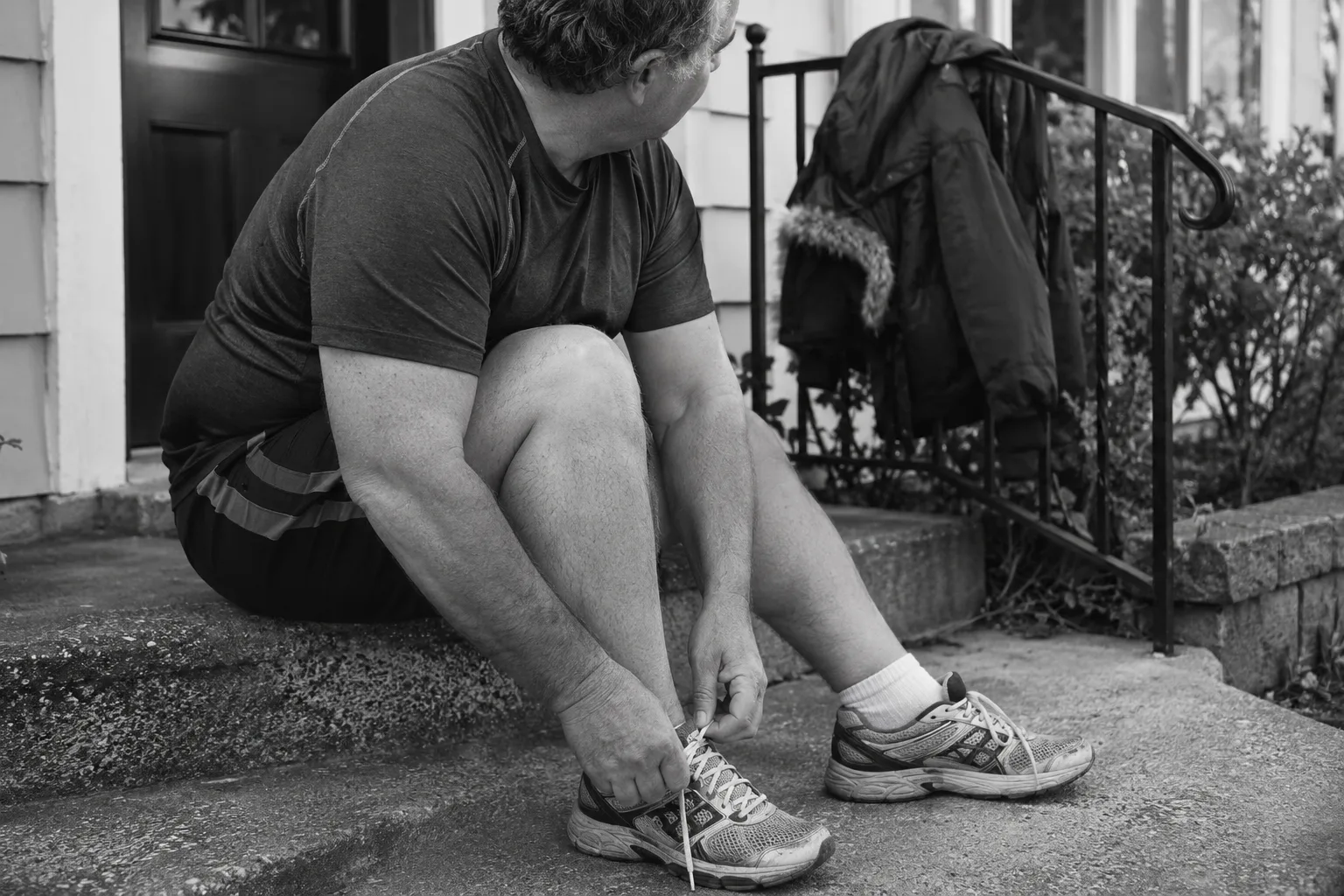
Train by minutes, not kilometers, at first. If your easy pace is 7:00 /km (11:16 /mi), a 10k is 70 minutes on your feet, so your longest run should build toward about 60 to 70 minutes of easy running. That number tells you more than any distance target.
General training guidance, not medical advice. Check with a doctor before increasing training if you have symptoms or a health condition.
Is a 10km run a long run?
For a beginner, yes. If your other runs are 20 to 40 minutes, a 10k is your long run for the week. For someone training for a half marathon, 10 km (6.2 mi) is more often a midweek run, and the long run grows well past it.
Your first 10k race: what to do on the day
- Eat what you know. A light, familiar breakfast two to three hours before the start. Our guide on what to eat before a run has simple options.
- Warm up briefly. Ten minutes of easy jogging and a few short pickups. A 10k is short enough that you do not need to save every step.
- Start behind your pace group. Being passed in the first kilometer is cheaper than passing people in the last one.
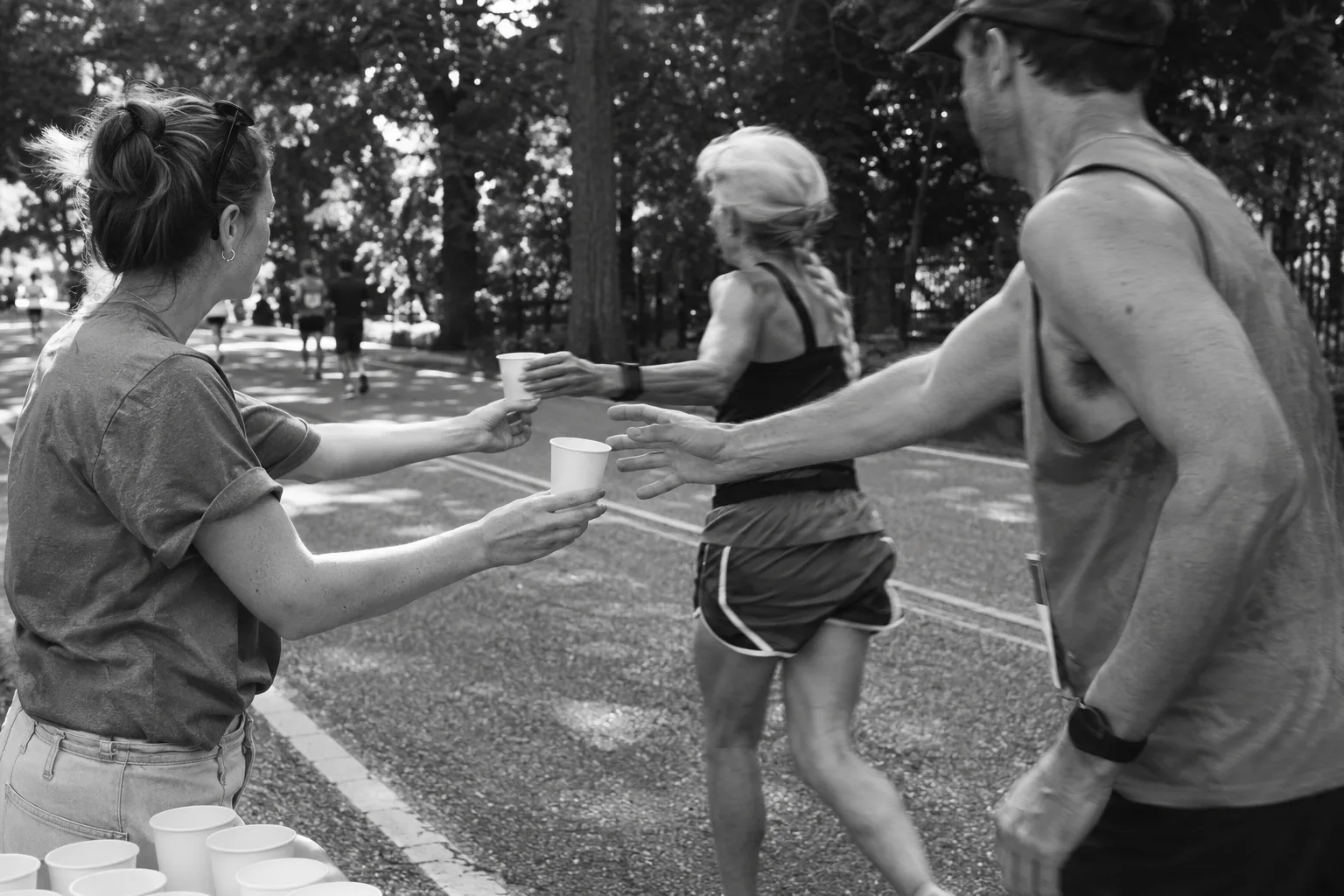
- Take a cup at the water station if it is warm, even a few sips. Walking through it costs seconds, not minutes.
- Trust the course markers, not your watch. GPS often reads a little long on a measured course, so keep running to the finish line.
Where a fixed plan stops helping
You can do all of this with a pace table and a paper schedule. The wall is specific: the plan doesn't move when your week does. A sick week, a work trip or a missed long run leaves you guessing how to rebuild the next week, and the race date keeps getting closer.
For many runners, a 10k is the step before a half marathon. That is where Raceblock comes in. Build your free plan for your race date. On the Coach plan, next week re-plans itself when you miss a run. If you want to see the weeks first, our half marathon training plan guide lays them out.
Free training plan
Build your free plan for your race date.
Pick your race and race date. Every week from today to race day is planned for you, with distances in km and miles.
Mistakes that make a 10k feel longer than it is
- Starting at 5K pace. The first 3 km (1.9 mi) feel easy, and you pay for them in the last 3 km.
- Training only by distance. Ten kilometers at 8:00 /km (12:52 /mi) is 80 minutes. Build your long run by time on your feet, the way our 10-week schedule for first-time 10k runners does.
- Picking a goal time from someone else's result. Use your own easy pace and a recent 5K, not a friend's finish time.
- Skipping easy weeks. Adding distance every single week without a lighter week is how a 10k plan stalls.
- Ignoring pain. Sharp or worsening pain is a reason to stop and see a doctor or physio, not to push through.
A 10k run is 10 km (6.21 mi), every time. How long it takes you is pace times ten: about 60 minutes at 6:00 /km (9:39 /mi), about 70 at 7:00 /km (11:16 /mi). Start slower than feels right, build your long run by minutes, and the distance takes care of itself.
When your 10k turns into a half marathon goal and you want the weeks built around your race date, build your free plan. On the Coach plan, next week re-plans itself when you miss a run.
Frequently asked questions
There is no set time. Newer runners often finish in 60 to 80 minutes, and regular club runners often run 40 to 55 minutes. Work out yours from your easy pace: pace per km x 10, or pace per mile x 6.21.
A 10k is 6.21 miles (6.2137 mi). It is 10 kilometers, or exactly two 5Ks.
It takes an average of 6:00 /km (9:39 /mi). That is a common, reachable goal for people who already run a few times a week, and a stretch target for a complete beginner's first race.
Yes. A 10k is not a marathon: it is 10 km (6.2 mi), less than a quarter of the marathon distance. Many beginners get there in about 3 to 5 months from no running, or 6 to 10 weeks from a comfortable 5K, with run-walk breaks allowed.
For a beginner it usually is, because it is the longest run of the week. For half marathon or marathon training, 10 km (6.2 mi) is more often a regular midweek run.
Start slower than your goal pace for the first 3 km (1.9 mi), eat a familiar breakfast two to three hours before, warm up with ten minutes of easy jogging, and run to the finish line rather than to your watch.
A common rough rule is about 1 calorie per kilogram of body weight per kilometer, so a 70 kg (154 lb) runner uses roughly 700 calories over 10 km (6.2 mi). It varies with body size, terrain and pace, and watch estimates differ.
Free training plan
Build your free plan for your race date.
On the Coach plan, next week re-plans itself when you miss a run.
Share article
About the author
More running training guides
Pacing and race day · 11 min
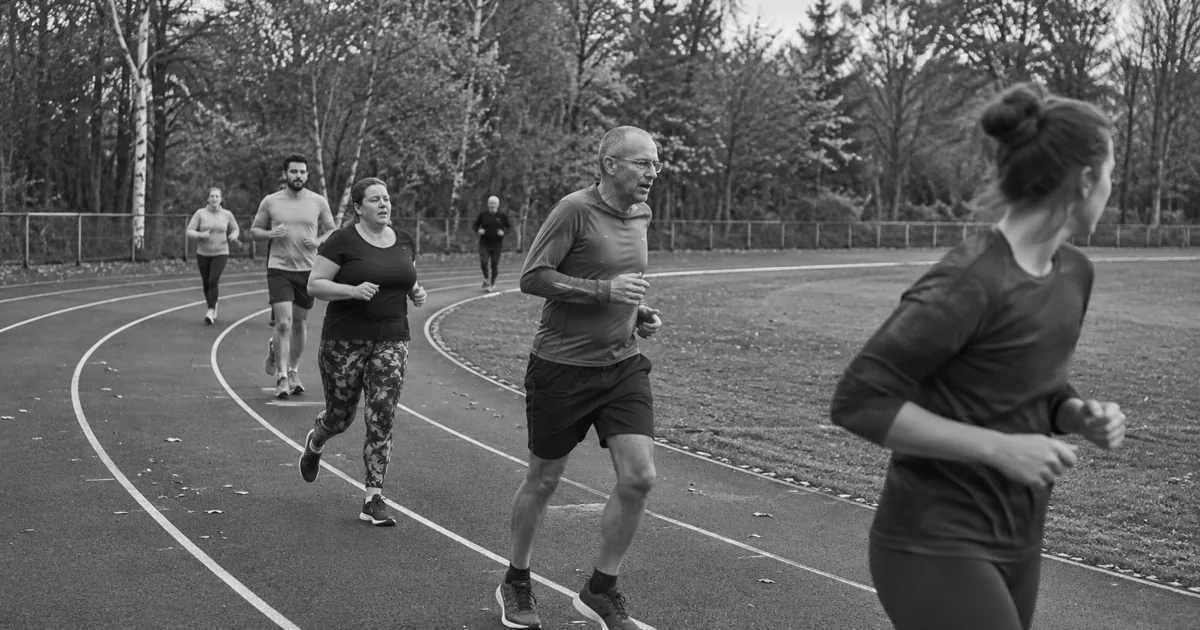
10K Running Pace Chart: Every Time From 35 to 75 Minutes
A 10K running pace chart for every finish time from 35:00 to 1:15:00: pace per km and per mile, 5 km halfway splits, 400 m laps, treadmill speeds, and what your 10K says about a half or marathon.
Pacing and race day · 10 min
How Long Does It Take to Run a Mile? Times by Age and Pace
Most people run a mile in 9 to 13 minutes at an easy pace and 6 to 8 minutes at race effort. See mile times by age, pace per km and how to get faster.
Pacing and race day · 10 min
5K Running Pace Chart: Every Time From 15 to 45 Minutes
A 5K running pace chart for every finish time from 15:00 to 45:00: pace per km and per mile, 400 m lap times, treadmill speeds, and what your 5K says about a half or marathon.
Pacing and race day · 10 min
Average 5K Time by Age for Men and Women (20 to 80)
The average 5K time by age is about 22:41 for men and 27:19 for women in their 20s, slowing by about a minute every five years after 35. Here are the age tables, the race field median of 34:37, and how to find your own time.

Pacing and race day · 10 min
Running Pace Conversion Chart: Km, Mile and Treadmill
Convert any running pace between minutes per km and minutes per mile, and treadmill mph or km/h into pace, with marathon and half marathon finish times in the same charts.
Pacing and race day · 11 min
What Is a Negative Split in Running? Splits for Every Goal
A negative split means you run the second half of a race faster than the first. You earn it by starting 5 to 10 seconds per km slower than goal pace, not by sprinting the end. Here is how big it should be for each race distance, the marathon halves for common goals, and the two sessions that train it.