
What Is Fartlek Running? 5 Workouts and How to Pace Them
Raceblock team Updated November 15, 2026 12 min read
Free training plan for your race date
Free training plan for your race date
Build my free planIn this article
Fartlek running is a continuous run where you mix short faster surges with easy running, with no stopping between them. The word is Swedish for "speed play": you pick when to speed up and for how long, often by landmarks or by feel, instead of by a track or a stopwatch.
Here is the part most runners get wrong: the surges are not the hard part of a fartlek, the recoveries are. You keep running through every recovery, and that is what makes a fartlek a speed session your legs can handle in the middle of a marathon or half marathon block.
What does fartlek mean?
Fartlek means "speed play" in Swedish: "fart" is speed and "lek" is play. It is a way of running where the pace changes during one continuous run, with the faster bits chosen by the runner instead of set by a track.
The method is credited to Swedish coach Gösta Holmér, who built it for his cross country runners and popularized it after World War II (Britannica). The original idea was simple: run through forests and fields, surge when the ground or your mood says so, and settle again without stopping. Nearly a century later that is still the whole method.
How does a fartlek run work?
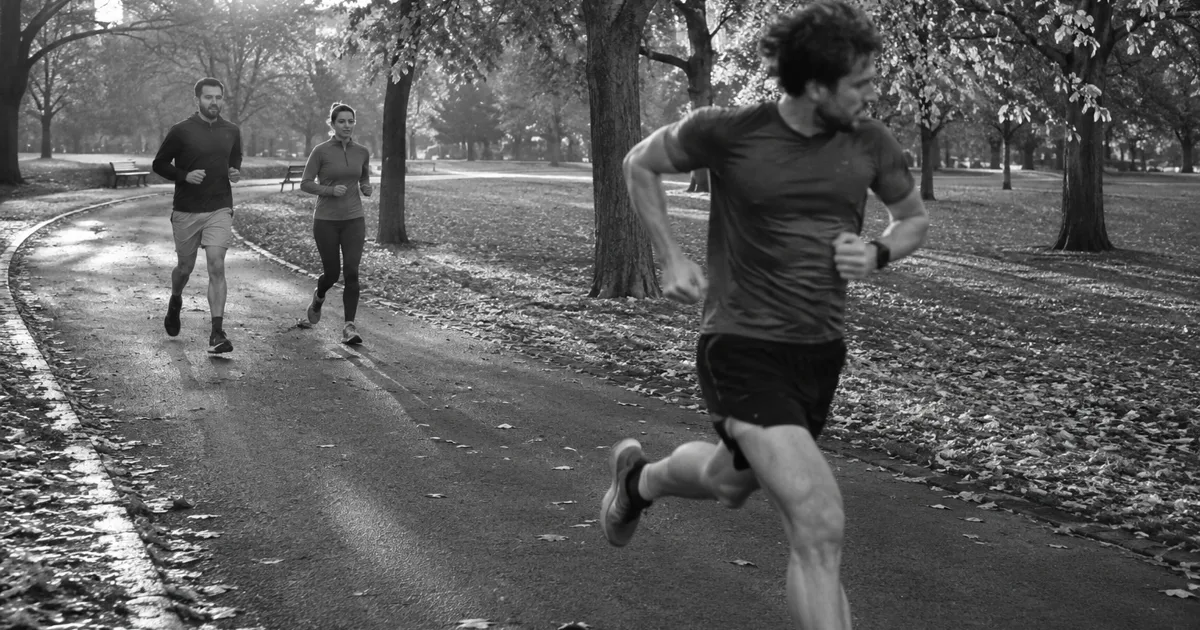
A fartlek works by alternating surges and floats inside one run. You speed up for a set time or to a landmark, then ease back to an easy jog until you feel ready, then surge again. Because you never stop, your heart rate stays up through the whole middle of the run.
Every fartlek has the same four parts:
- Warm-up: 10 to 15 minutes at easy pace. See our running warm-up routine if you want drills too.
- Surges: the faster pieces, from 15 seconds to 5 minutes.
- Floats: the recoveries between surges. You jog, you do not walk or stand.
- Cool-down: 10 minutes at easy pace.
The surges run by effort, not by a pace on your watch. That is the "play" part, and it is also why a fartlek is a good first speed session: there is no split to miss. Here is how the efforts line up, with example paces for a runner who runs 5 km (3.1 mi) in about 30:00.
| Effort | How it feels | Talk test | Example pace, 30:00 5 km runner |
|---|---|---|---|
| Easy (warm-up, cool-down, floats) | Relaxed, could go for an hour | Full sentences | 7:00 to 7:30 /km (11:16 to 12:04 /mi) |
| Marathon surge | Firm but steady | A short sentence | about 6:40 /km (10:44 /mi) |
| 10 km to half marathon surge | Hard but controlled | Two or three words | 6:15 to 6:20 /km (10:04 to 10:12 /mi) |
| 5 km surge and shorter | Hard, still smooth | No talking | 5:45 to 6:00 /km (9:15 to 9:39 /mi) |
Your own numbers will differ. If you know a recent race time, our running pace conversion chart turns any pace into per km and per mile.

The float is where beginners go wrong. If you walk, the session turns into stop-start sprints. If you float too fast, you cannot surge properly. Aim for your normal easy pace: slow enough to get your breath back, fast enough that you are still running.
Fartlek vs tempo vs interval runs
A fartlek is the loosest of the three main speed sessions. A tempo run holds one steady, comfortably hard pace for 20 to 40 minutes. An interval session repeats set distances at a set pace, usually with a standing or walking rest. A fartlek sits between them: varied efforts like intervals, but continuous like a tempo.
| Session | Structure | Recoveries | Pace control | Best for |
|---|---|---|---|---|
| Fartlek | Surges of varied length inside one run | Easy jog, never a stop | By feel or landmark | First speed work, hilly or rough routes, low stress weeks |
| Tempo run | One block, 20 to 40 minutes | None | One steady pace | Holding a firm pace for a long time |
| Intervals | Set repeats, for example 6 x 800 m | Walk, stand or slow jog | Exact pace on a track or watch | Precise speed work later in a block |
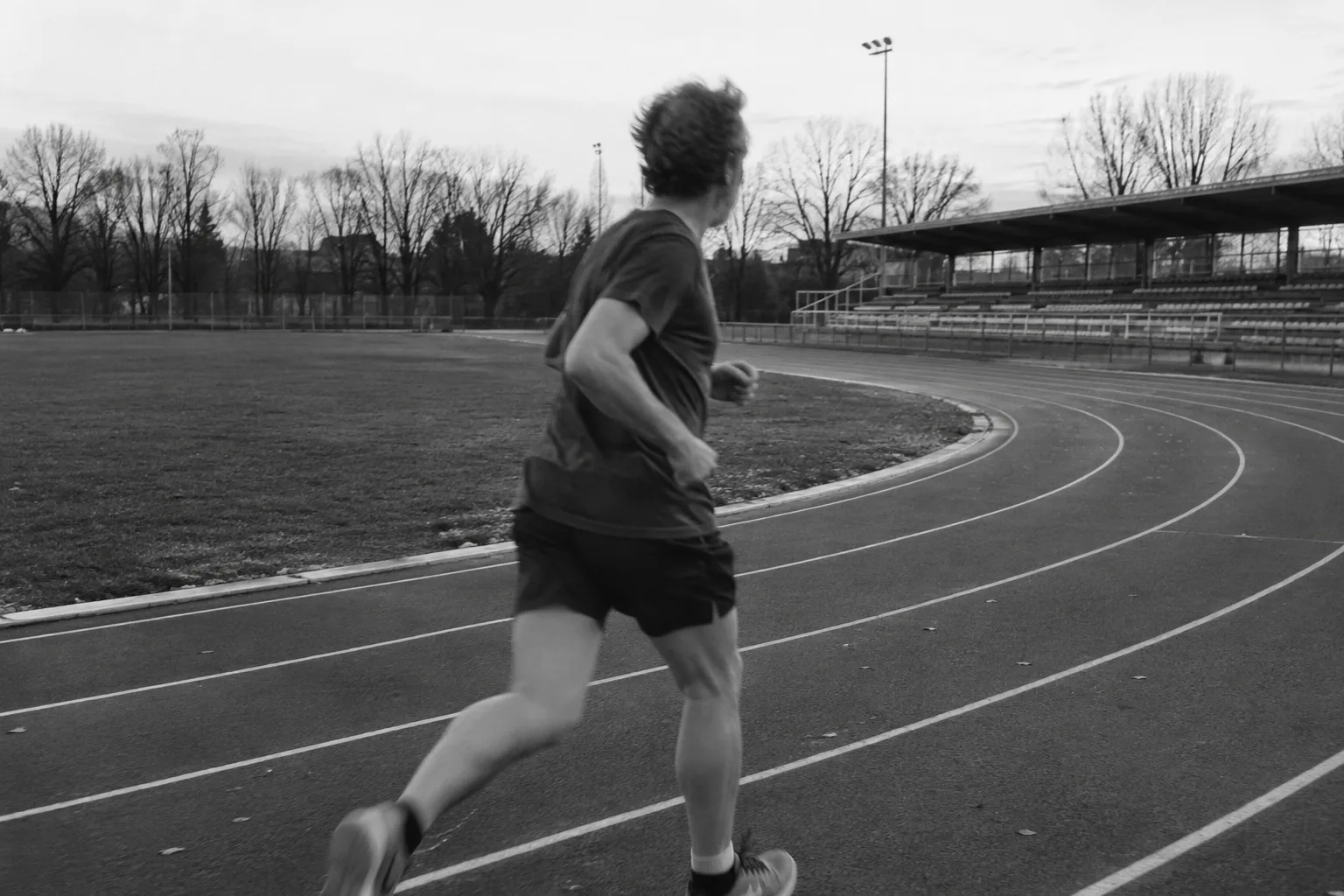
Our pick for a first-time half or marathon runner: start with fartlek. You get the same mix of faster running as an interval session without having to hit a pace on a track, and you can do it on the route you already run.
5 fartlek workouts to try
Pick the one that fits where you are. Every session starts with a 10 to 15 minute easy warm-up and ends with a 10 minute easy cool-down, which are not counted in the times below.
| Workout | Main set | Surge effort | Who it suits |
|---|---|---|---|
| Beginner minutes | 6 x 1 min fast, 2 min easy | 10 km effort | First speed session ever |
| Landmark fartlek | Surge to a lamppost, tree or corner, jog to the next, 20 min | 5 km to 10 km effort | Runners who hate the watch |
| Mona fartlek | 2 x 90 s, 4 x 60 s, 4 x 30 s, 4 x 15 s, each followed by the same time as a float | 5 km to 10 km effort | Runners with a few months of steady running |
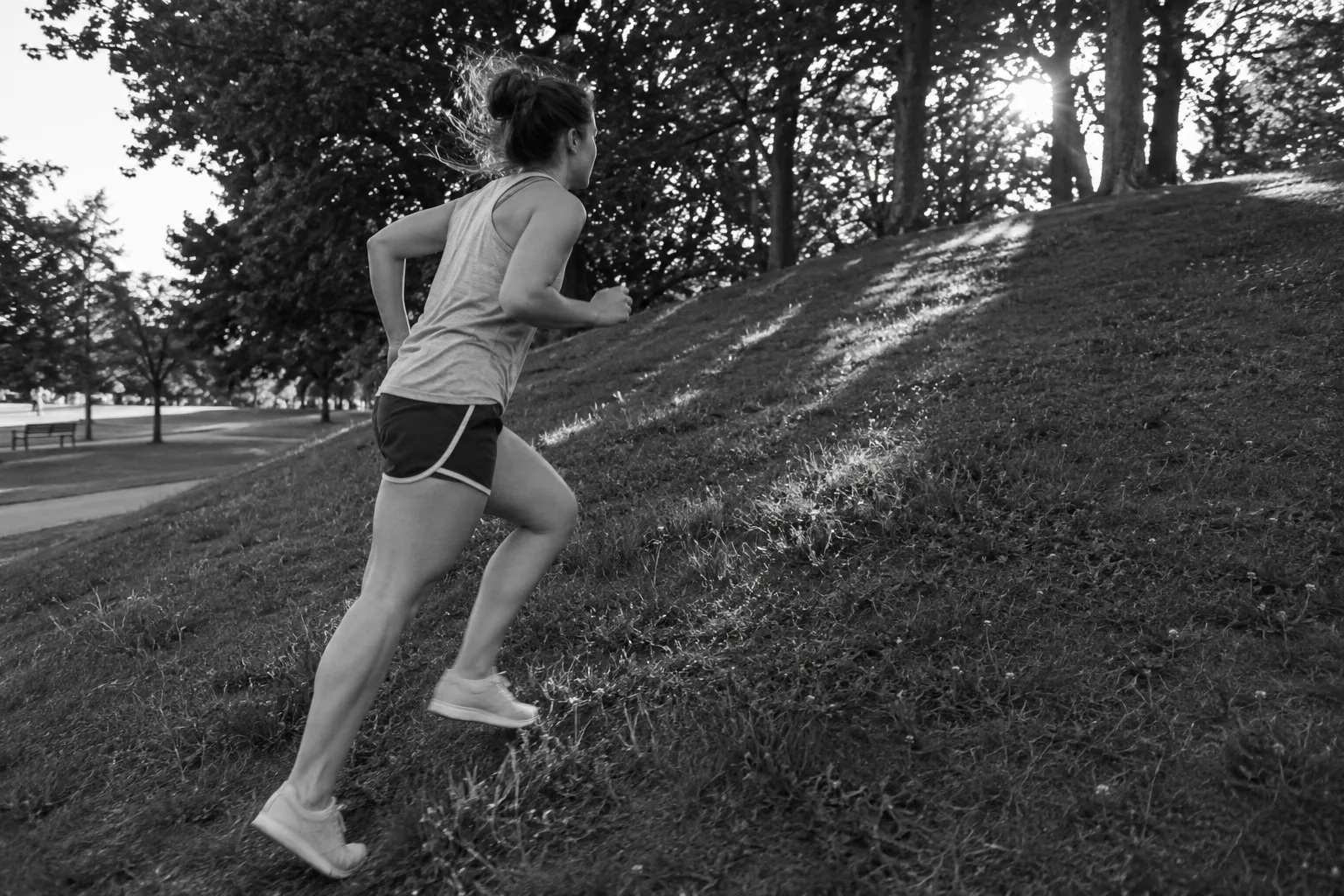
| Hill fartlek | Surge up every rise on a rolling route, jog the flats and downhills, 20 to 30 min | Hard, by effort | Hilly race courses, winter weeks |
| Marathon fartlek | 5 x 5 min at marathon to half effort, 2 min easy | Marathon to half effort | Marathon runners 6 to 12 weeks out |
The Mona fartlek is named after Australian marathoner Steve Moneghetti, and its main set takes exactly 20 minutes. Its floats are run fairly briskly, which makes it the hardest of the five, so save it until the beginner session feels easy.
The marathon fartlek is the most useful one for long race training. The surges are long and only a little faster than goal pace, so you practice changing gears without the session costing you the long run at the weekend. If you are building toward 42.2 km (26.2 mi), our marathon training plans show where a session like this sits.
How to run your first fartlek
- Warm up for 10 to 15 minutes
Run at an easy, chatty pace. Finish with three or four relaxed 15 second pick-ups so the first surge is not a shock.
- Surge for 1 minute
Speed up to about 10 km effort: hard enough that you can only say a couple of words, smooth enough that your form holds.
- Float for 2 minutes
Slow back to your easy pace and keep running. Do not walk. Let your breathing settle.
- Repeat 6 times
Six surges and six floats take 18 minutes. If the last surge is much slower than the first, you started too fast.
- Cool down for 10 minutes
Jog easily, then walk for a couple of minutes. Total time is about 40 to 45 minutes.
General training guidance, not medical advice. Check with a doctor before increasing training if you have symptoms or a health condition.
Which fartlek fits your race?
The right fartlek depends on what you are training for and how much speed work you already do. Use this as a starting point.
| Your situation | Start with | How often |
|---|---|---|
| First half marathon, no speed work yet | Beginner minutes | Once a week |
| First marathon, 12+ weeks out | Beginner minutes, then landmark fartlek | Once a week |
| Marathon, 6 to 12 weeks out | Marathon fartlek | Once a week, not the week of a long run peak if you feel flat |
| Hilly race course | Hill fartlek | Every other week |
| Experienced, already doing intervals | Mona fartlek | Every other week, swapped with intervals |
If you are training for a half marathon
A half marathon rewards running a firm pace for a long time, so the 10 km to half marathon surge is where you get the most from a fartlek. Start with beginner minutes, then lengthen the surges to 2 or 3 minutes over a few weeks. Our half marathon training plans put one speed session like this in most weeks.
If you are training for a marathon
Most of your marathon training is easy running and the long run. One fartlek a week is plenty, and later in the block the marathon fartlek beats short sharp surges because it trains the pace you will actually race. Keep the rest of the week easy so you arrive at the long run fresh.
If you run with a group
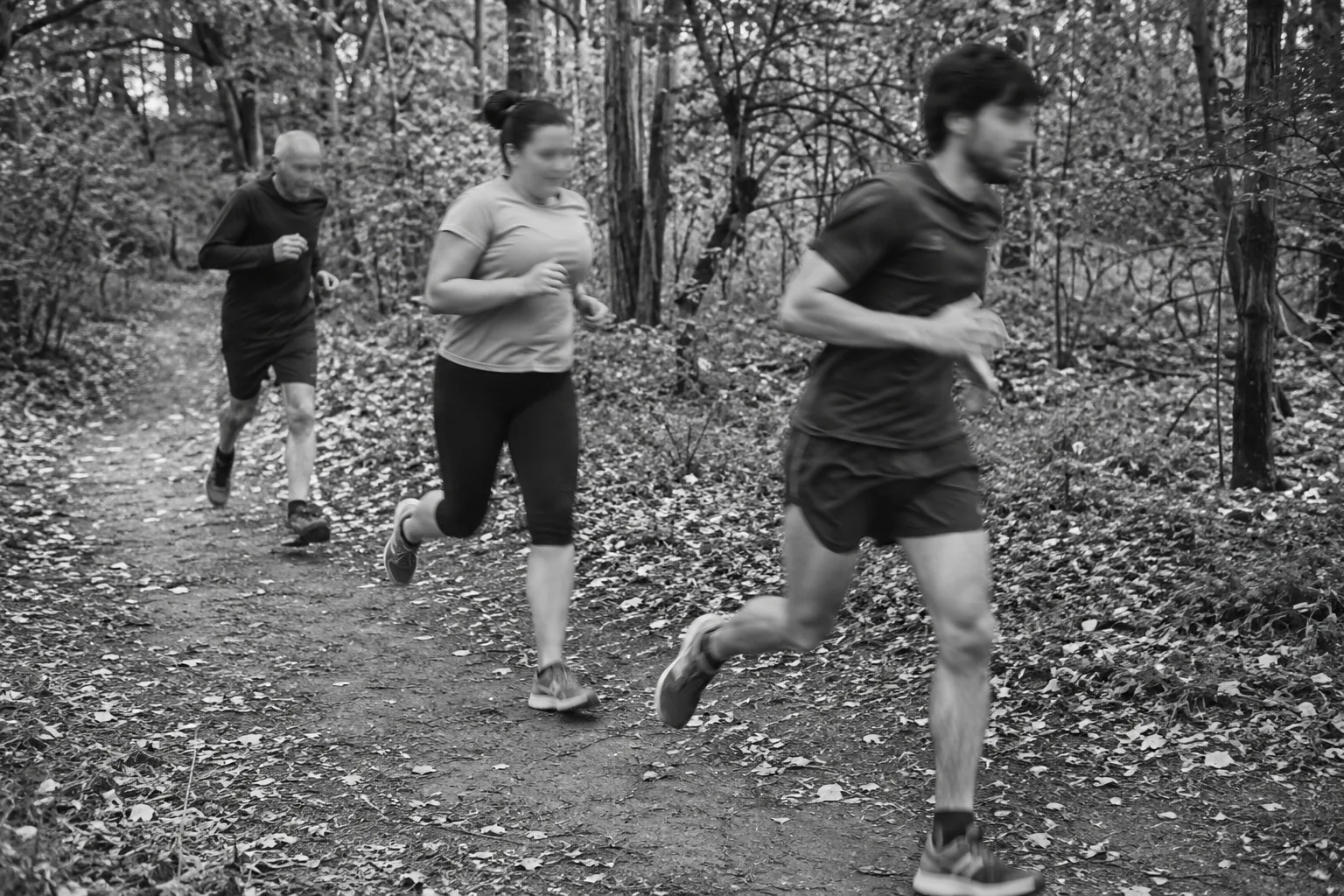
A group fartlek is the original way to run one. One runner leads and picks when to surge and for how long, then hands the lead on. Agree before you start that the surges stay at 10 km effort, so it does not turn into a race.
Where fartlek fits in your week
Fartlek is one of the harder days of your week, not an extra. Most half and marathon runners do best with one hard session plus the long run, and the rest easy. That pattern is often called the 80/20 rule: about 80% of your running easy and about 20% harder.
For a runner doing four runs a week, that looks like:
| Day | Run |
|---|---|
| Tuesday | Fartlek, 40 to 45 minutes |
| Thursday | Easy run, 30 to 45 minutes |
| Saturday | Easy run, 30 minutes |
| Sunday | Long run |
Leave at least one easy day between the fartlek and the long run. If your weekly distance is still growing, read how many miles a week you should run before adding a speed session.

Common fartlek mistakes
- Sprinting the surges. Flat out efforts wreck the next surge and the next day. Surges are 5 km to marathon effort. Cost: a session that feels heroic and trains little.
- Walking the floats. Stopping turns the fartlek into stop-start intervals and drops your heart rate. Cost: you lose the continuous part that makes it a fartlek.
- Floating too fast. If the floats are near your surge pace, every surge gets slower. Cost: a muddy tempo run with no real speed in it.
- No warm-up. The first surge from cold feels awful and is where strains tend to happen. Cost: a bad session from minute one.
- Racing a training partner. Group fartleks drift faster every surge. Cost: a race effort on a Tuesday and tired legs for the long run.
- Adding it on top of everything else. A fartlek replaces a run, it is not a bonus one. Cost: too much hard running in one week. If your legs are heavy, our guide to recovery after running covers the easy days.

When the week does not go to plan
You now have everything you need to run a fartlek on your own: the efforts, five sessions and where they go in your week. A written plan works well until your week changes.
The wall comes when life moves the week. A cold wipes out Tuesday's fartlek, a work trip lands on the long run, or you have to decide what to do after a missed long run. Do you move the fartlek, drop it or run both close together? A written plan does not move when your week does.
That is the part Raceblock handles. Build your free plan for your race date. On the Coach plan, next week re-plans itself when you miss a run.
Free training plan
Build your free plan for your race date.
Pick your race and race date. Every week from today to race day is planned for you, with distances in km and miles.
Fartlek running in one line
A fartlek is one continuous run with faster surges and easy floats, run by feel, and the floats matter as much as the surges. Start with 6 x 1 minute at 10 km effort with 2 minutes easy, once a week, and lengthen the surges as your race gets closer.
If you have a race booked, build a free plan for your race date and let the fartlek land in the right week for you.
Source: origin of fartlek from Britannica. Example paces on this page are computed from a 30:00 5 km time.
Frequently asked questions
Fartlek training is running with unplanned or loosely planned changes of pace inside one continuous run. Runners use it as an easy entry to speed work, on rough or hilly routes where a track session will not work, and as a lighter alternative to intervals during a half or marathon block.
You alternate faster surges with easy floats without stopping. The surges raise your effort for 15 seconds to 5 minutes, and the floats let you recover while still running. Because the run never stops, you spend the whole middle section working harder than an easy run.
Fartlek can train your VO2 max, the most oxygen your body can use, when the surges are hard enough: about 5 km effort and lasting 1 to 3 minutes. Longer, gentler surges train other things, like holding marathon pace. If VO2 max is your main goal, structured intervals give you more control, and a fartlek is a good way to build up to them. When you are ready for that step, our 8-week interval training plan builds from 1 minute reps to 1.6 km (1 mi) repeats.
It means running about 80% of your training at an easy, conversational pace and about 20% harder. A fartlek belongs in that harder 20%. For most half and marathon runners, one fartlek a week plus the long run is enough hard running.
Free training plan
Build your free plan for your race date.
On the Coach plan, next week re-plans itself when you miss a run.
Share article
About the author
More running training guides
Running basics · 12 min
What Is a Recovery Run? Pace, Length and When to Skip It
A recovery run is a short, very easy run you do the day after a long run or hard session. Here is how slow to run it, how long, how it differs from an easy run and a rest day, where it fits in a half or marathon week, and when to skip it.

Running basics · 10 min
10K Beginner Training Schedule: 10 Weeks From Run-Walk
A 10k beginner training schedule for runners starting from run-walk: 10 weeks, three timed sessions a week, a long session that grows to about 70 minutes, the paces behind common finish times and how to adjust the plan to your week.

Running basics · 11 min
10K Training Routine: 3 Runs a Week for 8 Weeks
A 10k training routine is three runs a week on fixed days: one easy run, one faster session and a long run that builds to the full 10 km (6.2 mi) at an easy pace. Here is the weekly layout, the 8-week schedule, the paces and the mistakes that break it.
Running basics · 11 min
5K Training Routine: The Weekly Schedule to Repeat
A good 5K training routine is three or four runs a week on fixed days: one key session, one longer easy run and easy running in between. Here are both weekly layouts, your paces, an 8-week schedule and the mistakes that stall it.
Running basics · 11 min
Interval Training Plan for Running: 8 Weeks With Paces
A simple 8-week interval training plan for running: one session a week at 5 km to 10 km effort, with paces per km and per mile, jog recoveries, a sample week and how to adjust it for a half marathon, a marathon or a comeback.
Running basics · 10 min
Running in the Heat: 9 Tips to Train Safely All Summer
Running in the heat tips that work: run early, run by effort instead of pace, drink and add salt on long runs, adapt over two weeks, and know the warning signs that mean stop.